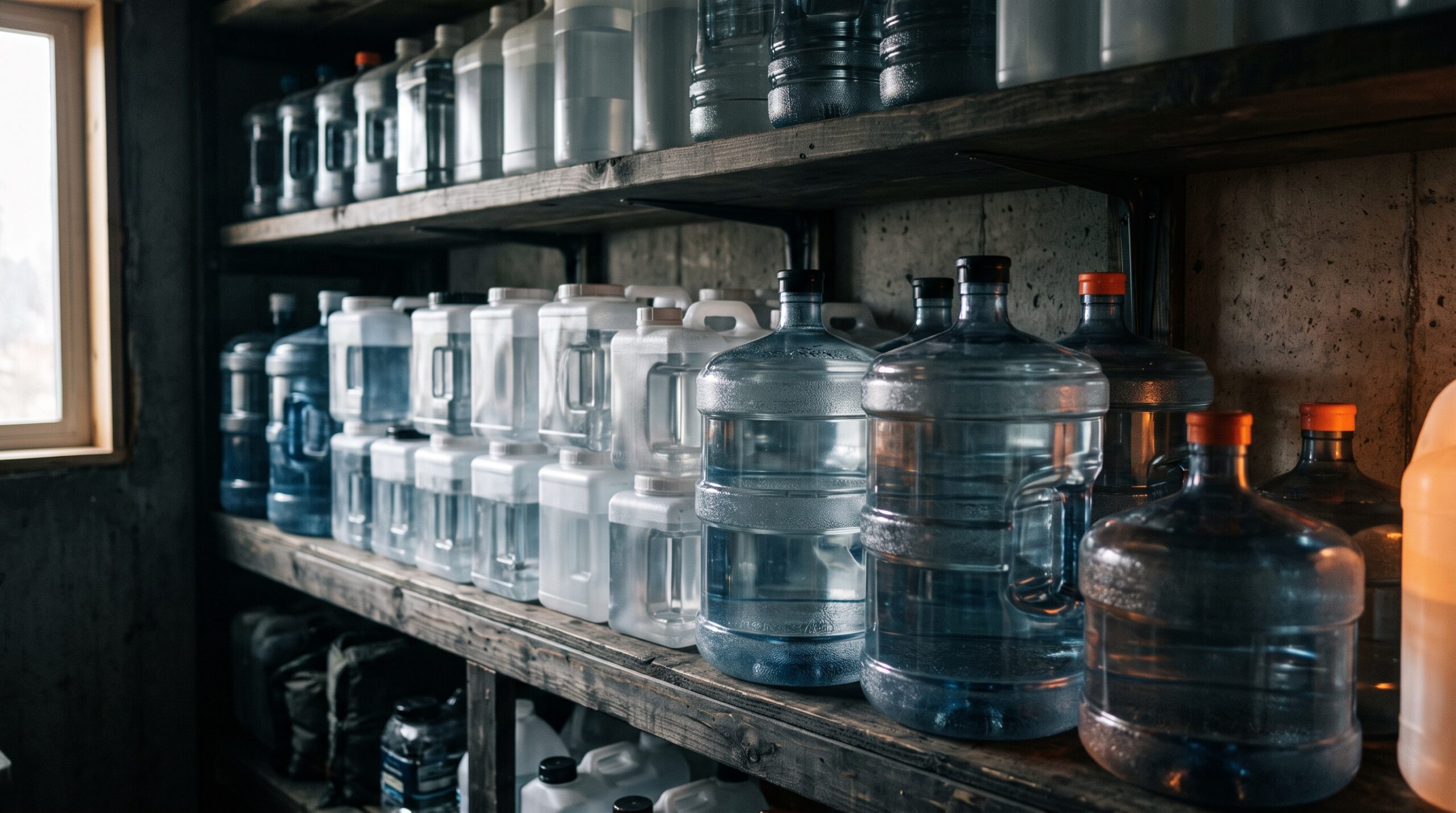
Store at least one gallon of water per person, per day, according to Ready.gov, and keep a three-day supply as the bare minimum. FEMA suggests building toward a two-week supply per person when you have the space, since a power outage can knock out well pumps and municipal pressure with little warning.
That one-gallon figure covers drinking and basic sanitation, not just thirst. Below is how to turn it into an actual number for your household, how to store water so it stays safe, when to store more, and what the CDC says to do if your supply runs low before the lights come back.
⚠️ When a boil-water notice is in effect
An extended outage can drop water pressure and trigger a boil-water advisory from your utility. If one is in effect, treat tap water as unsafe to drink until officials lift the notice, and follow your local authorities and water provider for the steps that apply to your area. Stored or bottled water is your safest option during a contamination advisory.
How much water to store per person and per day
The official baseline is simple: one gallon per person, per day. Ready.gov and the CDC both use that figure, and both treat three days as the minimum and two weeks as the goal if you can manage it. Ready.gov notes that a normally active person needs about three-quarters of a gallon of fluid a day from drinking alone; the rest of the gallon covers hand-washing, food prep, and basic hygiene.
Don’t forget pets. The CDC recommends storing extra water for animals in the household. A rough planning number many owners use is about one ounce of water per pound of body weight per day for dogs and cats, but check with your veterinarian for your specific animals.
One more rule worth memorizing: never ration drinking water. FEMA’s long-standing guidance is to drink the amount you need today and look for more tomorrow, rather than cutting back and risking dehydration.
How to store water safely
The easiest reliable option is commercially bottled water. FEMA calls it the safest, most reliable emergency supply. Keep it in the original sealed container, don’t open it until you need it, and follow the use-by date printed on the label.
If you fill your own containers, the CDC recommends FDA-approved, food-grade water storage containers from camping or surplus stores. A good container has a top that seals tightly and is made of durable, unbreakable material rather than glass. Never reuse a container that held a toxic substance such as bleach or pesticide, and milk and juice jugs are hard to clean well enough for long-term storage.
Before filling a container, the CDC says to wash it with soap and water, then sanitize it with a solution of one teaspoon of unscented liquid household chlorine bleach in one quart (four cups) of water. Swirl it so the solution touches every surface, wait at least 30 seconds, pour it out, and let the container air-dry. Store filled containers somewhere cool, ideally around 50–70°F, out of direct sunlight and away from chemicals like gasoline or pesticides.
Rotation matters. For tap water you bottle yourself, the CDC advises replacing it about every six months. Label each container with the date you filled it so you know when it is due. Store-bought bottled water follows its own expiration date instead.
When to store more than a gallon a day
The one-gallon figure is a floor, not a ceiling. Ready.gov is clear that individual needs vary with age, health, activity, diet, and climate. Plan to store more if any of the following apply:
- Hot weather. In high temperatures, water needs can rise sharply, so build in extra if your outage falls during a summer heat event.
- Children, nursing mothers, and people who are sick. Ready.gov specifically notes these groups may need more than a gallon a day.
- Pregnancy. The CDC lists pregnant women among those who should store more.
- Medical needs. A medical emergency, or equipment and routines that rely on water, can require additional supply.
- Pets and livestock. Add their daily needs on top of the human total.
When in doubt, store toward the higher end. Water is cheap and shelf-stable; running short during an outage is the harder problem to solve.
Treating water if your supply runs low
If you run out of stored water before power and services return, the CDC describes two main ways to make questionable water safer to drink. Always use the cleanest water you can find, and filter cloudy water through a clean cloth or let it settle first.
Boiling is the most reliable method. Bring clear water to a rolling boil for one minute, then let it cool. At elevations above 6,500 feet, boil for three minutes. Of course, boiling needs a heat source that doesn’t depend on grid power, such as a propane camp stove used outdoors or in a well-ventilated space.
Disinfecting with unscented household bleach works when you can’t boil. Use regular, unscented chlorine bleach labeled for disinfection (in the U.S., typically 5–9% sodium hypochlorite). The CDC’s guide is 8 drops of 6% bleach, or 6 drops of 8.25% bleach, per gallon of water. Stir, then let it stand for 30 minutes; the water should have a slight chlorine smell. Double the bleach if the water is cloudy, colored, or very cold. One caution from the CDC: chemical disinfection does not reliably kill parasites like Cryptosporidium and Giardia, so boiling is preferable when it’s an option.
During any boil-water or contamination advisory, follow your local authorities and water utility rather than general rules, since the right response depends on what contaminated the supply.
Water to store by household size
The table below applies the one-gallon-per-person-per-day rule to common household sizes. Use the three-day column as your minimum and the two-week column as your target.
| Household size | 3 days (minimum) | 1 week | 2 weeks (FEMA target) |
|---|---|---|---|
| 1 person | 3 gallons | 7 gallons | 14 gallons |
| 2 people | 6 gallons | 14 gallons | 28 gallons |
| 3 people | 9 gallons | 21 gallons | 42 gallons |
| 4 people | 12 gallons | 28 gallons | 56 gallons |
| 5 people | 15 gallons | 35 gallons | 70 gallons |
Keeping water flowing during a longer outage
Stored water covers drinking and sanitation, but if your home runs on a well, the pump stops the moment the power does, and a fridge or freezer full of food is on its own clock too. If a longer outage is your real concern, a portable power station can keep a well pump cycling or a refrigerator cold. Our Power-Station Sizing calculator helps you match a unit to the watts your essentials draw, so you know whether the model you’re eyeing can actually run them. Think of stored water and a sized power source as the two halves of the same plan.
Frequently asked questions
How much water should I store per person for a power outage?
Plan on at least one gallon per person, per day, per Ready.gov and the CDC. Three days is the minimum, and a two-week supply is the goal FEMA suggests if you have room. For one person that means 3 gallons minimum and 14 gallons for two weeks.
How long can you store water before it goes bad?
Commercial bottled water keeps until the use-by date on the label, as long as the seal stays intact. For tap water you bottle yourself in food-grade containers, the CDC recommends replacing it about every six months. Storing it cool and out of sunlight helps it last.
Can I drink the water already in my home during an outage?
If there is no contamination advisory, water already in your pipes and water heater tank is generally usable, and the CDC lists the water heater and melted ice as possible emergency sources. But if your utility issues a boil-water notice, treat that water as unsafe until officials say otherwise and rely on stored or bottled water instead. Follow your local authorities for guidance specific to your area.
How do I make water safe if I run out of stored water?
Boiling is best: bring clear water to a rolling boil for one minute, or three minutes above 6,500 feet, then cool. If you can’t boil, the CDC’s bleach method is 8 drops of 6% unscented household bleach (or 6 drops of 8.25%) per gallon, stirred and left to stand 30 minutes. During a contamination advisory, follow your local authorities.
Does a power outage make tap water unsafe?
A short outage usually doesn’t, since municipal systems often hold pressure for a while. But extended outages or a failed well or booster pump can drop pressure and let contaminants in, which is why utilities issue boil-water notices. Watch for advisories from your water provider and follow their instructions.