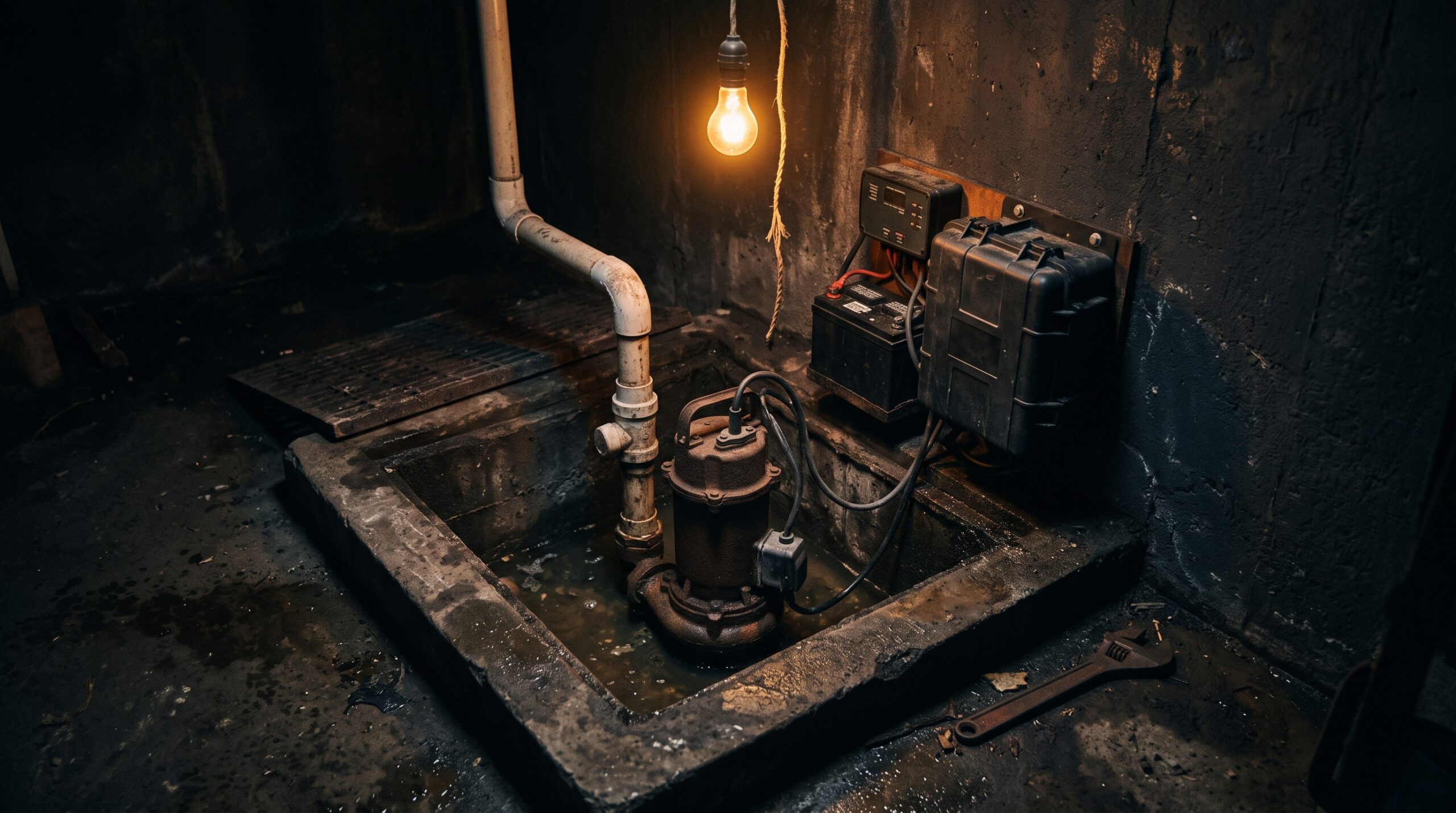
A 1/3 to 1/2 HP sump pump runs on about 800 to 1,050 watts but can surge to 1,300 to 2,150 watts at startup, so your power station’s surge (peak) rating matters more than its running rating.
Match the startup surge first. Then make sure the battery has enough stored capacity for a pump that cycles on and off for hours, because in a storm that is exactly when you need it.
Sump pump running vs. starting watts (by HP)
A sump pump is an induction-motor load, so it has two wattage numbers that matter. Running watts are what it draws once the motor is up to speed. Starting watts (also called surge or locked-rotor inrush) are the brief spike when the motor first kicks on, and that spike is usually two to three times the running figure. Most homes run a 1/3 or 1/2 HP pump, which is where the headline numbers come from.
You can sanity-check a pump’s running draw from its nameplate: multiply the rated amps by the voltage. A 1/2 HP Zoeller Model 98, for example, lists up to 15 amps at 115 volts, which lands in the range below. Numbers vary with how high the pump has to lift water (head), pump age, and motor design, so treat the table as ranges, not promises. Always check your own pump’s label.
| Pump size | Running watts | Starting / surge watts |
|---|---|---|
| 1/4 HP | 400–600 W | 800–1,800 W |
| 1/3 HP | 600–800 W | 1,300–2,400 W |
| 1/2 HP | 800–1,050 W | 1,500–2,150 W |
| 3/4 HP | 1,000–1,500 W | 3,000–4,500 W |
| 1 HP | 1,500–2,000 W | 4,500–6,000 W |
Why surge is the deciding factor
Here is the trap. A power station might advertise 1,000 running watts and easily cover a 1/2 HP pump’s 1,050-watt run draw on paper, yet still fail at the worst moment. When the motor starts, it demands its surge wattage for a fraction of a second. If that spike is higher than the station’s peak (surge) rating, the unit shuts off on overload, the pump never starts, and the water keeps rising.
So size to the surge column, not the running column. For a common 1/3 to 1/2 HP pump that means a station rated for at least roughly 2,000 to 2,200 surge watts, with some breathing room on top. If you only have a smaller unit, a soft-start controller can help. It ramps voltage to the motor over a couple of seconds and can cut startup surge from two to three times running down to roughly one and a half to two times, which sometimes brings a borderline pump within reach.
How much capacity you need for an outage
A sump pump does not run continuously. It cycles: it pumps for a minute or two, shuts off, and waits for the pit to refill. That is good news for your battery, because the pump only pulls its running watts during those short bursts. Capacity is measured in watt-hours (Wh), and how long a station lasts depends almost entirely on how often the pump cycles, which in turn depends on how much water is coming in.
Rough math helps. Say the pump draws 800 watts while running on a 1,000 Wh station. In light inflow it might run only about 20 percent of the time, so it averages around 160 watt-hours per hour and the station could last close to six hours. In a heavy storm it might run half the time, averaging about 400 watt-hours per hour, dropping real runtime to roughly two and a half hours. Same battery, very different outcome. For a long outage, plan around the wet-storm case and either size up the battery, add a second one, or have a way to recharge.
Choosing a power station: pure sine wave and surge headroom
Two specs decide whether a station can safely run a pump. First, it must output pure sine wave power. Sump pumps use inductive motors, and a modified or stepped sine wave inverter can make them run hot, buzz, lose efficiency, or fail early. This is not optional for a motor load. Most quality lithium power stations are pure sine wave, but confirm it before you buy.
Second, give yourself surge headroom. Pick a station whose peak (surge) rating sits comfortably above your pump’s startup surge, ideally with 25 to 50 percent margin, so a cold start or a slightly stiff motor does not trip it. Check both the continuous and the surge numbers on the spec sheet, since marketing often leads with the bigger surge figure. A pass-through or AC charging feature is a bonus, letting you top the battery from a generator or wall outlet if grid power flickers back during a long event.
A dedicated battery-backup sump pump as an alternative
A power station is flexible, but it usually waits for you to plug the pump in. If a basement floods while you are asleep or away, a dedicated battery-backup sump system is the more automatic answer. These use a secondary 12-volt DC pump sitting in the same pit, wired to a deep-cycle (AGM or marine) battery on a trickle charger. When the grid drops or the primary pump cannot keep up, the backup switches on by itself.
Capacity is rated in amp-hours. A 75 to 120 Ah deep-cycle battery typically gives several hours of continuous pumping and can stretch over a day or more of intermittent cycling in a normal outage. The trade-offs: DC backup pumps usually move less water per minute than your main AC pump, the battery needs periodic checking and eventual replacement, and combo units cost more up front. The other route is an inverter-based system that runs your existing AC pump from a battery bank. For belt-and-suspenders protection, many homeowners pair a dedicated backup pump with a power station so they have both an automatic safety net and a flexible reserve.
To match your specific pump to a station, run the numbers through our Power-Station Sizing calculator to find the surge and capacity you need, then use the Appliance Runtime calculator to estimate how many hours of pumping a given battery will cover at your storm’s duty cycle.
Sizes with surge headroom for a sump pump

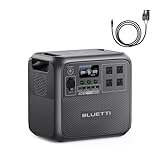

As an Amazon Associate we earn from qualifying purchases. Prices are pulled automatically from Amazon and may have changed.
Frequently asked questions
What size power station do I need to run a sump pump?
For a common 1/3 to 1/2 HP pump, look for a pure sine wave station with at least about 2,000 to 2,200 surge watts and 1,000 or more running watts, plus enough watt-hours for the outage you expect. Always size to your pump’s surge rating, not its running figure, and add a margin on top.
Will a 1,000-watt power station run a sump pump?
Often no, even though the running watts seem to fit. A 1,000-watt continuous unit may not have the surge headroom to start a 1/2 HP pump that spikes to 1,500 to 2,150 watts. Check the station’s peak surge rating, and consider a smaller pump or a soft-start controller if you are close to the limit.
Do I need a pure sine wave power station for a sump pump?
Yes. A sump pump is an inductive motor load, and a modified sine wave inverter can cause it to overheat, run inefficiently, or fail early. Use a pure sine wave power station or inverter for any pump.
How long will a power station run a sump pump during an outage?
It depends on how often the pump cycles. Because it only draws power in short bursts, a 1,000 Wh station might last roughly six hours in light inflow but only two to three hours in a heavy storm when the pump runs much more. Size your battery around the wet-storm case.
Is a battery backup sump pump better than a power station?
They solve different problems. A dedicated battery-backup pump switches on automatically, which protects you while you are asleep or away, but it usually moves less water. A power station is more flexible and can run other gear too, but you have to plug the pump in. Many homeowners use both.
Sources
- Zoeller Pump Company – Model 98 Sump Pump (manufacturer spec, amps and voltage)
- Basement Repair Guide – What size generator to run a sump pump (running vs. starting watts by HP)
- Home Battery Bank – Sump pump generator sizing (1/3 and 1/2 HP wattage)
- Bluetti – How many watts does a sump pump use (wattage table, pure sine wave, runtime)
- PumpingChops – Power inverters for sump pumps (pure sine wave requirement, soft-start surge reduction)
- SumpDirect – Sump pump battery backup runtime (amp-hours and intermittent runtime)