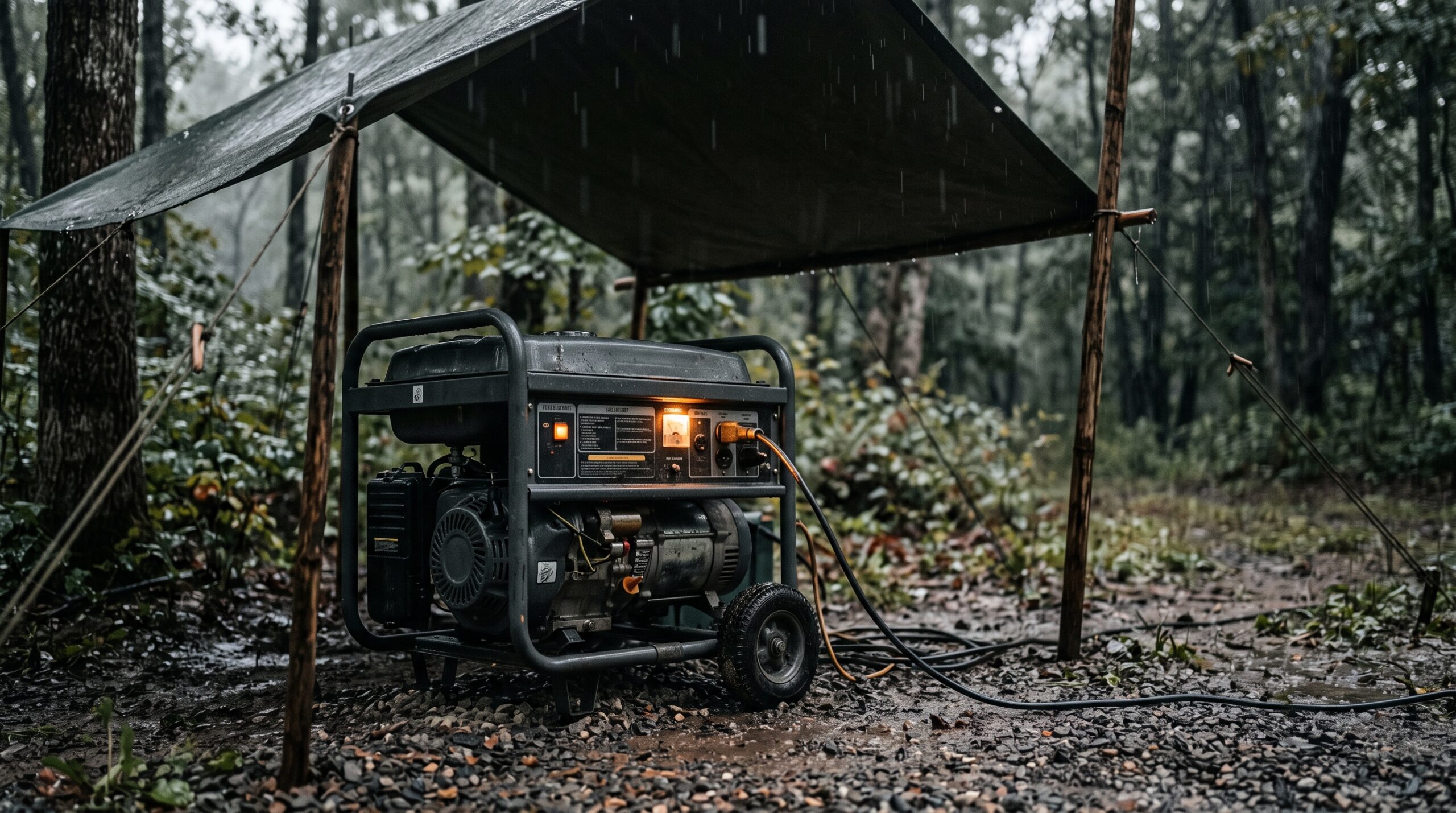
Short answer: not bare, and never inside. You can keep a generator running in the rain, but only if it stays outside, on a dry surface, and protected by a purpose-built cover or open canopy that still lets it breathe and vent exhaust. Water on a running generator can cause electric shock and damage the unit, so the goal is to keep it dry without ever moving it into a garage, shed, or any enclosed box where carbon monoxide can collect.
Why a wet generator is dangerous
A portable generator makes its own electricity, and water is a path for that electricity to go where it shouldn’t. The U.S. Consumer Product Safety Commission warns that generators pose a shock and electrocution risk, especially in wet conditions, and tells users to dry their hands before touching the unit. OSHA gives the same direction: keep a generator dry, do not run it in rain or wet conditions, and never touch the electrical components while you are wet or standing in water.
Manufacturers say the same thing in plain language. Honda’s owner guidance is “do not expose the generator to moisture, rain or snow,” and Generac tells owners to never run a generator directly in rain, snow, or other wet conditions. Beyond the shock risk to you, water in the outlets or internal electronics can short the unit out, corrode contacts, or ruin the alternator. So “can you run it in the rain” really becomes “how do I keep it dry while it runs.”
Why you still can’t move it indoors or into the garage
The obvious workaround—pull it into the garage or a shed to get it out of the weather—is the one that kills people. A running generator produces carbon monoxide, an invisible, odorless gas that builds up fast in any enclosed or partly enclosed space. CPSC is blunt about it: never run a generator inside a home, garage, basement, crawl space, or shed, even with doors and windows open. An open garage door does not provide enough ventilation.
That is the whole tension of this topic. Indoors solves the rain problem but creates a deadly CO problem. The only correct answer is to keep the generator outside and bring the shelter to it, not the other way around. For the full placement rules, see our guide on how far a generator should be from the house and our general guide to using a generator safely.
How to keep a generator dry while it runs outside
The accepted approach is an open-sided cover that keeps rain off the top and sides while leaving full airflow for cooling and exhaust. CPSC specifically describes operating the generator under an open, canopy-like structure on a dry surface where water cannot reach it, puddle, or drain underneath. Your options, in rough order of how purpose-built they are:
- A manufacturer-approved running cover or generator tent (such as a GenTent or similar). These attach to the generator itself and are designed to shed rain and snow while it runs. Confirm the cover is rated for use during operation and is compatible with your model—not every cover is.
- A sturdy pop-up canopy or open-sided steel carport staked down well away from the house. It blocks rain from above but stays open on all sides so heat and exhaust escape.
- A permanent open-sided generator shelter or “doghouse” enclosure built with the clearances the manufacturer specifies. These must be ventilated by design and exhaust routed away from the structure—not airtight.
Whatever you use, follow a few rules underneath it:
- Set the generator on a dry, level surface—a paver, a rubber mat, or a raised platform—so it isn’t sitting in a forming puddle or runoff.
- Keep cords, plugs, and connections up out of standing water. Use outdoor-rated cords and plug into GFCI protection where you can.
- Leave generous clearance on every side and above the unit for cooling air and exhaust. The cover should never trap heat or fumes against the engine.
- Dry your hands before you touch the controls, and don’t refuel or adjust anything while standing in water.
What not to do
- Don’t drape a tarp directly over a running generator. A loose tarp can sag onto the hot muffler and catch fire, block the airflow the engine needs, or trap exhaust around the unit.
- Don’t run it in a garage, shed, or carport with closed sides. Any space that holds in carbon monoxide is off limits, doors open or not.
- Don’t build a sealed box around it. Plastic bins, cardboard, or fully enclosed cabinets overheat the engine and concentrate CO and fumes.
- Don’t touch the outlets or electrical components with wet hands or while standing in water.
- Don’t keep running it if water has gotten into the unit. Shut it down, let it dry fully, and check it before the next start. If it won’t start afterward, work through our generator won’t start troubleshooting steps.
If heavy rain or snow is too severe to manage
CPSC notes that manufacturer instructions for inclement weather may tell you to use a noncombustible, rated generic cover or simply to wait until the rain or snow passes. In a hurricane band, a flooding event, or a heavy storm where you can’t keep water away from the unit and its cords, the safest move is to power down, cover the generator, and ride out the worst of it. A few hours without the generator is better than an electrocution or a fried machine.
If your area floods or storms often and you don’t want to wrestle with covers each time, a battery power station instead of a generator sidesteps both the rain and the carbon monoxide problem, since it has no engine and no exhaust and can sit safely indoors.
Placement, GFCI, and CO alarms still apply
Keeping the generator dry doesn’t replace the other basics—it sits on top of them. Run it at least 20 feet from the house with the exhaust pointed away from doors, windows, and vents. Use ground-fault protection and outdoor-rated cords. And put working, battery-backed carbon monoxide alarms inside the home on every level, because CO from an outdoor generator can still drift indoors if it’s placed too close. When the storm passes and you’re done, follow safe shutdown and generator storage practices so it’s ready next time.
Frequently asked questions
Can you run a generator in the rain at all?
Yes, but not uncovered. It has to stay outside on a dry surface, protected by an open-sided cover or canopy that keeps water off while allowing full airflow and exhaust. Running it wet and bare risks shock and damage; running it indoors to escape the rain risks carbon monoxide poisoning.
Is it OK to put a tarp over my generator while it runs?
No. A tarp laid directly on the unit can sag onto the hot exhaust and ignite, smother the airflow the engine needs, and trap fumes. Use a cover designed for use during operation, or a canopy with open sides that stays well clear of the machine.
Will rain ruin a generator?
It can. Water reaching the outlets or internal electronics can short the unit out, corrode contacts, and damage the alternator, on top of the shock hazard to you. If a generator gets wet, shut it down, let it dry completely, and inspect it before starting it again.
Can I run a generator in the garage if I leave the door open?
No. CPSC says never run a generator in a garage, even with the door open—an open door doesn’t provide enough ventilation, and carbon monoxide can build to deadly levels. Keep it outside and use a cover or canopy for the rain instead.
What kind of cover is safe to use while the generator is running?
One built for the job: a manufacturer-approved running cover or generator tent (like GenTent), or an open-sided pop-up canopy or carport. The common thread is that it sheds rain from above while leaving every side open so the engine gets cooling air and the exhaust escapes. Check that any cover is rated for use during operation and fits your model.
Sources
- U.S. Consumer Product Safety Commission — Generator, carbon monoxide and fire hazard safety guidance
- OSHA — Using Portable Generators Safely (PDF)
- Generac — Can a portable generator be used during inclement weather?
- GenTent — Why use a safety canopy when running a generator in rain or snow
- Portable Generator Manufacturers’ Association (PGMA) — Generator safety awareness