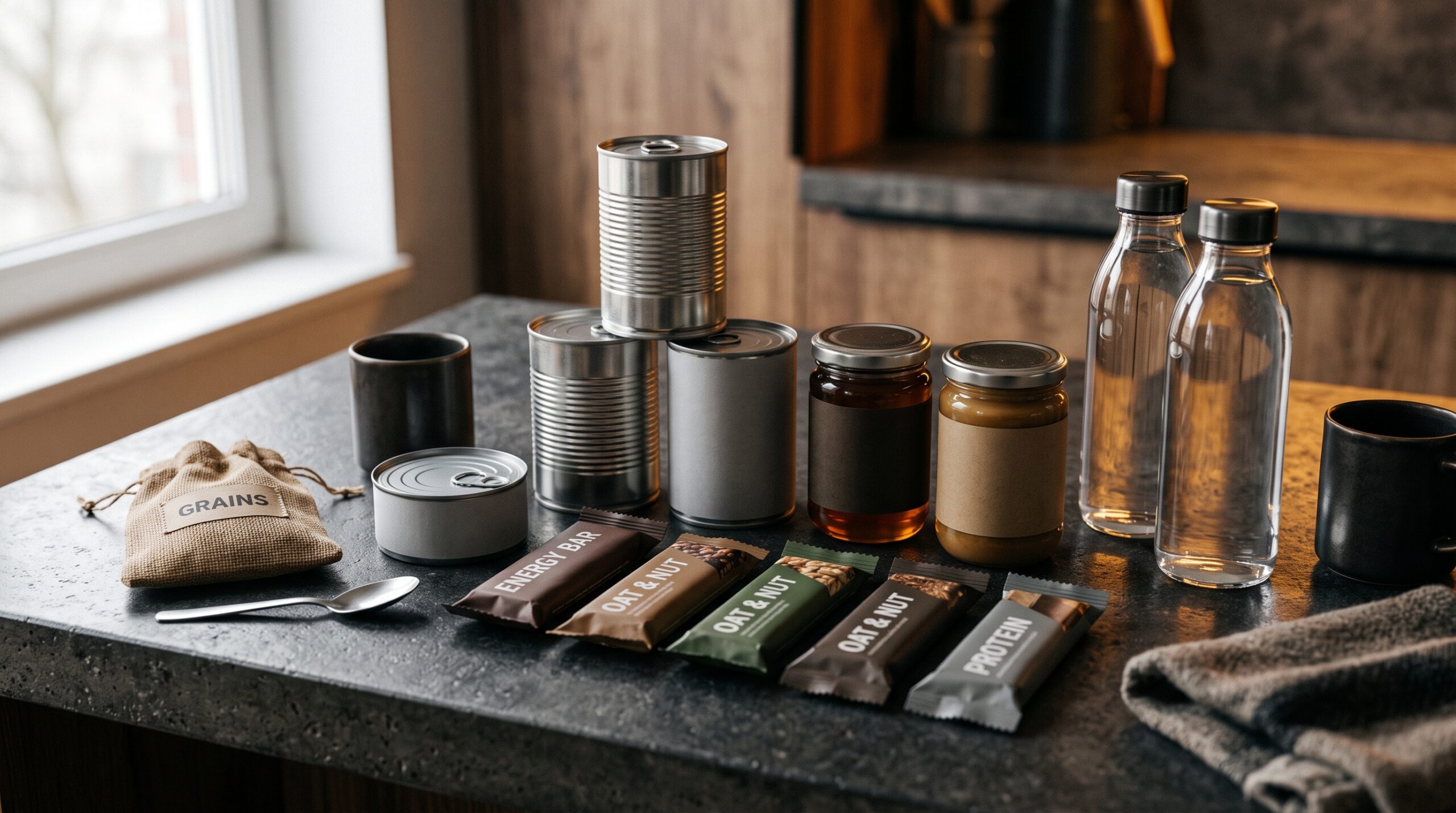
The best foods to keep for a power outage are non-perishable, no-cook, and ready to eat straight from the package, and you want at least a three-day supply on hand, the minimum Ready.gov recommends. Think canned proteins, beans, peanut butter, crackers, dried fruit, nuts, and shelf-stable milk: things that need no refrigeration, no stove, and no clean water to prepare.
Below is what to stock by category, a simple three-day plan, the foods that need zero power to eat, what to add for babies and pets, and how to rotate it all so nothing expires in the back of the closet.
⚠️ Pick foods you will actually eat
Stock food your household already likes and can eat safely, and account for allergies, special diets, and anyone who needs soft or low-salt meals. Keep a manual can opener and utensils with the supply, since an electric opener will not work in an outage. This is planning guidance built on Ready.gov, FDA, and Red Cross recommendations, not medical or dietary advice; the official pages are linked at the bottom.
The best no-cook foods, by category
Canned and pouched proteins are the backbone of an outage pantry. Tuna, chicken, salmon, sardines, and ham come fully cooked and sealed, so you can open a can and eat. Ready.gov notes that commercially canned food can be eaten straight from the can without warming. Canned beans, chili, and bean-based soups add protein and fiber and are just as easy.
Peanut butter and other nut butters pack a lot of calories and protein into a shelf-stable jar, spread well on crackers or bread, and need no refrigeration until well after opening. Pair them with crackers, which keep for months in a sealed sleeve, plus any shelf-stable bread or tortillas you like.
For energy and variety, keep dried fruit, nuts and seeds, trail mix, and energy or granola bars. The Red Cross specifically points to high-energy snacks like granola bars and trail mix for emergencies. Canned fruit and vegetables round out a meal with something other than salt and starch, and the liquid in the can adds a little extra hydration.
For something closer to a normal meal, shelf-stable milk fills the gap when the fridge is off. Boxed UHT milk, canned evaporated milk, and powdered milk all keep without refrigeration until opened, and the FDA lists boxed or canned milk as part of a planned emergency food supply. Ready-to-eat meals, from canned soups and stews to retort pouches and military-style MRE kits, give you a full meal with no prep, and self-heating versions warm themselves without a stove.
| Food | Why it’s good | Shelf life note |
|---|---|---|
| Canned proteins (tuna, chicken, salmon, ham) | Fully cooked, sealed, and eaten cold from the can. The protein core of the kit. | Often good for years unopened. Rotate by the date stamped on the can. |
| Canned beans, chili, and soups | Protein, fiber, and a filling meal with no cooking needed. | Typically keeps for years. Go by the date on the can. |
| Peanut butter and nut butters | Calorie- and protein-dense, spreadable, no fridge needed until well after opening. | Unopened, many months to a year or more. Check the jar’s date. |
| Crackers and shelf-stable bread | A no-cook base for nut butter, canned fish, or beans. | Months in a sealed sleeve. Reseal after opening and watch the best-by date. |
| Dried fruit | Sweet, compact energy with no refrigeration. | Months unopened, longer if sealed and stored cool. |
| Nuts and seeds | Dense calories, protein, and healthy fats in a small package. | Months. The oils eventually turn, so store cool and rotate. |
| Energy and granola bars | Grab-and-go calories the Red Cross recommends for emergencies. | Months. Follow the wrapper’s best-by date. |
| Shelf-stable milk (UHT, canned, powdered) | Keeps without a fridge until opened; powdered also stretches your water. | Unopened, months. Powdered lasts longest. Refrigerate after opening. |
| Canned fruit and vegetables | Variety and nutrients beyond salt and starch; the liquid adds hydration. | Years unopened, though high-acid fruit and tomatoes are best within a year or two. |
| Ready-to-eat meals (retort pouches, MRE kits) | A complete meal with zero prep; self-heating versions need no stove. | Months to years depending on type. Check the package date. |
A three-day food plan
Ready.gov and the Red Cross both set a three-day supply of non-perishable food as the floor, with two weeks the better goal at home if you have room to store it. Plan for roughly three light meals plus snacks per person per day, leaning on foods that keep without a fridge and need no cooking.
A simple day for one person might look like this: breakfast of an energy bar with dried fruit and a box of shelf-stable milk; lunch of canned tuna or chicken on crackers with a spoon of peanut butter; dinner of canned stew or bean chili, eaten cold or self-heated, with canned fruit for dessert; and nuts or trail mix to snack on. Multiply that by the number of people and by at least three days, and you have your shopping list.
Pick foods your family will actually eat, account for any special diets, and do not forget a manual can opener, water for anything that needs mixing, and basic utensils.
Foods that need no power to prepare
In a real outage you may have no working stove, no microwave, and no safe way to cook indoors, since camp stoves, charcoal grills, and generators all give off carbon monoxide and must stay outside. So the safest pantry is one you can eat with nothing but a can opener and a spoon.
Foods that need zero power include canned meat, fish, beans, soup, fruit, and vegetables; peanut butter and nut butters; crackers and shelf-stable bread; dried fruit, nuts, seeds, and jerky; energy and granola bars; and boxed or powdered milk mixed with stored water. Retort pouches and shelf-stable ready meals fit here too. None of these need heat, refrigeration, or clean running water to be safe to eat.
Don’t forget water, babies, and pets
Food is only half the kit. Store at least one gallon of water per person per day, enough for at least three days, as Ready.gov recommends, and more in hot weather or for nursing mothers and anyone who is ill. You need water both to drink and to mix anything like powdered milk or infant formula.
For infants, the FDA recommends keeping ready-to-use baby formula that needs no added water, since clean water may be scarce in an outage. Stock enough formula, baby food, and feeding supplies for at least three days, and keep them with the rest of the kit.
Pets need their own three-day supply too. Set aside non-perishable pet food and extra water for each animal, plus a manual can opener if their food is canned. Rotate it the same way you rotate your own.
Rotating your supply
Non-perishable does not mean it lasts forever. Canned and dry goods keep for months or years, but they still carry a best-by or use-by date, and quality slowly drops after it. Stored cool and dry, shelf-stable food stays safe well past that date in most cases, but it tastes best when fresh, so the goal is to use it before it sits too long.
The simple system is first in, first out. When you buy new cans and boxes, put them behind the older ones and eat from the front. Check the supply a couple of times a year, use up anything getting close to its date in your normal meals, and replace it. Keep everything in a cool, dry place, since heat shortens shelf life.
Keep the fridge running for fresh food
A no-cook pantry covers you while the power is out, but it does not save the fresh food already in your refrigerator and freezer. A battery power station can keep the fridge running so that milk, leftovers, and frozen food do not spoil during a longer outage, which means less waste and less to replace afterward.
A typical home refrigerator draws roughly 100 to 250 watts while the compressor runs, with a brief startup surge, and it cycles on and off rather than running constantly. To see whether a given power station could keep yours cold, run the numbers through the Appliance Runtime calculator, or use the Power-Station Sizing calculator to find the capacity you would need for a one or two day outage.
Frequently asked questions
What are the best non-perishable foods for a power outage?
Canned proteins like tuna, chicken, and salmon; canned beans, soups, and stews; peanut butter and nut butters; crackers; dried fruit, nuts, and trail mix; energy or granola bars; shelf-stable milk; and canned fruit and vegetables. Ready.gov recommends canned foods and dry staples that need no refrigeration, cooking, or water.
How much food should I store for a power outage?
At least a three-day supply of non-perishable food per person, the minimum Ready.gov and the Red Cross recommend, plus one gallon of water per person per day. Two weeks is a better goal at home if you have room to store it.
What foods can you eat during a power outage without cooking?
Anything ready to eat from the package: canned meat, fish, beans, soup, fruit, and vegetables; peanut butter and crackers; dried fruit, nuts, and jerky; energy bars; and boxed or powdered milk. Commercially canned food is safe to eat cold straight from the can.
What should I feed a baby during a power outage?
The FDA recommends ready-to-use baby formula that needs no added water, since clean water may be limited. Keep enough formula, baby food, and feeding supplies for at least three days with the rest of your emergency kit.
How long do non-perishable foods last?
It depends on the food. Many canned goods stay good for years, while crackers, bars, and dried fruit are better within months. Go by the date printed on the package, store everything cool and dry, and rotate first in, first out so nothing expires unused.