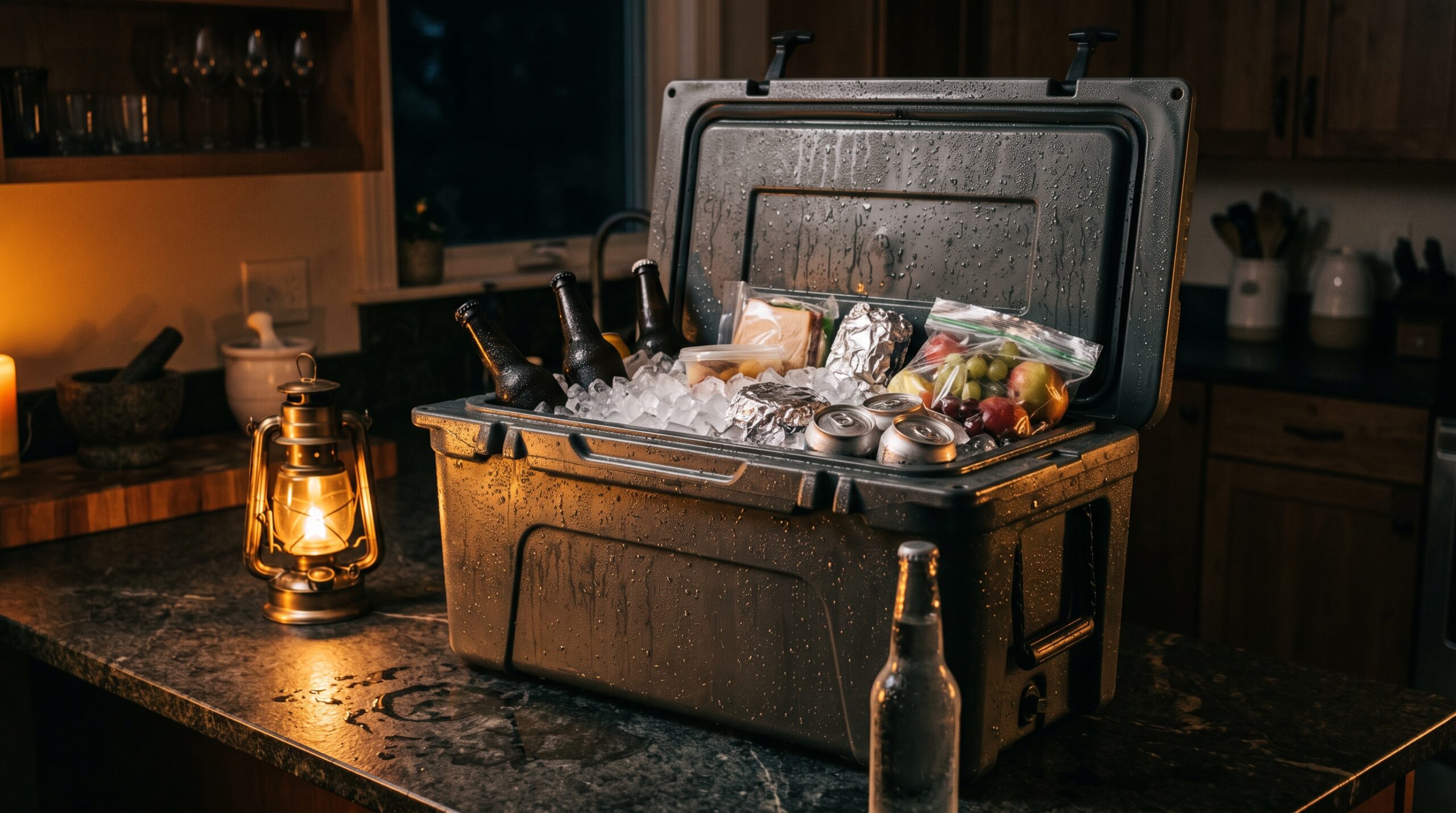
When the power goes out, the clock starts on your food. The USDA says a closed refrigerator keeps food safe for only about four hours, so a well-packed cooler is often what carries you through anything longer. The goal is simple: make ice last longer in a cooler so your food stays at or below 40°F until the power comes back.
Why your ice melts and what “safe” actually means
Ice melts because heat keeps finding its way in: through warm air every time you open the lid, through thin cooler walls, and from any food you load in that isn’t already cold. Slowing that heat down is the whole game. The food-safety target is steady: keep perishable items at or below 40°F, and throw out anything that sits above that for more than two hours.
Before you even touch the cooler, know your timeline. An unopened refrigerator holds for roughly four hours, a full freezer for about 48 hours, and a half-full freezer for about 24. If you want the details, see how long food lasts in the fridge without power and how long a freezer lasts without power. Once those windows close, your cooler becomes the plan, and so does knowing whether food is still safe after an outage.
Pre-chill the cooler and the food before you load it
A warm cooler steals cold from your ice the moment you fill it. Cool the cooler down first, then load food that is already cold straight from the fridge or freezer. Adding room-temperature leftovers to a cold cooler is one of the fastest ways to burn through your ice.
- Pre-chill the empty cooler for an hour with a bag of sacrificial ice, then dump that water out before loading.
- Freeze jugs of water and gel packs ahead of storm season so you have long-lasting cold on hand.
- Move only cold food into the cooler. Anything warm raises the interior temperature and shortens your safe window.
- Pack the coldest, most perishable items (meat, dairy, eggs) closest to the ice.
Choose block ice and dry ice over cubes
Cubes have a lot of surface area, so they melt quickly. A single block of ice has far less surface exposed to warm air and lasts much longer, which makes it the better base layer. Frozen water jugs work the same way and give you drinking water as they thaw.
For a long outage, dry ice is the heavyweight. The USDA notes that 50 pounds of dry ice can keep an 18-cubic-foot, fully stocked freezer cold for about two days, far longer than any cooler of cubes. It needs careful handling, though.
- Never touch dry ice with bare hands. It’s around -109°F and causes frostbite fast, so wear thick insulated gloves and use tongs.
- Don’t let dry ice sit in direct contact with food. Wrap it or place a barrier (like cardboard) between it and what you’re keeping cold.
- Keep it ventilated. Dry ice turns straight into carbon dioxide gas, which can build up and displace oxygen in a closed car, basement, or small room. Handle it in open air and never seal it in an airtight container.
- For a colder brine, sprinkle some salt over regular ice. Salt lowers the freezing point of the meltwater, dropping the cooler below 32°F. The ice melts faster this way, so use it when you need a quick deep chill, not maximum duration.
Keep the cooler full, closed, and in the coolest spot
Air is the enemy. Empty space in a cooler fills with warm air every time you open the lid, and that air melts ice. A full cooler holds cold far better than a half-empty one, so fill the gaps.
- Pack empty space with extra ice, frozen jugs, or crumpled towels to cut down on warm air pockets.
- Open the lid as little as possible, and know what you want before you open it. Every peek lets cold out.
- Keep the cooler in the shade and the coolest part of the house, off hot pavement or direct sun.
- Drape a blanket or sleeping bag over the closed cooler for extra insulation. A thick-walled, rotomolded cooler holds ice for days longer than a thin disposable foam one.
- Leave the melted water in until you need to add more ice. Cold water still helps hold the temperature, and draining it just leaves room for warm air.
Run a separate cooler for drinks
Drinks get grabbed constantly, and every grab dumps cold air. Keep your perishable food in one cooler you open rarely, and put sodas, water, and snacks in a second “drinks” cooler that can take the abuse. The food cooler stays sealed and cold while everyone raids the other one.
This pairs well with the other no-power tactics in our guide to keeping food cold without power. Coolers and ice should already be part of your power outage emergency kit so you’re not scrambling for them after the lights go out.
Watch the temperature, not the ice
How much ice is left tells you less than the actual temperature inside. Drop an inexpensive appliance or refrigerator thermometer in the food cooler and check it without fully opening the lid. As long as it reads 40°F or below, your food is in the safe zone.
If the thermometer climbs above 40°F, the American Red Cross says to discard any perishable food that has stayed there for more than two hours. When in doubt, throw it out. No amount of stretched ice is worth a foodborne illness, and you can’t judge safety by smell or taste alone.
Frequently asked questions
How long will a cooler full of ice stay cold?
It depends on the cooler, how full it is, and how often you open it. A pre-chilled, packed, well-insulated cooler kept closed and shaded can hold ice for one to several days. A thin foam cooler opened often may only last a day or less. The number that matters is the temperature: keep it at or below 40°F.
Does dry ice work in a regular cooler?
Yes, but use it carefully. Wear insulated gloves, keep it off direct contact with food, and never seal the cooler airtight, because the carbon dioxide gas needs somewhere to escape. Use it in a ventilated area, not inside a closed vehicle or small room.
Is it safe to refreeze food that thawed in the cooler?
According to the USDA, food can be safely refrozen if it still contains ice crystals or is at 40°F or below, though the quality may suffer. Anything that warmed above 40°F for more than two hours should be thrown out, not refrozen.
Does adding salt to the ice really make it colder?
It does. Salt lowers the freezing point of the meltwater, so the brine can drop below the usual 32°F and chill food and drinks faster. The trade-off is that salted ice melts quicker, so it’s best for a fast, deep chill rather than making ice last as long as possible.
Should I drain the water as the ice melts?
Usually no. Cold meltwater still helps hold the temperature, and draining it just opens up space for warm air. Leave the water unless you need the room to add fresh ice, and make sure food in waterproof bags isn’t sitting in standing water it could leak into.