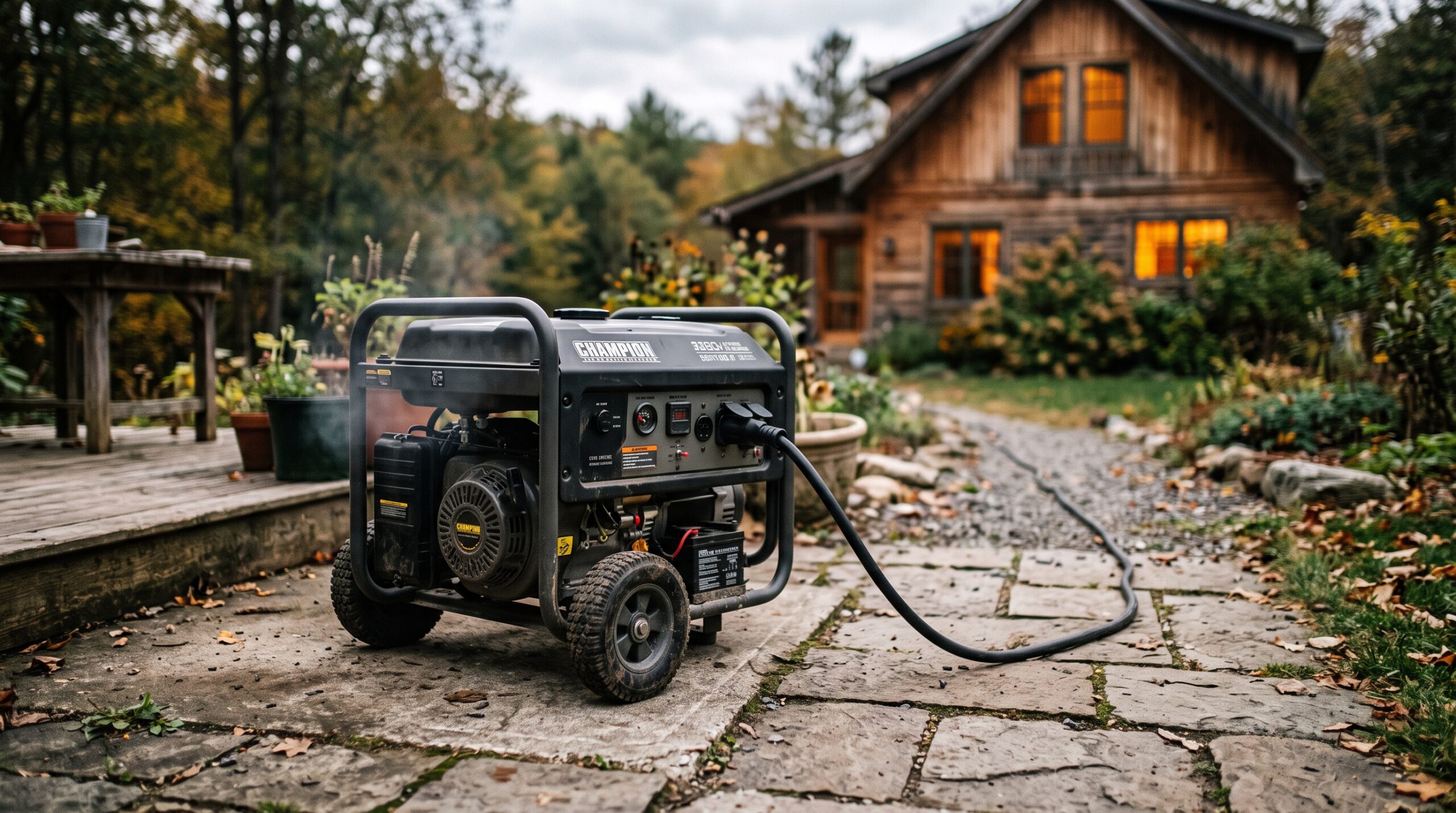
The single most important rule is to run a portable generator outdoors only, at least 20 feet from the house, with the exhaust pointed away from windows, doors, and vents. That one habit prevents the carbon monoxide poisoning that the U.S. Consumer Product Safety Commission links to more than 80 deaths a year from portable generators (CPSC). A generator is a small gasoline engine, and its exhaust is invisible, odorless, and fast-acting. Used the right way, it keeps your fridge cold and your phone charged through an outage. Used the wrong way, it is genuinely dangerous. This guide covers the handful of habits that matter most.
⚠️ Outdoors only, and never backfeed
Run a generator outdoors only, at least 20 feet from windows, doors, and vents, with a working CO alarm. Never plug a generator into a wall outlet (backfeeding); it can kill utility workers and you. Use a transfer switch installed by a licensed electrician.
Carbon monoxide is the risk that kills first
Carbon monoxide (CO) is colorless and odorless, and the CPSC calls it the “invisible killer” because it can kill in minutes before you notice anything is wrong. The fix is simple and non-negotiable: operate the generator outside only, at least 20 feet from the house, and aim the exhaust away from the home and any other building. The reason a gas generator carries this risk at all is that it burns fuel; a battery unit does not, which is one of the trade-offs in our gas generator vs power station comparison.
Never run a generator inside a home, garage, basement, crawlspace, shed, or on a porch, even with the doors and windows open. The CPSC is explicit that opening doors or windows does not provide enough ventilation to stop a lethal buildup of CO. The CDC adds the same 20-foot rule from another angle: keep the generator at least 20 feet from any window, door, or vent so exhaust cannot drift back inside.
Back it up with alarms. The CPSC recommends installing battery-operated CO alarms, or alarms with battery backup, outside sleeping areas and on each floor of your home, and testing them monthly. Know the symptoms of CO poisoning: headache, dizziness, weakness, nausea, vomiting, sleepiness, and confusion. If you suspect CO poisoning, get outside into fresh air immediately, then call 911.
| Core rule | What the official guidance says |
|---|---|
| Placement | Outdoors only, at least 20 feet from the house, exhaust pointed away (CPSC) |
| Clearance from openings | At least 20 feet from any window, door, or vent (CDC) |
| Never run it | Indoors, in a garage, basement, crawlspace, shed, or on a porch (CPSC) |
| CO alarms | Battery-powered or battery-backup, on every level and outside sleeping areas; test monthly (CPSC) |
| Connecting to the house | Only through a transfer switch installed by a licensed electrician (OSHA) |
Never backfeed: use a transfer switch
Backfeeding means plugging a generator into a wall outlet to push power into your home’s wiring. It is one of the most dangerous things you can do with a generator. OSHA warns that attaching a generator directly to a building’s electrical system without a properly installed transfer switch can energize wiring for great distances, creating a risk of electrocution for utility workers and others in the area. The same setup can overheat wiring inside your walls, because the power is bypassing the breakers that are meant to protect those circuits.
The safe way to power your home’s circuits is a transfer switch installed by a qualified, licensed electrician. A transfer switch keeps the house connected to either utility power or the generator, but never both at once, which is what stops power from flowing back into the grid. If your goal is to run furnace, well pump, or larger loads, read up first on what size generator you need, then have the electrician size the switch to match. Skip the so-called “suicide cords” (male-to-male extension cords) sold for backfeeding; the CPSC has warned consumers to stop using them.
If you are not wiring into the house at all, the rule is simpler: plug appliances directly into the generator with proper cords, covered below.
The right cords for the job
OSHA’s guidance for connecting devices is direct: plug appliances directly into the generator using the manufacturer’s supplied cords, or grounded, three-pronged extension cords rated for outdoor use. A few points to check before you run anything:
- Use grounded, three-pronged cords. Inspect them first and never use cords that are frayed, cut, or abraded.
- Make sure the cord is rated in watts or amps for the load you are running. Underrated cords can overheat, so replace them with appropriately rated cords that use heavier-gauge wire, especially for longer runs.
- Do not overload the generator. OSHA notes that overloading can cause overheating and create a fire hazard.
Refueling safely
A generator gets hot while running and stays hot for a long time after you shut it off. OSHA points out that gasoline and other fuels can ignite when spilled on hot engine parts, so the order of operations matters: shut the generator down and let it cool before you refuel. Never add fuel to a running or hot engine.
Handle the fuel itself with the same caution. Store and transport gasoline in approved, properly marked containers, and keep those containers away from anything that produces a flame or heat, including the generator, water heaters, cigarettes, lighters, and matches. Do not smoke around fuel, and do not store fuel inside your living space.
Wet conditions and grounding
Water and electricity are a deadly mix, and an outage often comes with a storm. OSHA’s advice is to keep a generator dry and not operate it in rain or wet conditions. If you need to run it during wet weather, protect it under an open canopy or other cover, and never touch the generator’s electrical components while you are wet or standing in water.
Two more electrical basics: use ground fault circuit interrupters (GFCIs), which OSHA recommends especially around wet or damp locations, and make sure the generator is properly grounded with tight grounding connections, following the manufacturer’s instructions. Give the unit room to breathe too. OSHA calls for 3 to 4 feet of clear space on all sides and above the generator for adequate ventilation, which also keeps any cover from trapping heat or exhaust.
Before you start: a quick run-through
Run through this short checklist each time, ideally before the lights go out rather than in the dark with a flashlight in your teeth:
- Read the owner’s manual for your specific model and follow its labels and warnings.
- Place the generator outdoors, at least 20 feet from the house, exhaust pointed away from windows, doors, and vents.
- Pick a dry, level spot with 3 to 4 feet of clearance on all sides and above.
- Confirm your CO alarms are working and have fresh batteries.
- Inspect your cords and confirm they are grounded and rated for the load.
- Never plug into a wall outlet; either plug devices directly into the generator or use a transfer switch.
- Let the engine cool before refueling.
A generator is one piece of a larger plan. For the rest of it, see our guide on what to do during a power outage, from food safety to staying warm.
It also helps to know exactly how much power your essentials draw, so you run the right size unit and avoid overloading it. Our free Power-Station Sizing calculator estimates the capacity you need, and the Appliance Runtime calculator shows how long a given unit will keep each device running.
Frequently asked questions
How far should a generator be from the house?
Run it outdoors only, at least 20 feet from the house, with the exhaust pointed away from windows, doors, and vents. The CDC adds that a generator should never sit less than 20 feet from any window, door, or vent, because carbon monoxide can drift back inside even when an opening looks far enough away.
Can I run a generator in the garage if the door is open?
No. The CPSC says never to run a portable generator inside a home, garage, basement, crawlspace, shed, or on a porch, even with the doors and windows open. Opening doors or windows does not provide enough ventilation to prevent a deadly buildup of carbon monoxide.
Why can’t I plug a generator into a wall outlet?
Plugging a generator into a household outlet, known as backfeeding, sends power backward through your wiring and can energize the utility lines outside for a long distance, which can electrocute utility workers and you. To power your home’s circuits, have a licensed electrician install a transfer switch.
Can I refuel a generator while it is running?
No. A running generator is hot and stays hot after you switch it off. Gasoline spilled on hot engine parts can ignite, so OSHA advises shutting the generator down and letting it cool before you add fuel.
Is it safe to run a generator in the rain?
Keep a generator dry and do not run it in rain or wet conditions. OSHA recommends protecting it under an open canopy with clear space on all sides, and never touching the generator’s electrical parts while you are wet or standing in water.
Sources
- U.S. Consumer Product Safety Commission, What to Know About Generators and Carbon Monoxide (CO)
- CPSC, Carbon Monoxide Information Center
- Centers for Disease Control and Prevention, Generator Safety Fact Sheet
- OSHA, Using Portable Generators Safely (Fact Sheet)
- Ready.gov, Power Outages