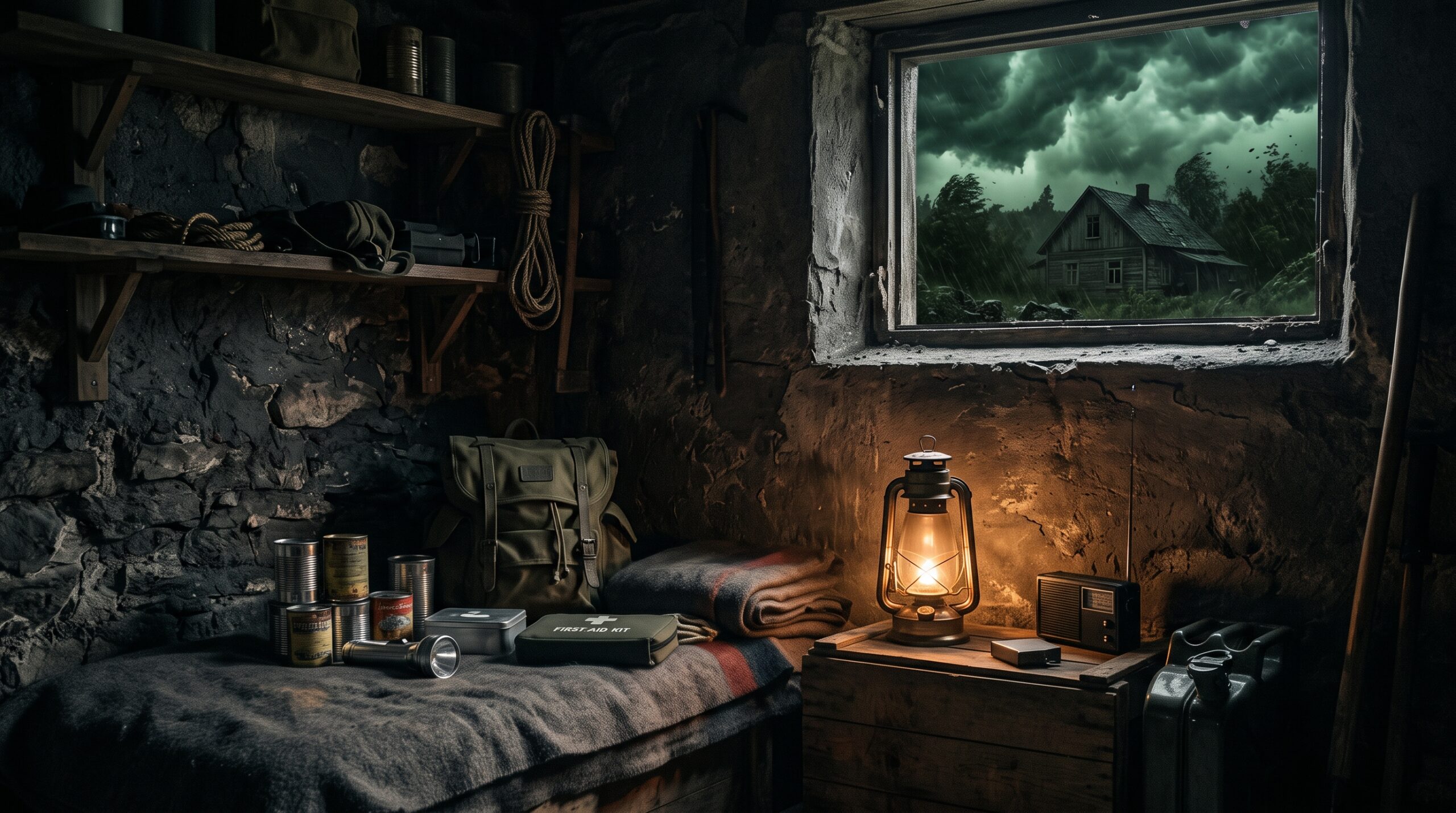
A tornado can take out power in a heartbeat and leave it out for days, but the outage is rarely the part that hurts you first, so the order of tornado prep is shelter first, then power: have a safe place to ride out a warning, then plan how you will keep essentials running once the storm has passed. According to Ready.gov, the safest place during a tornado is a small, windowless interior room or basement on the lowest level of a sturdy building, and the National Weather Service warns that a warning means a tornado has already been spotted or shown on radar, with imminent danger to life and property.
This guide walks through the four things tornado season asks of you: knowing your shelter and the difference between a watch and a warning, keeping a go-ready kit you can grab in seconds, lining up backup power for the essentials, and handling the dangerous hours after the storm when downed lines and gas leaks do most of the harm. It complements general outage prep rather than replacing it, so pair it with our emergency kit checklist and a written family emergency plan.
⚠️ On a tornado warning, shelter immediately
A warning means take shelter now in a basement or a small interior room on the lowest floor, away from windows, and cover your head and neck. Do not stay in a mobile home. After the storm, assume every downed line is live and stay clear of it, leave at once if you smell gas and do not flip switches or light a flame, and run any generator outdoors only, at least 20 feet from windows, doors, and vents (Ready.gov, NWS, CDC, American Red Cross).
Know your shelter and the warnings
Tornadoes give you very little time, so the decisions that keep you alive have to be made before the sky turns. The first is where you will go. Ready.gov says the best protection is a safe room built to FEMA criteria or a storm shelter built to ICC 500 standards, and the next best is a small, interior, windowless room or a basement on the lowest level of a sturdy building. Pick that spot in your home now, clear it out, and make sure everyone in the house knows where it is. The National Weather Service puts it plainly: the safest place is the interior part of a basement, and if there is no basement, an inside room without windows on the lowest floor, such as a center hallway, bathroom, or closet.
Once you are there, protect your body. Ready.gov advises covering your head and neck with your arms and putting furniture and blankets around or on top of you. The NWS suggests getting under something sturdy like a heavy table and covering yourself with a blanket, sleeping bag, or mattress to shield against flying debris, which causes most tornado injuries. Stay away from windows: an exploding window can injure or kill.
Some places are not survivable in a direct hit. The CDC says do not stay in a mobile home during a tornado, and to identify a nearby sturdy building you can reach quickly instead. If you are caught in a vehicle, the NWS warns not to try to outrun a tornado in your car; if you cannot reach a building, the standard guidance is to get to a low spot like a ditch and shield your head. The second decision is knowing what the alerts mean, because they tell you when to act:
| Alert | What it means (NWS) | What to do |
|---|---|---|
| Tornado watch | Tornadoes are possible in and near the watch area | Review your plan, check supplies, charge devices, and stay close to shelter and weather updates |
| Tornado warning | A tornado has been sighted or shown on radar; imminent danger to life and property | Shelter immediately on the lowest floor in an interior room or basement, away from windows; cover your head |
Prep a go-ready kit
Because a tornado may send you to a basement, a closet, or a neighbor’s storm shelter with no warning, your kit should be grab-and-go rather than spread across the house. Keep it near your shelter spot or by the door so you can carry it down in one trip. The core of it is the same emergency supply kit Ready.gov recommends for any outage: at least one gallon of water per person per day with a three-day supply as a minimum, several days of no-cook food and a manual can opener, a battery or hand-crank radio, flashlights and spare batteries, a first-aid kit, and any medications.
A few items earn their place specifically because of how tornadoes behave. Sturdy shoes and work gloves matter because the ground after a tornado is covered in broken glass, nails, and splintered wood; the CDC tells people to wear sturdy shoes or boots, long sleeves, and gloves during cleanup, and that gear does no good if it is buried in a closet upstairs. Round out the kit with the rest of these basics:
- Water and no-cook food. One gallon per person per day, three days minimum, plus food that needs no cooking and a manual can opener. Don’t forget pets.
- A way to hear warnings. A battery-powered or hand-crank NOAA Weather Radio and a charged phone, so an alert reaches you even with the grid down.
- Light, not flame. Flashlights and headlamps with spare batteries. Skip candles, especially after a storm when a gas leak could be present.
- Sturdy shoes and gloves. Thick-soled shoes or boots and work gloves for everyone, kept with the kit for the debris-covered aftermath.
- Medications and first aid. A stocked first-aid kit and a few days of any prescriptions you cannot skip.
- Power and documents. Charged power banks, a charged power station if you have one, and copies of IDs and insurance papers in a waterproof bag.
Backup power for essentials
Tornado outages are unpredictable. A glancing storm might drop your power for a few hours, while a tornado that tears down transmission lines can leave a town dark for days. Either way, the smart move is to size your backup power to the handful of things you truly need rather than the whole house: a way to charge phones, a few lights, a refrigerator, and any medical device someone depends on. Charge everything the moment a watch is issued, since a battery is only worth what is stored in it when the grid drops.
A battery power station is well suited to tornado outages. It is quiet, produces no exhaust, and is safe to run indoors or in your shelter spot, so it can keep phones, a radio, lights, and a CPAP going while you wait out the weather. A gas generator makes more sustained power for a larger essentials load, but it must run outdoors only and never anywhere near where you are sheltering. The CDC and Red Cross are emphatic on this: never run a generator, grill, or other fuel-burning device inside a home, garage, or basement, and keep it at least 20 feet from any window, door, or vent, because carbon monoxide is invisible, odorless, and can kill before you notice it. Keep a battery-powered CO alarm wherever you sleep.
For the food in your kitchen, the same rule applies as in any outage: keep the refrigerator and freezer doors shut. The CDC says a closed refrigerator holds food safely for about 4 hours, a full freezer for about 48 hours, and a half-full freezer for about 24 hours. If you want the deeper version of this planning, our hurricane checklist covers multi-day outages and food safety in more detail, and most of it carries straight over to a long tornado outage.
After the tornado: safety
The minutes and hours after a tornado are when avoidable injuries pile up, because people walk into damaged buildings and hidden hazards while the power is still out. Move slowly and treat the whole area as dangerous. The two things most likely to hurt you are electricity and gas.
Treat every downed line as live. The CDC says to stay clear of fallen power lines and report them to the electric company, and the Red Cross adds that if lines are down outside your home you should not step in puddles or standing water near them, because water carries current. A line that looks dead can still be energized, so keep your distance and keep others back too.
Gas leaks call for a fast, specific response. The American Red Cross says that if you smell gas or suspect a leak, turn off the main gas valve from the outside if you can, leave the property immediately, and call the gas company or fire department from somewhere else, and do not turn on lights, light a match, or do anything that could create a spark. The CDC echoes this: do not use electrical switches or appliances until a gas leak has been ruled out, since a single spark can set off an explosion. This is exactly why your kit uses flashlights, not candles. When you do start cleaning up, wear sturdy shoes or boots, long sleeves, and gloves, and watch for broken glass, nails, and weakened structures overhead.
Staying informed
A tornado can form and strike faster than you can react, so the goal is to get the warning early and keep getting official updates after the grid goes down. Do not rely on a single channel. The most reliable combination is a battery-powered or hand-crank NOAA Weather Radio, which broadcasts NWS warnings directly and keeps working in an outage, paired with the Wireless Emergency Alerts that come to most cell phones automatically. Keep your phone charged and its emergency alerts switched on.
During a watch, stay close to your shelter and your radio so a warning does not catch you across the house or out in the yard. After the storm passes, keep one device tuned to official updates from your local emergency managers and the National Weather Service, and use your other devices sparingly to stretch your battery. Follow instructions from local officials first; they know which roads, lines, and buildings in your area are unsafe. None of this replaces the basics of riding out a long outage, so keep your general outage plan ready alongside your tornado plan.
Do the power math for your home
Backup power is the part of tornado prep where guessing costs the most, so size it before the season starts rather than during a watch. Start with the Power-Station Sizing calculator to add up the watts and watt-hours your essentials need, including the higher surge watts a refrigerator pulls at startup. Then use the Appliance Runtime calculator to estimate how many hours a given battery will carry that load before it runs flat. Both tools give ranges based on your inputs, not guarantees, so build in a buffer and check the numbers against your own appliances.
Frequently asked questions
What is the difference between a tornado watch and a tornado warning?
The National Weather Service issues a tornado watch when tornadoes are possible in and near the watch area, which is your cue to review your plan, check supplies, and stay near shelter. A tornado warning means a tornado has been sighted or shown on radar and there is imminent danger to life and property. On a warning, move immediately to an interior room on the lowest floor of a sturdy building, away from windows, and cover your head.
Where is the safest place to shelter from a tornado?
The safest place is a purpose-built safe room or storm shelter. If you do not have one, Ready.gov and the NWS recommend a basement or a small, windowless interior room on the lowest floor, such as a bathroom, closet, or center hallway. Get under something sturdy, cover yourself with a mattress or blankets, and protect your head and neck. Do not stay in a mobile home; go to a nearby sturdy building instead.
How long can a tornado knock out power?
It depends on the damage. A glancing storm may cause an outage of a few hours, while a tornado that destroys poles and transmission lines can leave an area without power for days. Plan for at least a multi-day outage: keep a three-day minimum of water and food, charge your devices and any power station when a watch is issued, and keep the fridge and freezer closed to protect food.
What should I do after a tornado about downed lines and gas leaks?
Assume every downed power line is live, stay well clear of it, avoid puddles near it, and report it to the electric company. If you smell gas or suspect a leak, leave the building immediately, turn off the main gas valve from the outside if you can, and call the gas company or fire department from elsewhere. Do not flip switches, light a match, or use anything that could make a spark until the leak is ruled out.
Is a power station or a generator better for tornado outages?
A battery power station is quiet, fume-free, and safe to use indoors or in your shelter spot, which makes it a good fit for phones, lights, a radio, and a CPAP during a tornado outage. A gas generator delivers more sustained power for a bigger essentials load, but it must run outdoors only, at least 20 feet from windows, doors, and vents, because of carbon monoxide. Many households keep both. Size either one to your actual load with the sizing and runtime calculators above.