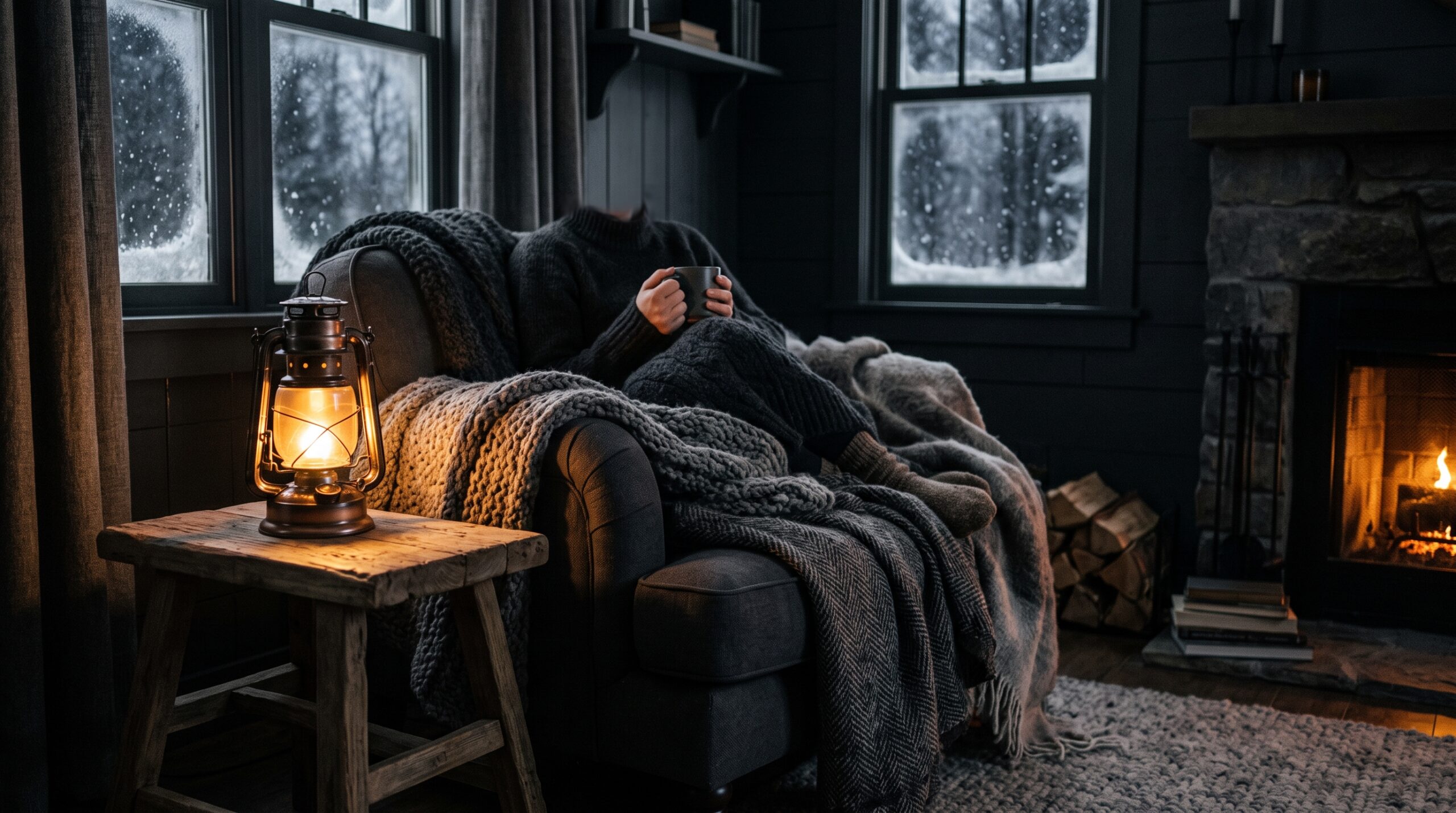
The safest way to stay warm during a power outage is to close off and heat one small room instead of trying to keep the whole house warm. Pick an interior room with few windows, shut the doors, block the drafts, and concentrate your blankets, dry layers, and any battery or backup-powered heat in that single space. A small room holds body heat far better than an open floor plan, and it gives you one place to keep everyone together.
Just as important is what not to do. The most dangerous mistake in a cold outage is burning something indoors for warmth, whether a gas oven, a charcoal grill, or a generator in the garage. That is how carbon monoxide builds up and kills people, often while they sleep.
⚠️ Never heat your home with a stove, oven, grill, or generator
Gas stoves and ovens, charcoal and propane grills, camp stoves, and generators all release carbon monoxide (CO), an odorless, colorless gas, and must never be used indoors to heat. Run generators outdoors only, at least 20 feet from any window, door, or vent. Keep a battery-powered or battery-backup CO alarm where you sleep. Watch for hypothermia in children, older adults, and pets, and for CO symptoms like headache, dizziness, nausea, or confusion. If someone is shivering uncontrollably, confused, very cold, or hard to wake, call 911 right away (CDC).
Heat one room, not the whole house
Choose one room to ride out the outage in. An interior room, or one with the fewest exterior windows, loses heat the slowest. Close the door, roll a towel or blanket against the gap at the bottom, and keep that room shut. Move everyone, including pets, into it. Several people in a small space generate and hold noticeably more warmth than the same people spread across the house.
Close doors to rooms you are not using so you are not paying to warm space no one is in. If the outage drags on and the room still gets dangerously cold, the Red Cross advises going to a public building, shelter, or designated warming center rather than toughing it out.
Layer clothing and use blankets and sleeping bags
Several loose, thin layers trap warm air better than one thick coat. Start with a thermal or moisture-wicking base layer, add a fleece or wool middle layer, and finish with something that blocks wind. Cover the parts that lose heat fastest: wear a hat, gloves or mittens, and thick socks even indoors.
Keep your clothing dry. Damp fabric pulls heat away from your body fast, so change out of anything sweaty or wet right away. For sleeping, a cold-rated sleeping bag beats loose blankets because it seals around you, but piling several blankets and quilts works too. Pull a hood or hat over your head when you lie down.
Insulate windows and doors, and use sunlight
Most of your heat escapes through windows and gaps. During daylight, open the curtains and blinds on the sunny side of the house to let the sun warm the room, then close every curtain, blind, and shade as soon as it gets dark to hold that heat in. Heavy blankets or even plastic sheeting taped over drafty windows add another insulating layer.
Seal the leaks you can feel. Stuff rolled towels along door bottoms and windowsills, and shut off and block unused rooms, hallways, and the basement so cold air has nowhere to pool and spread.
Trap your body heat
Your own body is a reliable heater if you keep its warmth from escaping. Get under the covers, and build a small fort with blankets over a couple of chairs or a table to shrink the air space you are warming. The cold floor will steal heat, so sit or sleep on cushions, foam, a couch, or folded blankets rather than directly on tile or concrete.
Sharing space helps. Children and pets stay warmer tucked in close to adults under shared blankets. A warm (not scalding) drink and a snack before bed give your body fuel to keep producing heat overnight.
Safe heat sources: battery and electric only on backup power
If you have a battery power station or another backup power source, an electric space heater is the only kind you should consider running indoors, because it produces no combustion fumes. The catch is the size of the load. A space heater on its high setting pulls about 1,500 watts, which is one of the heaviest loads a portable battery can face. Almost every watt is converted straight to heat and drawn continuously. Most portable stations can run one only briefly.
| Heat source | Typical power draw | Can a portable power station run it? |
|---|---|---|
| Electric space heater (high) | ~1,500 watts | Only a large station (2,000W+ output); even a ~2 kWh battery lasts roughly 1 to 2 hours |
| Electric space heater (low/eco) | ~750 watts | A large station can stretch this to a few hours |
| Heated blanket or throw | ~50 to 200 watts | Yes, a mid-size station can run one for many hours |
For backup power, a heated blanket is far more practical than a space heater: it warms you directly and sips a fraction of the energy. A wood stove or fireplace is fine only if it is built for heating and properly vented to the outside. Whatever you use, keep a working CO alarm nearby and never bring an outdoor heater, grill, or generator inside to warm the room.
Keep moving and stay fed and hydrated
Light activity generates heat from the inside. Stand up and move around, do a few gentle exercises, or take on a small chore every so often to get your blood flowing. Just stop short of sweating, since damp clothing chills you afterward. Eating regularly matters more than usual in the cold, because your body burns calories to make heat, so keep easy, no-cook food on hand.
Sip warm fluids and keep drinking water through the day. Skip alcohol: it makes you feel warmer while actually speeding up heat loss, and it can blunt the early warning signs of both hypothermia and carbon monoxide poisoning.
Watch vulnerable people and pets
Infants, older adults, and anyone with a chronic illness lose body heat faster and may not notice it happening. Babies in particular cannot shiver well to warm themselves. Check on them often, keep them dressed in layers and out of drafts, and do not rely on them to tell you they are too cold.
Learn the signs of hypothermia so you can act early. In adults, the CDC lists shivering, exhaustion, confusion, fumbling hands, memory loss, slurred speech, and drowsiness. In babies, look for bright red, cold skin and unusually low energy. These are signals to warm the person and get medical help: seek immediate medical attention, and call 911 if someone is very cold, confused, or hard to wake. Bring pets indoors and keep them off cold floors.
If you are leaning on a battery backup, do the math before the lights go out. Our Power-Station Sizing calculator helps you match a station to what you actually need to power, and the Appliance Runtime calculator lets you see what it takes to run an electric heater or heated blanket, and how fast each one drains the battery.
Frequently asked questions
Can I use my gas oven or stove to heat the house during an outage?
No. The CDC says never use a gas range or oven to heat a home. It is both a fire hazard and a source of carbon monoxide, which is odorless and can build up to deadly levels indoors. Use blankets, layers, and body heat in one closed-off room instead.
Is it safe to run a generator in the garage if I leave the door open?
No. Never run a generator inside your home, basement, garage, or carport, even with the door open. Carbon monoxide collects in those spaces and lingers for hours. Run a generator outdoors only, at least 20 feet from any window, door, or vent, and keep a battery-powered CO alarm inside.
How long can a portable power station run an electric space heater?
Not very long. A space heater on high draws about 1,500 watts, so you need a large station rated for at least 1,500 to 2,000 watts of output, and even a roughly 2 kWh battery will run it for only about one to two hours. A heated blanket draws far less and is a much better use of limited backup power.
What are the first signs of hypothermia I should watch for?
In adults, the CDC lists shivering, exhaustion, confusion, fumbling hands, memory loss, slurred speech, and drowsiness. In babies, watch for bright red, cold skin and very low energy. If you notice these signs, warm the person and seek immediate medical attention; call 911 if they are very cold, confused, or difficult to wake.
Are candles or a kerosene heater a good way to stay warm?
Candles are a fire risk and give off almost no usable heat, so use flashlights and battery lanterns for light instead. Any fuel-burning heater, including kerosene, produces carbon monoxide and is only appropriate if it is designed for indoor use and the room is ventilated exactly as the manufacturer requires. When in doubt, stick to layers, blankets, and a closed-off room.