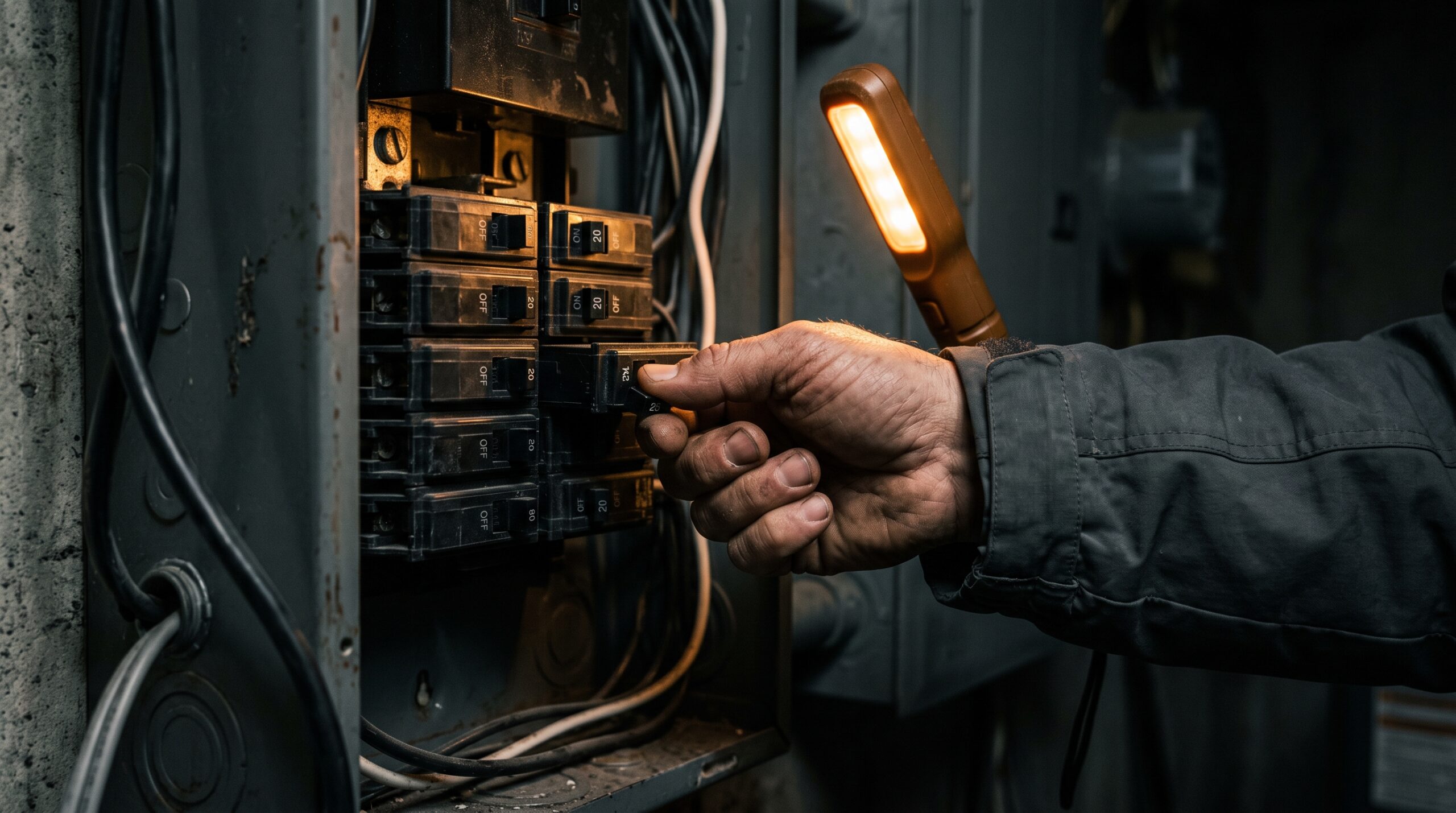
When the lights blink back on, the instinct is to flip everything to normal at once. That is the moment a returning grid can spike, a brownout can quietly cook a motor, and a freezer full of half-thawed food needs a second look before you trust it. Knowing what to do when the power comes back on takes a few careful minutes, and the order matters.
A quick checklist for when power returns
Work through these steps in order. The first few protect your electronics and appliances while the grid settles; the rest handle food, resets, and restocking.
- Wait a few minutes before plugging sensitive electronics back in, letting the voltage stabilize.
- Watch the lights. If they flicker, glow dim, or surge bright, you may be on partial power.
- Reconnect devices gradually, starting with the things you actually need, not everything at once.
- Check your refrigerator and freezer before you eat anything that was inside.
- Reset tripped breakers, GFCI outlets, clocks, and your thermostat program.
- Restock the supplies you burned through and recharge your batteries and power station.
Guard against the restoration surge
Power rarely comes back as a clean, steady flow. As the utility re-energizes a line, voltage can spike for a moment, and that spike travels through anything still plugged in. The American Red Cross and FEMA both recommend unplugging electronics during the outage and waiting a few minutes after power returns to let the grid stabilize before you reconnect them.
Prioritize the expensive, sensitive gear: televisions, computers, game consoles, routers, and anything with a circuit board. Large appliances like the refrigerator and washing machine can usually stay connected, but avoid forcing them to restart the instant power returns. A good surge protector adds a layer of defense for the devices you care about, though it is not a guarantee against a major event. If you want the full picture on what these strips can and cannot stop, see do surge protectors help during a power outage.
Watch for partial power and low voltage
Sometimes the power returns, but not all of it. A home can lose one of its two incoming legs, or the utility may throttle voltage during a strained grid. The result is a brownout: lights that look dim or flicker, electronics that behave oddly, and appliances that hum but never fully start.
This is more dangerous to your equipment than a clean outage. When voltage drops, the motors in your air conditioner, refrigerator, and freezer draw more current to keep running, and that extra heat can burn out a compressor or motor. If you see these warning signs, shut off the AC, the fridge, and any large motor-driven appliance, then contact your utility before turning them back on. You can find your provider’s outage line through how to report a power outage.
Check your food before you trust it
Food safety is where most people guess and guess wrong. The USDA rules are specific. A closed refrigerator keeps food safe for about 4 hours. A full freezer holds a safe temperature for roughly 48 hours, or about 24 hours if it is only half full and the door stays shut. Once perishable food sits above 40°F for two hours or more, it is no longer safe to eat.
| Location | Safe window without power | What to do when power returns |
|---|---|---|
| Refrigerator | About 4 hours, door closed | Discard meat, poultry, seafood, eggs, dairy, and leftovers held above 40°F for 2+ hours |
| Full freezer | About 48 hours | Refreeze items that still have ice crystals or are at 40°F or below |
| Half-full freezer | About 24 hours | Same check: look for ice crystals before refreezing |
Never taste food to decide whether it is safe, and never rely on smell or appearance alone. If you cannot account for how long something was warm, when in doubt, throw it out. An appliance thermometer left in the fridge and freezer takes the guesswork out entirely, since it tells you the actual temperature the food reached. For the full breakdown, read is food safe after a power outage and how long does food last in fridge without power.
Reset what the outage knocked offline
Once power is stable and the food is sorted, walk the house and bring everything back to normal:
- Breakers: Check the panel for any breaker that tripped during the outage or the restart, and flip it back on.
- GFCI outlets: The outlets in kitchens, bathrooms, garages, and outdoors often trip during a surge. Press the reset button to bring them back.
- Clocks and timers: Reset oven clocks, alarm clocks, sprinkler timers, and anything that lost its time.
- Thermostat: Reprogram your schedule if the thermostat reverted to a default, and give your HVAC a minute before it cycles.
- Wi-Fi and electronics: Power the modem and router back up first, then the rest of your network and devices.
Restock and recharge for next time
The end of one outage is the start of preparing for the next. Recharge your phones, flashlights, and any portable power station you leaned on, so they are full again. Refill water containers, replace used batteries, and restock the snacks or canned food you ate. Make a quick note of anything that ran short or failed, because that gap is the first thing to fix. For a wider routine, see what to do during a power outage.
Frequently asked questions
Should I unplug everything before the power comes back on?
Unplug your sensitive, high-value electronics during the outage, since the moment power returns is when a surge is most likely. Large appliances can usually stay plugged in, but wait a few minutes after restoration for the voltage to settle before reconnecting computers, TVs, and networking gear.
How long does refrigerated food stay safe during an outage?
About 4 hours, as long as the door stays closed. After that, the USDA says to discard perishable items such as meat, poultry, seafood, eggs, dairy, and leftovers that have been above 40°F for two hours or more.
Can I refreeze food that thawed during the outage?
Yes, if it still contains ice crystals or is at 40°F or below. The quality may suffer, but it is safe to refreeze. If an item has fully thawed and sat warm, follow the same “when in doubt, throw it out” rule you use for the fridge.
My lights are dim or flickering after power returned. What is wrong?
That is a sign of partial power or low voltage, often from a lost incoming leg or a strained grid. Low voltage can overheat and burn out motors and compressors, so shut off your AC, refrigerator, and large appliances, then call your utility before running them again.
Why won’t an appliance turn on now that the power is back?
Check whether a breaker tripped or a GFCI outlet needs resetting, since both happen during surges. If the circuit is fine and the rest of the house has clean power, the appliance itself may have been damaged by the outage or the restoration spike.