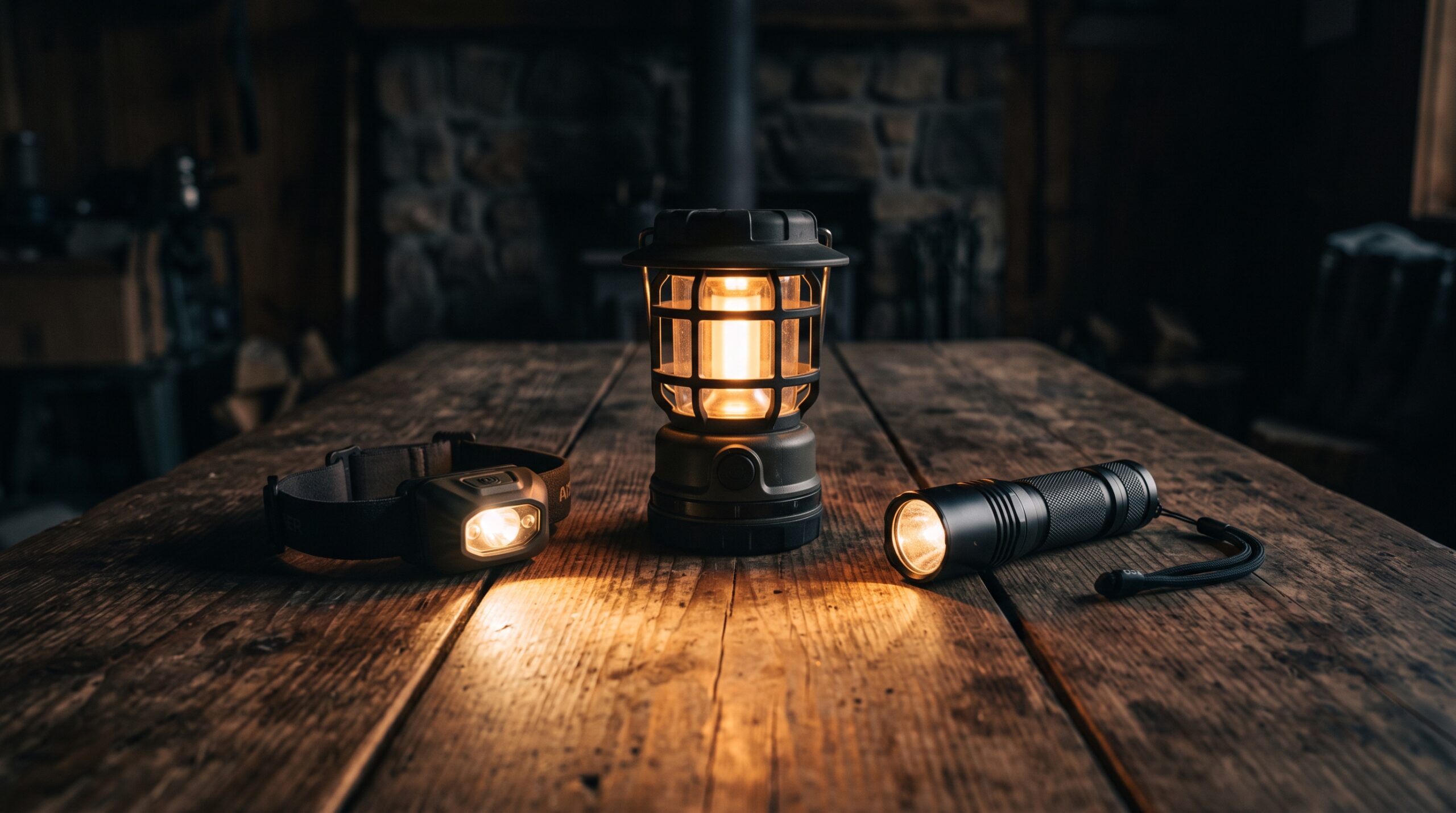
When the power goes out, the safest light is the kind that runs on a battery, not a flame. For most homes the best setup is a headlamp on every nightstand plus an LED lantern or two for the rooms where the family gathers, with candles left in the drawer. Battery light is brighter, lasts for hours or days, and will not start a fire if it gets knocked over. Candles feel like the classic blackout answer, but they are one of the things emergency agencies specifically tell you to skip.
Below is the best emergency lighting by type, what each one is good at, how long it tends to run, and how to keep the whole kit charged when the grid stays down for more than a night.
⚠️ Skip candles, use battery light
Candles are a leading cause of home fires, and using them for light during an outage poses a particular risk of a fatal fire. Use battery or rechargeable lighting instead, and never leave an open flame unattended.
Headlamps: hands-free light you reach for first
A headlamp straps to your head and points light wherever you look, which leaves both hands free for cooking, carrying a child, checking the breaker panel, or fixing something in the dark. That hands-free part is why a headlamp is often the first light worth buying. Modern LED headlamps run from roughly 100 to 500 lumens, and most have a low setting that stretches a single charge or set of batteries across many hours. Keep one per person, ideally by each bed, so nobody is fumbling for light when the lights cut out.
LED lanterns: soft room light for the whole family
A flashlight throws a beam, but a lantern lights a whole room. An LED lantern glows in every direction, which makes it the right tool for a kitchen table, a bathroom, or the room where everyone waits out the outage together. Output usually ranges from about 100 to 1,000 lumens, and most have a low mode that runs for a day or more on one charge or battery set. Lanterns that recharge over USB are especially handy, because you can top them off from a power station or power bank, and some double as a battery pack for your phone.
Flashlights: reach and durability when you need it
A flashlight is the tool for reach and toughness. Its focused beam lets you see down a hallway, out into the yard, or under the house far better than a lantern’s soft glow, and a metal-bodied light shrugs off being dropped. Runtime varies widely with brightness, from a couple of hours on a bright setting to twenty hours or more on low. Keep at least one easy to grab, and favor models that take common batteries or recharge over USB so you are never stuck with a dead light and no way to refill it.
Rechargeable and backup bulbs: keep your fixtures working
Rechargeable LED bulbs look like ordinary light bulbs but hold a small battery inside. You screw one into a lamp or ceiling fixture and use it normally while the power is on; when the grid drops, the bulb keeps glowing from its own charge, often for about three to six hours. They are a low-effort way to keep a familiar fixture lit without changing how anyone in the house flips a switch. They do not run forever, so treat them as a bridge for short outages and pair them with lanterns and headlamps for longer ones.
Motion-sensor lights: automatic light for hallways and stairs
Battery-powered motion-sensor lights switch themselves on when someone walks by, which makes them ideal for hallways, stairs, closets, and bathrooms during an outage. Because they only light up for a short time and otherwise sit idle, a set of batteries can last weeks or months. Stick a few in the spots where a fall is most likely in the dark, and you get automatic light exactly where and when you need it without reaching for a switch.
Why not candles
Candles are the picture most people have of a blackout, but emergency agencies are clear that they are the wrong choice. The American Red Cross, Ready.gov, and the U.S. Fire Administration all tell households to use flashlights or battery lanterns instead of candles during a power outage. The reason is fire. Candles are a leading cause of home fires, and the National Fire Protection Association notes that candles used for light when the power is out pose a particular risk of a fatal fire. A candle can tip over, get knocked by a pet or a child, or be forgotten in another room. Battery light carries none of that risk, costs little, and gives you far more usable light for the same money. If you truly have no other option, the Consumer Product Safety Commission says to keep a candle well away from anything that can burn and never leave it unattended, but the better plan is to not rely on one at all.
Powering and recharging your lights
Battery lights only help if they have charge, so the other half of an outage lighting plan is keeping them fed. For a short outage, fresh batteries and fully charged lights are usually enough. Stock the sizes your lights use, store a spare set with each one, and check them a couple of times a year so you are not finding dead batteries during a storm. For anything past a night, plan to recharge. A portable power station can refill USB headlamps, lanterns, and flashlights many times over, and you can recharge the station itself from solar panels if the grid stays down for days. Because lights draw so little power compared with a fridge or a CPAP, even a modest battery keeps your whole lighting kit going for a long time.
| Light type | Best for | Typical runtime |
|---|---|---|
| Headlamp | Hands-free tasks, walking, repairs | ~2–10+ hours, longer on low |
| LED lantern | Lighting a whole room or table | ~6 hours to a day or more on low |
| Flashlight | Reach outdoors, durability, spotting | ~2–20+ hours by brightness |
| Rechargeable LED bulb | Keeping a lamp or ceiling fixture lit | ~3–6 hours per charge |
| Motion-sensor light | Hallways, stairs, closets, bathrooms | Weeks to months per battery set |
If you are building a backup battery to cover lights along with the rest of your home, size it for the bigger loads first. Run your fridge, medical gear, and other essentials through the Power-Station Sizing calculator to find the capacity you need, then use the Appliance Runtime calculator to see how long a given station will keep everything, lights included, running.
Frequently asked questions
What is the best emergency lighting for a power outage?
For most homes, a headlamp for each person plus one or two LED lanterns for shared rooms. Headlamps free up your hands, lanterns light a whole room, and both are far safer and longer-lasting than candles. Add a flashlight for reach outdoors, and rechargeable bulbs or motion lights to round out the kit.
Why shouldn’t I use candles during a power outage?
Candles are a leading cause of home fires, and agencies including the Red Cross and Ready.gov specifically tell households to use flashlights or battery lanterns instead. A candle can tip over or be forgotten, and the NFPA notes that candles used for light during an outage pose a particular risk of a fatal fire. Battery light gives more usable light with none of the fire risk.
How long will battery-powered lights last in an outage?
It depends on the light and the brightness setting. Headlamps and flashlights commonly run a few hours on high and ten to twenty or more on low, LED lanterns can last from several hours to a day or more on a low setting, rechargeable bulbs hold roughly three to six hours, and motion lights stretch across weeks because they only switch on briefly. Treat these as ranges, not guarantees, and check your light’s rating.
How do I keep my lights charged during a long outage?
Keep fresh batteries and chargers on hand, and use a portable power station or power bank to refill USB headlamps, lanterns, and flashlights. Lights draw very little power, so even a small battery recharges them many times. If the grid stays down for days, solar panels can recharge the power station so your lighting kit never runs out.
Are rechargeable light bulbs worth it for outages?
Yes, as part of a kit. A rechargeable LED bulb keeps a familiar lamp or ceiling fixture working for about three to six hours when the power drops, with no change to how you use the switch. They are a good bridge for short outages, but pair them with lanterns and headlamps for anything longer, since they do not run indefinitely.