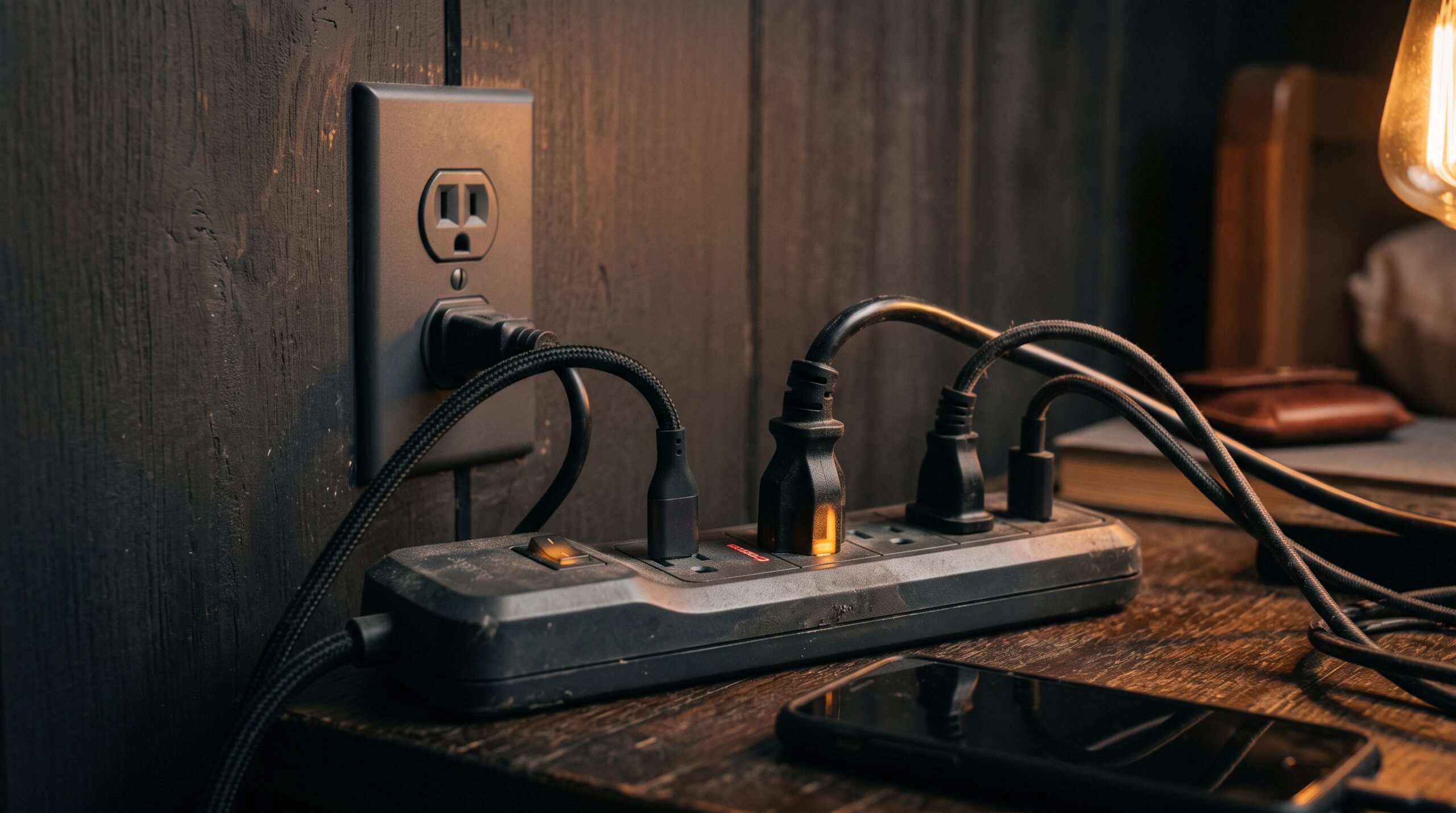
A power surge is a short, sharp spike in the voltage flowing through your home’s wiring. Most are small and pass without notice, but a large one can fry the electronics plugged into it in a fraction of a second. Knowing what triggers a surge helps you understand why the moment power returns after an outage is one of the riskiest times for your gear.
What a power surge actually is
Standard household outlets in the US deliver roughly 120 volts. A surge is any brief jump above that level. The spike usually lasts only microseconds, but the voltage can climb into the thousands or, in the case of a direct lightning hit, tens of thousands of volts. Sensitive circuit boards in TVs, computers, and modern appliances are not built to absorb that kind of jolt, so a single large surge can damage or destroy them outright. Smaller surges rarely kill a device on the spot. Instead they chip away at it over time, shortening its life with each hit.
The most common causes of a power surge
It is easy to assume surges come from outside the house, but most do not. The Electrical Safety Foundation International cites a NEMA estimate that 60 to 80 percent of surges are generated inside the building itself. Here are the usual sources, from the everyday to the dramatic:
- Large appliances cycling on and off (the most common cause). When an air conditioner, refrigerator compressor, well pump, or HVAC motor switches on or off, it pulls or releases a burst of power. That creates a small internal surge that travels through your wiring. These happen dozens of times a day and are the steady, low-level wear that eats away at electronics.
- Power restoration after an outage. When the utility re-energizes a line, voltage can spike as electricity rushes back in. The bigger the outage and the more homes coming back at once, the larger this surge can be. This is why an outage and its recovery deserve real attention.
- Lightning strikes. The most powerful surges of all. A strike on or near a power line, or a nearby tree, can push an enormous spike through the grid and into your home. No plug-in protector reliably stops a direct hit, which is why unplugging during a storm matters.
- Downed lines and utility faults. A fallen line, a blown transformer, or grid switching on the utility’s side can all send a surge down the wires to your house.
- Faulty or old wiring. Loose connections, corroded wiring, or an overloaded circuit can cause voltage to fluctuate inside the home. If surges or flickering happen often and seem tied to one room or circuit, that points to a wiring problem worth having an electrician inspect.
Why surges matter during a power outage
Here is the part people miss: the danger usually is not when the power goes out. It is when the power comes back on. The outage itself just leaves your devices sitting idle. The surge that can do real damage often arrives in the instant electricity is restored, when voltage briefly overshoots before settling.
That is why utilities and electrical-safety groups recommend unplugging sensitive electronics during an outage and waiting before plugging them back in. If you want to understand why outages happen in the first place, see our guide on why the power goes out. For the steps to take while the lights are off, read what to do during a power outage.
How to protect your electronics from surges
You do not need to stop every surge to be safe. You need layers of protection that catch the common ones and blunt the rare big one. Three approaches work together:
- Plug-in surge protectors. A surge protector (not a plain power strip) diverts excess voltage away from your devices. The key spec is the joule rating, which measures how much surge energy it can absorb over its life. A higher number means more protection and a longer service life. Look for a UL or ETL certification label so you know it meets current safety standards, and replace older units, since their protective parts wear out after absorbing surges.
- Whole-home surge protection. This is a device installed at your electrical panel by a licensed electrician. It catches large surges, including some coming in from the utility, before they spread through the house. It is the best defense against the big incoming spikes, but it does not stop everything. Whole-home units can let a fraction of the voltage through, so it is still worth using point-of-use surge protectors on your most valuable gear.
- Unplugging. Free and completely effective. A device that is not connected cannot be hit by a surge. During an outage or a lightning storm, unplugging your most expensive or sensitive electronics is the surest protection there is.
For a closer look at whether plug-in protectors actually help in an outage, see do surge protectors help during a power outage.
What to unplug, and how to power back up safely
When the power goes out, unplug high-value, sensitive items: TVs, computers and monitors, game consoles, and your modem and router. Large appliances like the refrigerator and washing machine can usually stay plugged in, but avoid having everything draw power at the same instant the grid comes back.
When electricity is restored, bring things back gradually rather than all at once. Wait a few minutes to let the voltage stabilize, then plug devices back in one at a time. Powering up slowly reduces the strain on both your home’s wiring and the grid. Our full walkthrough on what to do when the power comes back on covers the sequence step by step, and you can find more general guidance in our power outage safety tips.
Frequently asked questions
What is the most common cause of a power surge?
Large appliances and motors switching on and off inside your own home. Air conditioners, refrigerator compressors, well pumps, and HVAC systems all create small internal surges every time they cycle. According to ESFI, the majority of surges originate inside the building rather than from lightning or the utility.
Can a power outage cause a surge?
The outage itself does not, but the moment power is restored can. Voltage often spikes briefly as electricity rushes back into the lines, and that surge can damage devices that were left plugged in. This is why unplugging sensitive electronics during an outage is a smart habit.
Does a surge protector stop a lightning strike?
Not a direct one. A standard surge protector handles the everyday surges and smaller spikes well, but a direct lightning strike carries far too much energy for any plug-in device to absorb. The only reliable protection against a direct hit is to unplug your electronics before or during a storm.
What does the joule rating on a surge protector mean?
The joule rating tells you how much surge energy the protector can absorb over its lifetime before it wears out. A higher rating means more capacity and a longer useful life. Surge protectors degrade as they absorb hits, so an old unit may offer little protection even if it still powers your devices.
Should I unplug everything during a power outage?
Focus on sensitive, high-value electronics: TVs, computers, game consoles, and networking gear. Major appliances can generally stay plugged in. When power returns, plug things back in gradually rather than all at once to avoid stressing your wiring and the grid.
Sources
- Electrical Safety Foundation International — Understanding Power Surges and Surge Protective Devices
- Electrical Safety Foundation International — What Are Power Surges
- This Old House — What to Know About Whole House Surge Protectors
- Southern California Edison — 4 Ways to Protect Your Appliances During an Outage
- U.S. Consumer Product Safety Commission — Cables, Surge and Power Protection