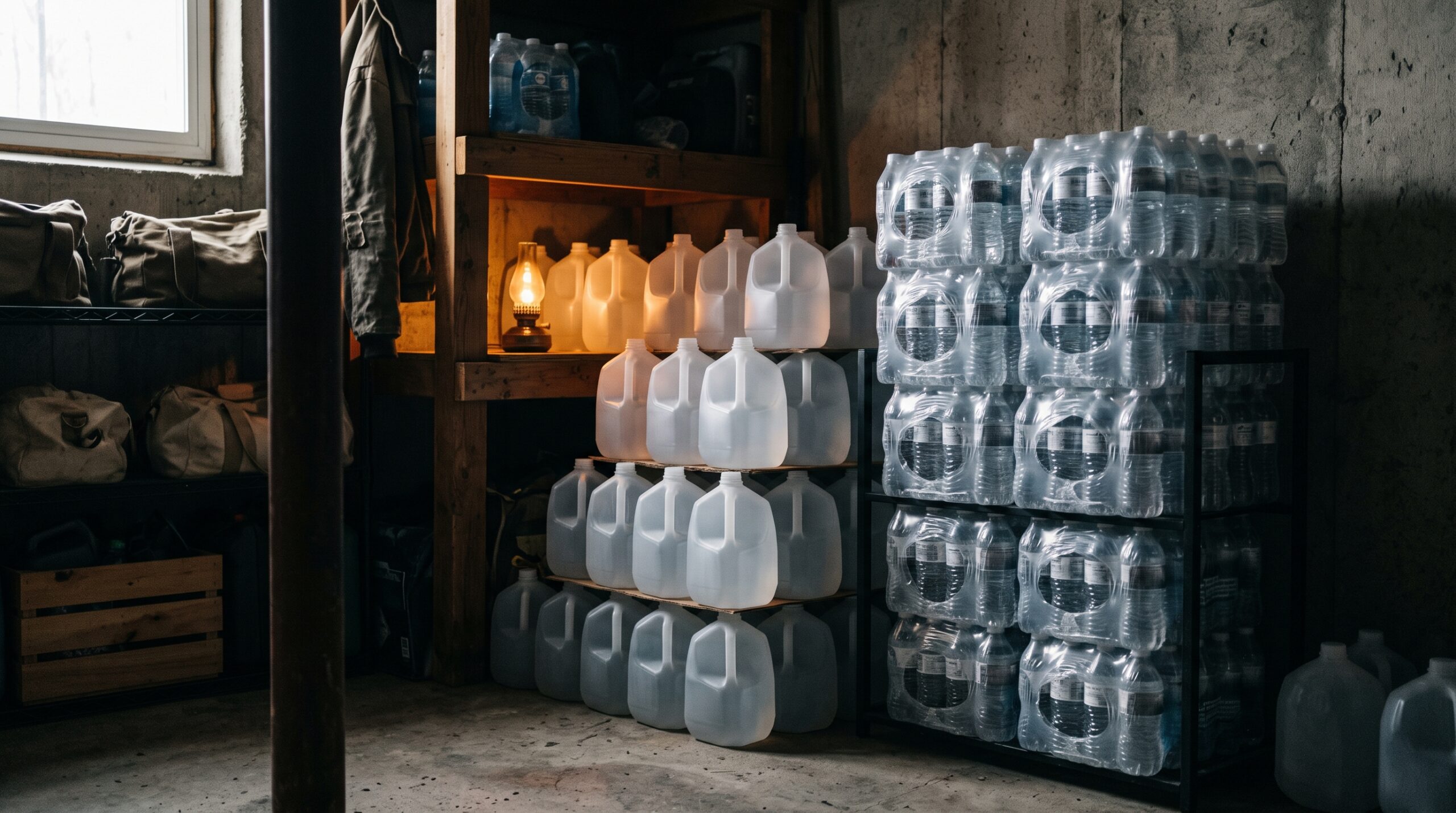
Commercial bottled water does not really expire. The U.S. Food and Drug Administration does not require an expiration date on bottled water and considers it safe to drink indefinitely as long as it stays sealed and is stored properly. The “best by” date you see stamped on the bottle is about taste and plastic quality over time, not safety. The water you bottle yourself at home is a different story, and that is where a replace-every-six-months rule comes in.
The short answer: sealed bottled water lasts indefinitely
Water is not a food that spoils. It has no proteins, sugars, or fats for bacteria to feed on, so an unopened, properly sealed bottle of commercially produced water stays safe more or less forever. The FDA puts it plainly: bottled water has no expiration requirement, and the agency has determined there is no shelf-life limit for the product when it is made under federal quality standards and kept sealed.
The International Bottled Water Association agrees and confirms the FDA does not mandate an expiration date. So if you find a case of water in the garage that is three years past the printed date, the water inside is almost certainly fine to drink. What can change over a long stretch is the flavor, not the safety.
Why bottles have a “best by” date if water doesn’t go bad
If water lasts indefinitely, why print a date at all? A few practical reasons:
- Taste and odor drift. Plastic bottles are slightly porous. Over months and years, tiny amounts of air and outside odors can pass through and affect how the water tastes. The IBWA notes this is an aesthetic issue, not a safety one.
- Plastic and packaging quality. The date reflects how long the manufacturer is confident the bottle and seal will hold up, not a point where the water becomes dangerous.
- Stock rotation. A printed date helps stores and warehouses sell the oldest inventory first, and helps you do the same at home.
- Consistency with other products. Many bottlers add a roughly two-year date simply because dating is standard practice across the beverage aisle.
One caveat worth taking seriously: heat. Storing bottles in a hot car trunk, a sun-baked shed, or against a warm wall speeds up changes to the plastic and the taste. Keep water cool and shaded and the printed date becomes almost meaningless.
How to store bottled water so it lasts
Storage is what actually determines whether your emergency water stays pleasant to drink. The IBWA and CDC give the same basic guidance:
- Keep it cool, ideally between 50°F and 70°F. A pantry, closet, or basement beats a garage or attic.
- Keep it out of direct sunlight. UV light and heat are the main drivers of taste changes and, rarely, algae growth.
- Keep it away from chemicals and solvents. Because plastic is porous, fumes from gasoline, paint thinners, pesticides, and household cleaners can seep in and taint the water. Do not store water next to these in the garage.
- Leave bottles sealed until you need them. An unopened seal is what keeps the indefinite shelf life intact.
Once you open a bottle, treat it like any other drink: refrigerate it and finish it within a few days, since handling can introduce bacteria from your mouth or hands.
Bottled water vs. tap water you store yourself
This is the distinction that trips people up. The “replace your water every six months” advice you may have heard does not apply to sealed, store-bought bottles. It applies to water you fill into containers yourself at home. The CDC and Ready.gov both call commercially bottled water the safest, most reliable emergency option and tell you to simply observe its printed date. Self-filled containers need rotation because home tap water and ordinary containers are not sterile.
| Water type | Replace by | Notes |
|---|---|---|
| Sealed commercial bottled water | Indefinite; observe the printed “best by” date | FDA requires no expiration date; safe if kept sealed, cool, and away from chemicals |
| Tap water you store yourself | Every 6 months | Use clean, food-grade containers; label with the date filled |
| Any opened bottle or container | Within a few days | Refrigerate after opening |
If you plan to store your own water, the right containers and prep matter as much as the schedule. Our guides on how to store water for an emergency and how to purify water during an emergency walk through food-grade containers, sanitizing, and treating questionable water before you drink it.
How much water to keep on hand
However you store it, the amount matters more than the brand. The CDC and Ready.gov recommend at least one gallon of water per person per day, with a three-day supply as the minimum and a two-week supply as the goal where space allows. That covers drinking and basic sanitation. Households with pets, infants, or anyone who is sick or pregnant should plan for more.
To turn that into a real number for your household, use our water storage guide for a power outage, and fold water into the broader power outage emergency kit checklist so it is not the one thing you forget.
When to actually replace or toss bottled water
You rarely need to throw out sealed bottled water on a schedule, but trust your senses and the container. Replace or discard water when:
- The bottle is damaged, leaking, swollen, or the seal is broken.
- The water looks cloudy or has visible particles or growth.
- It smells or tastes off, plasticky, or musty.
- It was stored hot, in sun, or next to chemicals for a long time. When in doubt, swap it out.
For self-stored tap water, follow the six-month rotation regardless of how it looks. And if your only available water is of unknown quality during an emergency, purify it first rather than risking it.
Frequently asked questions
Can you drink bottled water after the expiration date?
Yes, in almost all cases. The FDA does not require an expiration date on bottled water and considers sealed water safe indefinitely. A date that has passed signals possible taste changes, not spoilage, as long as the bottle was kept sealed and stored properly.
Does bottled water go bad in heat or sunlight?
Heat and direct sunlight do not make sealed water unsafe overnight, but they speed up changes in taste and odor and can, rarely, allow algae to form. Store water cool and shaded, and avoid hot car trunks and sunny windowsills for long-term storage.
How often should I replace my emergency water supply?
It depends on the source. Sealed commercial bottles do not need a set replacement schedule; just observe the printed date. Water you fill into containers yourself should be replaced every six months, per CDC and Ready.gov guidance.
Is it safe to store water in plastic bottles long term?
Yes, if you keep them sealed, cool, out of sunlight, and away from solvents and chemicals. Plastic is slightly porous, so chemical fumes nearby are the real risk to flavor, not the plastic itself breaking down into the water under normal storage.
How long does opened bottled water last?
Once opened, bottled water is best refrigerated and finished within a few days. Drinking directly from the bottle introduces bacteria, so an opened bottle does not keep the indefinite shelf life of a sealed one.
Sources
- U.S. Food and Drug Administration — Bottled Water Everywhere: Keeping it Safe
- U.S. Food and Drug Administration — FDA Regulates the Safety of Bottled Water Beverages
- CDC — How to Create and Store an Emergency Water Supply
- Ready.gov — Water
- International Bottled Water Association — Bottled Water Storage