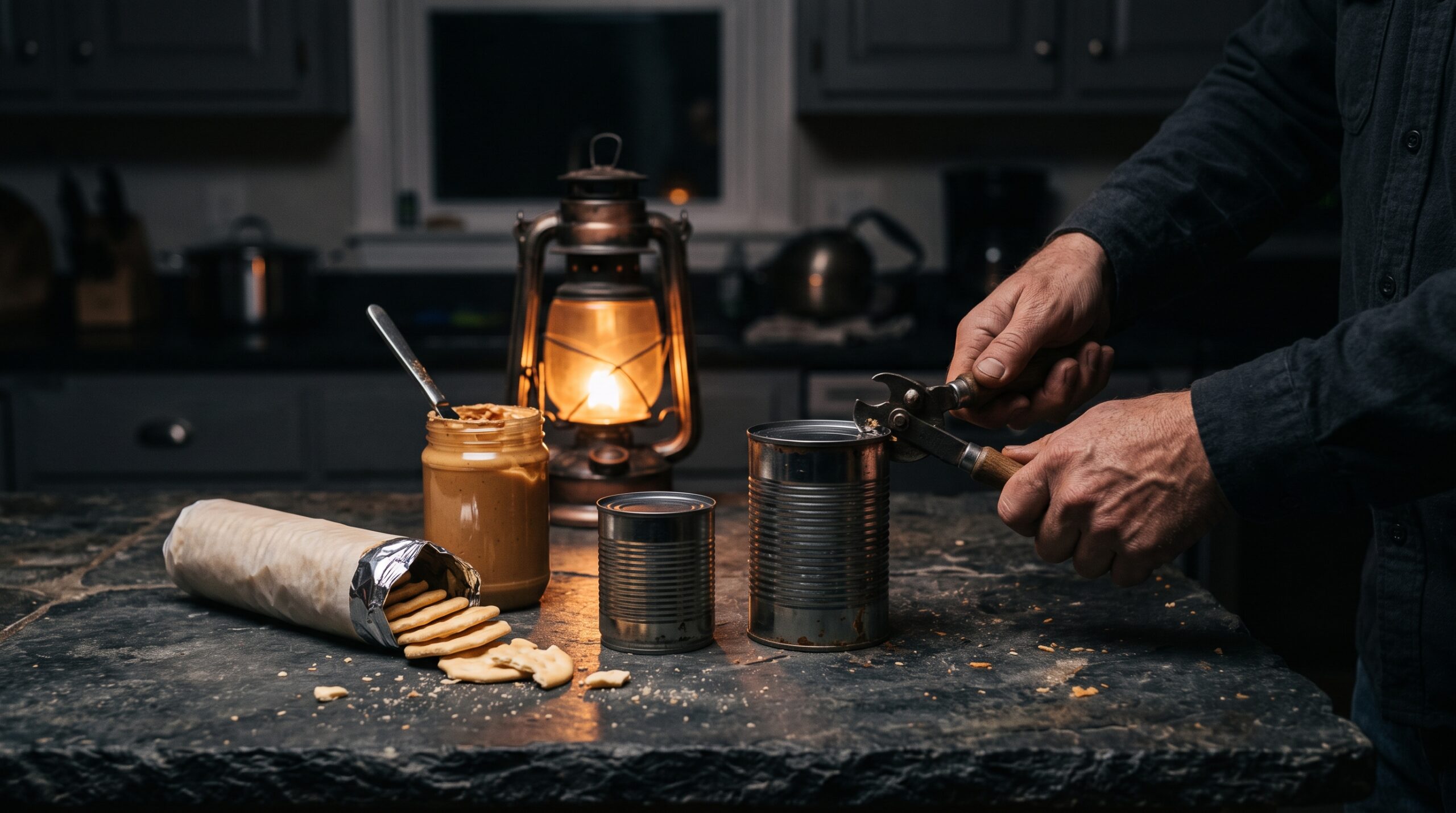
When the power is out, your stove, microwave, and electric kettle are out with it. The good news is that a surprising amount of real food needs no heat, no fridge, and no power at all. This guide covers the no-cook foods worth keeping on hand, a handful of meals you can actually assemble in the dark, and a few small things (like a manual can opener) that people forget until it’s too late.
Eat down your fridge and freezer first
Before you crack open a single can, work through the food that’s already going to spoil. The order is simple: refrigerator first, then freezer, then your shelf-stable pantry. This keeps you from wasting food and stretches your stored supplies for later in the outage.
Timing matters here. According to FoodSafety.gov, a closed refrigerator keeps food safe for about 4 hours, and a full freezer holds a safe temperature for roughly 48 hours (24 hours if it’s only half full) as long as you keep the doors shut. Throw out perishable items like meat, poultry, fish, eggs, and leftovers once they’ve been above 40°F for more than 2 hours, and never taste food to decide whether it’s safe. When in doubt, throw it out. For the full breakdown of what’s still safe and when, see our guide on whether food is safe after a power outage, and a few tricks for keeping food cold without power.
No-cook foods to keep on hand
Ready.gov recommends stocking foods that need no refrigeration, cooking, water, or special preparation, and notes that commercially canned food can be eaten straight from the can without warming. Build your no-cook shelf around a mix of protein, carbs, and fruit so meals don’t get monotonous. Here’s how the categories break down:
- Canned proteins: tuna, chicken, salmon, sardines, and beans (black, kidney, chickpeas). All edible cold.
- Shelf-stable pouches: tuna and chicken pouches, plus ready-to-eat meals that don’t need heating.
- Nut and seed butters: peanut butter, almond butter, and sunflower-seed butter for people with nut allergies.
- Crackers and shelf-stable carbs: whole-grain crackers, tortillas, and shelf-stable bread.
- Nuts, trail mix, and jerky: calorie-dense, protein-rich, and ready to eat by the handful.
- Dried and canned fruit: raisins, dried apricots, canned peaches, applesauce, and fruit cups.
- Canned vegetables: corn, green beans, peas, and carrots, all fine to eat cold.
- Canned soups and chili: hearty, ready-to-eat varieties you can eat at room temperature.
- Bars: granola bars, protein bars, and meal-replacement bars for quick energy.
- Drinks: canned juices and shelf-stable (UHT) milk or plant milk.
One practical tip from USDA: lean toward foods that aren’t very salty or spicy. Those increase thirst, and during an outage your drinking water may already be limited. For a deeper stock list, see our roundup of the best non-perishable foods for a power outage.
No-cook meal ideas you can actually put together
Individual cans are fine, but combining a protein, a carb, and a fruit or vegetable makes an actual meal that holds you over. Here are seven combos built entirely from shelf-stable, no-cook ingredients. Calorie figures are rough estimates and will vary by brand and portion.
| Meal idea | What’s in it | Rough calories |
|---|---|---|
| Tuna cracker plate | Canned or pouch tuna, whole-grain crackers, a canned peach cup | ~450–550 |
| Peanut butter power plate | Peanut butter spread on crackers or a tortilla, plus raisins or dried fruit | ~550–650 |
| Cold bean and corn bowl | Canned beans (drained), canned corn, a splash of olive oil, hot sauce | ~400–500 |
| Chicken salad wrap | Pouch chicken, tortilla or shelf-stable bread, a mustard or mayo packet | ~400–500 |
| Cold chili and crackers | Canned chili or hearty soup eaten at room temperature, with crackers | ~450–550 |
| Granola breakfast | Granola or dry cereal, shelf-stable milk, dried fruit and a handful of nuts | ~450–600 |
| Salmon and veggie plate | Canned salmon, crackers, canned green beans | ~400–500 |
If you do want something warm, a few options exist that don’t rely on grid power. We cover them in how to cook without power, but never run a camp stove, grill, or charcoal indoors because of carbon monoxide risk.
Hitting roughly 2,000 calories a day with no stove
A common planning figure is about 2,000 calories per adult per day, though real needs vary with age, size, and activity. No-cook food can clear that bar easily if you lean on calorie-dense items. A jar of peanut butter is around 3,000 calories on its own; a can of chili runs 300 to 400; an ounce of nuts is roughly 170. The trick is to plan for enough, not just enough variety.
Ready.gov and the Red Cross both suggest keeping at least a three-day supply of non-perishable food at home, and the Red Cross recommends building toward a two-week supply where you can. If you want to size that out per person, our guide on how much food to stockpile for an emergency walks through the math.
The small stuff that makes no-cook food work
The food is only half of it. A few cheap, easy-to-overlook items make the difference between a meal and a frustrating standoff with a sealed can:
- A manual can opener. This is the one people forget. All those cans are useless without it, so keep at least one with your supplies.
- Paper plates, bowls, cups, and plastic utensils. With water possibly limited, disposables mean you’re not spending drinking water on dishes.
- Condiment packets and seasoning. Mustard, mayo, hot sauce, and salt packets turn plain canned food into something you’ll actually want to eat.
- Stored drinking water. Plan for about one gallon per person per day. See how much water to store for a power outage.
- Trash bags and wet wipes. For cleanup and basic hygiene when you can’t run the tap.
If you’re assembling supplies from scratch, our power outage emergency kit checklist rounds up everything beyond food.
Adjusting for kids, seniors, and pets
A one-size plan rarely fits a whole household. A few adjustments:
- Infants and kids: stock ready-to-feed formula or shelf-stable baby food, plus familiar snacks. Comfort foods matter more for kids during a stressful outage than for adults.
- Seniors: choose easy-to-chew, low-sodium options and keep any food-dependent medications in mind. Pull-tab cans help if hand strength or grip is an issue.
- Pets: include several days of pet food and water. Canned pet food doubles as a no-prep option, and you’ll want a manual opener for that too.
Frequently asked questions
Can you eat canned food cold straight from the can?
Yes. Ready.gov notes that commercially canned food is fully cooked and can be eaten without warming. Wipe the lid before opening, and once a can is open, treat leftovers like any perishable food and don’t leave them sitting out for hours.
How long do canned and shelf-stable foods last?
USDA guidance puts high-acid canned foods (tomatoes, citrus, pineapple) at about 12 to 18 months, and low-acid canned foods (meat, vegetables, soups) at roughly 2 to 5 years, as long as the can stays in good shape in a cool, dry place. Rotate your stock and replace anything past date or with a bulging, leaking, or rusted can.
What should I eat first during an outage?
Start with the refrigerator, since it loses safe temperature first (about 4 hours). Move to freezer food next, then to your shelf-stable pantry. This order keeps perishable food from going to waste and saves your non-perishables for the back half of a long outage.
Do I need to heat canned soup or chili?
No. Ready-to-eat soups and chili are already cooked and safe to eat cold or at room temperature. They won’t taste as good as they do hot, but they’re perfectly fine, and skipping the heat saves fuel and water.
How much no-cook food should I keep on hand?
Aim for at least a three-day supply per person as a baseline, which is what Ready.gov and the Red Cross recommend, and build toward two weeks if you have the space. Plan around roughly 2,000 calories per adult per day, adjusting for kids, seniors, and anyone with higher needs.