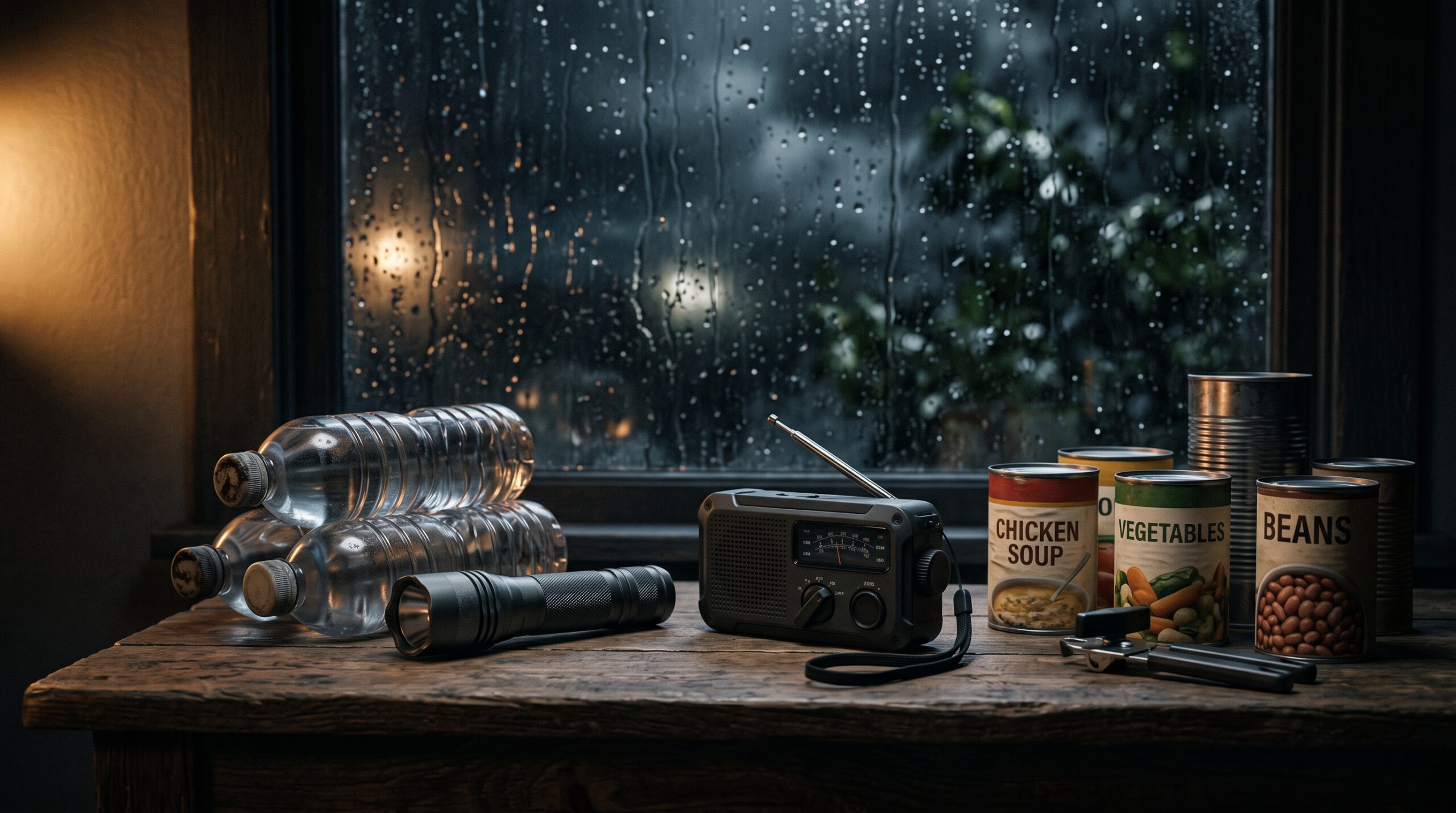
A hurricane can knock out power for days, and sometimes for a week or more, so the only prep that works is the prep you finish weeks before a storm is named. Once a hurricane is in the forecast, water, batteries, fuel, and generators sell out fast. This checklist walks you through what to do weeks ahead, in the 48 hours before landfall, during the outage, and after the storm passes. It leans on official guidance from Ready.gov, the National Hurricane Center, the CDC, and FEMA. Treat every number here as a planning range, not a promise, and follow orders from your local officials first.
⚠️ Run generators outdoors only
Carbon monoxide poisoning from portable generators is a leading cause of death after hurricanes, and most of it happens after the storm passes. Run a generator outside only, more than 20 feet from windows, doors, and vents, with the exhaust pointed away from the house. Never run one indoors, in a garage, basement, crawlspace, or shed, even with the doors open. Use a battery-powered CO alarm, and let the engine cool before you refuel it.
Weeks before hurricane season
The Atlantic hurricane season runs from June 1 through November 30, and the worst time to shop for supplies is the week a storm is heading your way. Build your kit early, while shelves are full and prices are normal. A few things to handle weeks out:
- Store water. Plan on at least one gallon per person per day. Ready.gov suggests a three-day supply at a minimum and a two-week supply if you have room to store it. Don’t forget pets.
- Know your evacuation zone. Look up your local zone now so you are not figuring it out under a warning. Storm surge is often the biggest threat to life, and surge evacuations are called zone by zone.
- Sort out backup power. Decide between a battery power station, a generator, or both, then test the gear and charge it. A power station is quiet and safe to run indoors; a gas generator makes more power but has to stay outside.
- Refill prescriptions. Ask your pharmacist about an emergency supply, and ask your clinician how to handle medications that need refrigeration if the power goes out for days.
- Protect documents. Put IDs, insurance policies, medical records, and key account numbers in a waterproof bag or container, and keep digital copies too.
- Make a communication plan. Agree on an out-of-area contact and a meeting point in case your household gets separated or cell service drops.
48 hours before the storm
When the National Hurricane Center issues a hurricane watch, tropical-storm-force winds are possible in your area within about 48 hours. A hurricane warning means those winds are expected within about 36 hours. That watch window is your signal to top everything off:
- Fill the gas tank. Keep your vehicle at least half full as a baseline, and fill it now. Gas stations run on electricity, so pumps go down with the grid.
- Get cash. ATMs and card readers stop working in an outage. Keep small bills on hand.
- Charge everything. Phones, power banks, laptops, and your power station should all be at full charge before landfall. Freeze a few jugs of water to help keep the freezer and a cooler cold.
- Store washing water. Fill clean containers with drinking water, and fill bathtubs and sinks for flushing and cleaning if your supply is cut.
- Turn the fridge and freezer colder. Set them to their coldest settings so food stays safe longer once the power drops.
- Secure the outside and prepare to leave. Bring in or tie down loose items, and review your route. If officials order an evacuation, go early instead of waiting it out.
During the outage
Once the power is out, the goal is to stay safe, keep food cold, and use your backup power carefully.
- Keep the fridge and freezer shut. The CDC says a closed refrigerator holds food safely for about 4 hours, a full freezer for about 48 hours, and a half-full freezer for about 24 hours. Every time you open the door, that clock speeds up.
- Run generators outside only. Outdoors, more than 20 feet from any window, door, or vent, with a CO alarm running. Never run a generator or any gas engine inside or in an attached garage.
- Don’t bring other fuel-burning gear indoors. Charcoal grills, camp stoves, and lanterns all produce carbon monoxide and belong outside.
- Stay off flooded roads. Just 6 inches of moving water can sweep a vehicle away. Turn around, don’t drown.
- Protect medical devices. If someone depends on CPAP, oxygen, or other powered equipment, follow the device manual and your provider’s guidance on backup power and runtime.
- Conserve and report. Use one device for official updates to save battery, stay clear of downed power lines, and report your outage to the utility.
After the storm passes
The danger does not end when the wind dies down. This is when generator carbon monoxide deaths and food-safety mistakes tend to happen, so slow down and work through the cleanup carefully:
- Keep CO safety up. If you are still running a generator, keep it outdoors and far from the house. Watch for headache, dizziness, nausea, or confusion, and get to fresh air and call for help if anyone shows those signs.
- When in doubt, throw it out. Discard perishable food that has been above 40°F for more than 4 hours, and never taste food to decide whether it is safe.
- Check your medications. Refrigerated drugs may need to be replaced after a long outage. Follow the label, and ask a pharmacist or clinician, but keep using a life-critical medicine until you can replace it.
- Avoid floodwater and downed lines. Floodwater can hide debris, sharp objects, and electrical hazards. Assume any downed line is live.
- Document damage. Photograph damage before you clean up, for your insurance claim.
- Recharge for the next one. Hurricanes can arrive in series. Refill fuel, recharge power stations and power banks, and restock what you used.
Your hurricane power outage kit
Here is the short version to gather and store before the season starts. Aim for at least two weeks of self-sufficiency if you have the space, since hurricane outages and supply disruptions can run long.
| What to pack | Aim for | Why it matters |
|---|---|---|
| Water | 1 gallon per person per day; up to two weeks if you can store it | Drinking, cooking, hygiene; municipal water can fail too |
| Food | Two weeks of no-cook food plus a manual can opener | Stoves and microwaves are down without power |
| Backup power | Charged power station and/or generator, plus power banks | Phones, lights, medical devices, keeping food cold |
| Fuel | Full vehicle tank; generator fuel stored safely where allowed | Pumps need electricity and stations close |
| Medications | Two-plus week supply; a cooler for refrigerated meds | Pharmacies may be shut for days |
| Documents | IDs, insurance, medical records in a waterproof bag | Needed for evacuation and claims |
| Cash | Small bills | ATMs and card readers go down |
| Light and info | Flashlights, extra batteries, battery or hand-crank radio | Skip candles; stay on top of official updates |
| Health and comfort | First-aid kit, hygiene items, pet and baby supplies | Multi-day self-sufficiency |
Do the power math for your home
Backup power is the part of hurricane prep where guesswork costs the most. Before you buy or rely on a generator or battery, size it to the things you actually need to keep running, such as a fridge, a few lights, a phone, and any medical device. Start with the Power-Station Sizing calculator to find the watts and watt-hours your essentials add up to, including the higher surge watts a fridge pulls at startup. Then use the Appliance Runtime calculator to estimate how many hours a given battery will carry that load. Both give you ranges based on your inputs, not guarantees, so build in a buffer and confirm specs against your own appliances.
Frequently asked questions
How long do power outages last after a hurricane?
It varies widely with the storm and your area. Ready.gov warns that electricity and water can be out for days, and in hard-hit areas for weeks. Plan for a multi-day outage at a minimum, and aim for two weeks of supplies if you can store them.
How much water should I store for a hurricane?
Plan on at least one gallon per person per day. Ready.gov recommends a three-day supply as a minimum and a two-week supply where you have room, plus extra for pets. Filling clean containers, sinks, and bathtubs before landfall adds water for washing and flushing.
Can I run a generator during a hurricane?
Only outdoors, and never during the high winds and flooding of the storm itself. Keep a portable generator more than 20 feet from windows, doors, and vents, with exhaust pointed away from the house, and use a battery-powered CO alarm. Never run one indoors or in a garage. Most hurricane-related carbon monoxide deaths involve generators used too close to a home.
How long will food last in the fridge and freezer without power?
The CDC says an unopened refrigerator keeps food safe for about 4 hours, a full freezer for about 48 hours, and a half-full freezer for about 24 hours. Keep the doors closed as much as possible, and when in doubt, throw it out rather than tasting food to check.
Should I get a portable power station or a generator for hurricane season?
It depends on what you need to run and for how long. A battery power station is quiet, needs no fuel, and is safe to use indoors, which suits phones, lights, CPAP machines, and short fridge cycles. A gas generator delivers more sustained power for a whole-home essentials load, but it produces carbon monoxide and must run outdoors only. Many households keep both. Size either one to your actual load using the sizing and runtime calculators above.
Sources
- Ready.gov – Hurricanes: https://www.ready.gov/hurricanes
- Ready.gov – Power Outages: https://www.ready.gov/power-outages
- FEMA / Ready.gov – Be Prepared for a Power Outage (PDF): https://www.ready.gov/sites/default/files/2024-03/ready.gov_power-outage_hazard-info-sheet.pdf
- CDC – What to Do During a Power Outage: https://www.cdc.gov/natural-disasters/response/what-to-do-protect-yourself-during-a-power-outage.html
- CDC – Preparing for Hurricanes or Other Tropical Storms: https://www.cdc.gov/hurricanes/safety/index.html
- CDC – When the Power Goes Out, Keep Your Generator Outside (PDF): https://www.cdc.gov/carbon-monoxide/media/pdfs/Generators_1.pdf
- National Weather Service – Hurricane Watches and Warnings: https://www.weather.gov/safety/hurricane-ww
- NOAA – Hurricane Preparedness: https://www.noaa.gov/hurricane-prep