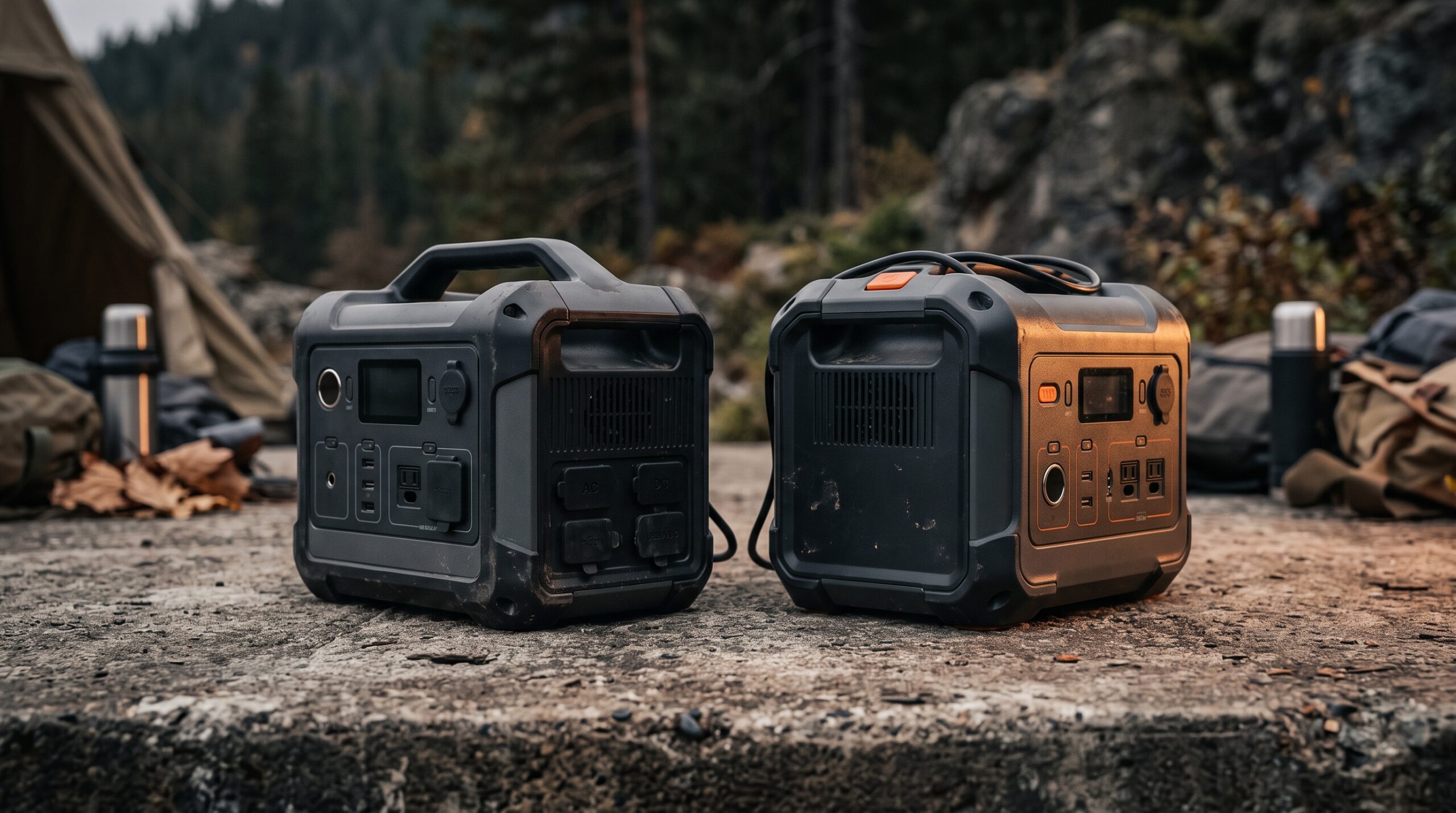
Anker SOLIX and EcoFlow are two of the strongest names in portable power, and most shoppers end up choosing between them. The short version: pick Anker SOLIX if you care most about battery longevity, a long warranty, and clean, simple design; pick EcoFlow if you want the fastest recharge times and the deepest set of app and smart-home features. Both build solid LiFePO4 units, so the “wrong” choice here is usually buying the wrong size, not the wrong brand.
How the two brands position themselves
Anker leans on its electronics reputation. The SOLIX line is built around what Anker calls InfiniPower, which is its pitch for long battery life and durability, paired with a clean industrial design and a 5-year warranty across the range. The lineup runs from the compact C1000 (around 1,000Wh) up to the F-series home-backup units like the F2000, F2600, and F3800, which can be stacked with expansion batteries and tied into your home circuits.
EcoFlow leans on speed and features. Its DELTA family is known for X-Stream fast charging and a feature-rich app, and the lineup is broad: the DELTA 3 mid-range units, the DELTA 2 and DELTA 2 Max, and the flagship DELTA Pro 3 and DELTA Pro Ultra for whole-home backup. EcoFlow also pushes deeper into smart-home territory with its Smart Home Panel, which manages individual circuits during an outage.
Neither brand is “better” in the abstract. They optimize for slightly different things, and which one wins depends on what you’re trying to do. If you’re still deciding what capacity and output you even need, start with how to choose a power station before you compare badges.
Battery chemistry and lifespan
Both brands have standardized on LiFePO4 (also written LFP) chemistry across their current lineups. LFP runs cooler, ages more slowly, and tolerates far more charge cycles than the older lithium-ion (NMC) cells found in cheap power banks. If you want the full breakdown of why this matters, see LiFePO4 vs lithium-ion power stations.
Where they differ is the rated cycle count. Anker advertises its InfiniPower F-series at roughly 6,000 cycles to 80% capacity, which is unusually high and a genuine selling point if you plan to cycle the unit daily for years. EcoFlow’s current DELTA 3 generation is rated around 4,000 cycles to 80%, with older units like the DELTA 2 closer to 3,000. In practice, both numbers translate to roughly a decade of regular use before the battery noticeably fades, so for most households this is a tiebreaker rather than a dealbreaker. If you cycle the unit hard every single day, Anker’s higher rating earns it the edge.
Charging speed, output, and surge
Charging is EcoFlow’s traditional home turf. X-Stream charging pushes a lot of watts into the battery from a wall outlet, and EcoFlow units routinely advertise 0-80% in under an hour. The DELTA 3, for example, claims a full 0-100% wall charge in under an hour under ideal conditions, and the larger units can pull from AC and solar at the same time to recharge faster.
Anker has closed much of this gap. The C1000 Gen 2 advertises a full charge in roughly the same ballpark, under an hour, which a couple of years ago would have been an EcoFlow-only claim. EcoFlow still tends to win or tie on raw recharge speed, especially at the larger sizes, but the difference is no longer dramatic at the mid-range. If your priority is topping up fast, off a generator, in a car, or during a brief grid window, EcoFlow is the safer bet. Just remember that fast charging stresses the battery slightly more over time, which is part of the longevity trade-off.
On output, both brands deliver clean pure sine wave power and comparable continuous wattage at each size class. The wrinkle is surge handling. EcoFlow’s X-Boost feature can temporarily push effective output higher to start motor-driven appliances (think a fridge compressor or a small pump) that briefly draw more than the inverter’s rated continuous wattage. Anker’s larger units handle surges well too, and the F-series steps up to 120V/240V split-phase output for things like a well pump or whole-home transfer setups.
What actually matters is matching the unit’s continuous and surge ratings to your appliances. A power station that’s undersized for your fridge’s startup spike will trip regardless of which logo is on it. Before you buy either brand, run your real load list through the sizing calculator and the runtime calculator so you know the wattage and watt-hours you actually need. The difference between the right size and the wrong size dwarfs the difference between Anker and EcoFlow.
App, smart features, and solar
Both brands offer Bluetooth and Wi-Fi apps that let you check charge level, adjust charging rate, and monitor output from your phone, plus over-the-air firmware updates. EcoFlow’s app is generally the more feature-dense of the two, with scheduling, peak-shaving (charge off-peak, discharge on-peak), and tight integration with the EcoFlow Smart Home Panel for managing individual circuits during an outage. Anker’s app is cleaner and simpler, covering the monitoring and control basics without as many advanced toggles.
On solar, both accept high MPPT solar input and pair with their own panels, and both support pass-through charging so you can power devices while the unit recharges. If solar resilience is a major goal, the panel wattage and the unit’s max solar input ceiling matter more than the brand. For the bigger picture on solar recharging, see the best portable power stations for home backup.
Warranty, price, and value
Both brands now offer a 5-year warranty as standard, which is strong for this category. Anker pairs that with its high cycle-life rating and 10-year design-life messaging, so the “buy it once” pitch is central to its brand. EcoFlow matches the 5-year baseline and extends coverage further on some flagship units. Read the fine print for the specific model you’re considering, since coverage can vary between a brand’s compact and home-backup tiers.
On price, the two are close enough that frequent sales matter more than list price. Both run heavy discounts around major shopping events, and a unit that looks more expensive on paper can flip to the cheaper option during a sale week. If you’re shopping a budget, our roundups of the best power stations under $1,000 and budget options under $500 include models from both brands. Don’t anchor on a single sticker price; watch the actual street price.
Head-to-head comparison
| Dimension | Anker SOLIX | EcoFlow |
|---|---|---|
| Battery chemistry | LiFePO4 (LFP) | LiFePO4 (LFP) |
| Rated cycle life | Up to ~6,000 cycles (InfiniPower F-series) | ~4,000 cycles (DELTA 3); ~3,000 on older units |
| Charging speed | Fast; C1000 Gen 2 ~full charge under an hour | Fastest; X-Stream, AC+solar simultaneous |
| Surge handling | Strong; F-series adds 120V/240V split-phase | X-Boost temporarily lifts effective output |
| App and features | Clean, simple monitoring and control | Feature-dense; scheduling, peak-shaving |
| Smart-home integration | F-series stacks + home circuit tie-in | Smart Home Panel manages individual circuits |
| Warranty | 5 years standard; 10-year design life | 5 years standard; longer on some flagships |
| Lineup breadth | C-series to F-series home backup | DELTA 2/3 to DELTA Pro 3/Ultra |
| Design | Minimal, understated | Functional, control-forward |
The verdict by use case
There’s no single winner, so match the brand to your priority:
- Pick Anker SOLIX if you want maximum longevity, a no-fuss warranty story, and clean design. It’s the better choice for “buy once, keep for a decade” home backup, especially if you’ll cycle it daily.
- Pick EcoFlow if you want the fastest recharge, the most app features, and deeper smart-home control. It’s the better choice if you top up frequently or want circuit-level outage management.
- It’s roughly a wash if you just need occasional outage and camping power at a mid-range size. Both will serve you well, so buy whichever is discounted when you’re ready.
If you’re also weighing Jackery and Bluetti, the broader three-way picture is in Jackery vs EcoFlow vs Bluetti. But whichever brand you lean toward, size it correctly first. A right-sized Anker beats an undersized EcoFlow every time, and vice versa. A few habits keep you from overpaying:
- Decide your watt-hours and continuous/surge wattage before you shop, using your real appliance list.
- Compare the specific models in your size class, not the brands in general; lineups change yearly.
- Check the warranty terms for the exact model, since coverage can differ between compact and home-backup tiers.
- Watch the street price around major sale events rather than buying at full list.
- Confirm solar input ceilings and panel compatibility if off-grid recharging matters to you.
Anker and EcoFlow, live prices


EcoFlow DELTA 2 Max
2,048Wh, 2,400W — fast solar, runs most of a kitchen
$1,049.00Check price on Amazon →
As an Amazon Associate we earn from qualifying purchases. Prices are pulled automatically from Amazon and may have changed.
Frequently asked questions
Is Anker SOLIX or EcoFlow more reliable?
Both are reputable and use the same safer LiFePO4 chemistry, so reliability is comparable. Anker emphasizes higher rated cycle life and a long design life, which appeals to “buy it once” shoppers. EcoFlow has a long track record and broad lineup. For most buyers, correct sizing affects real-world reliability more than the brand badge does.
Which brand charges faster?
EcoFlow generally wins on raw charging speed thanks to its X-Stream technology, especially at larger sizes where it can pull from AC and solar at once. Anker has narrowed the gap considerably, and units like the C1000 Gen 2 now charge fully in roughly an hour. If fast top-ups are a priority, lean EcoFlow.
Do both work for home backup during an outage?
Yes. Both offer large home-backup units (Anker’s F-series, EcoFlow’s DELTA Pro 3 and Ultra) that stack with expansion batteries and can tie into home circuits or a transfer setup. For larger loads you’ll want a model with 120V/240V output. See our home backup guide for sizing.
Is the longer warranty worth paying more for?
A 5-year warranty is now standard from both brands, so it’s rarely a deciding factor on its own. The longer-life cycle ratings matter most if you’ll cycle the unit daily for years. For occasional outage and camping use, you likely won’t reach the cycle limit either way, so weigh price and features instead.
Does brand matter more than size?
No. Getting the capacity and output right matters far more than choosing Anker over EcoFlow or the reverse. An undersized unit from either brand will fall short, while a correctly sized one from either will do the job. Run your loads through the sizing calculator first.