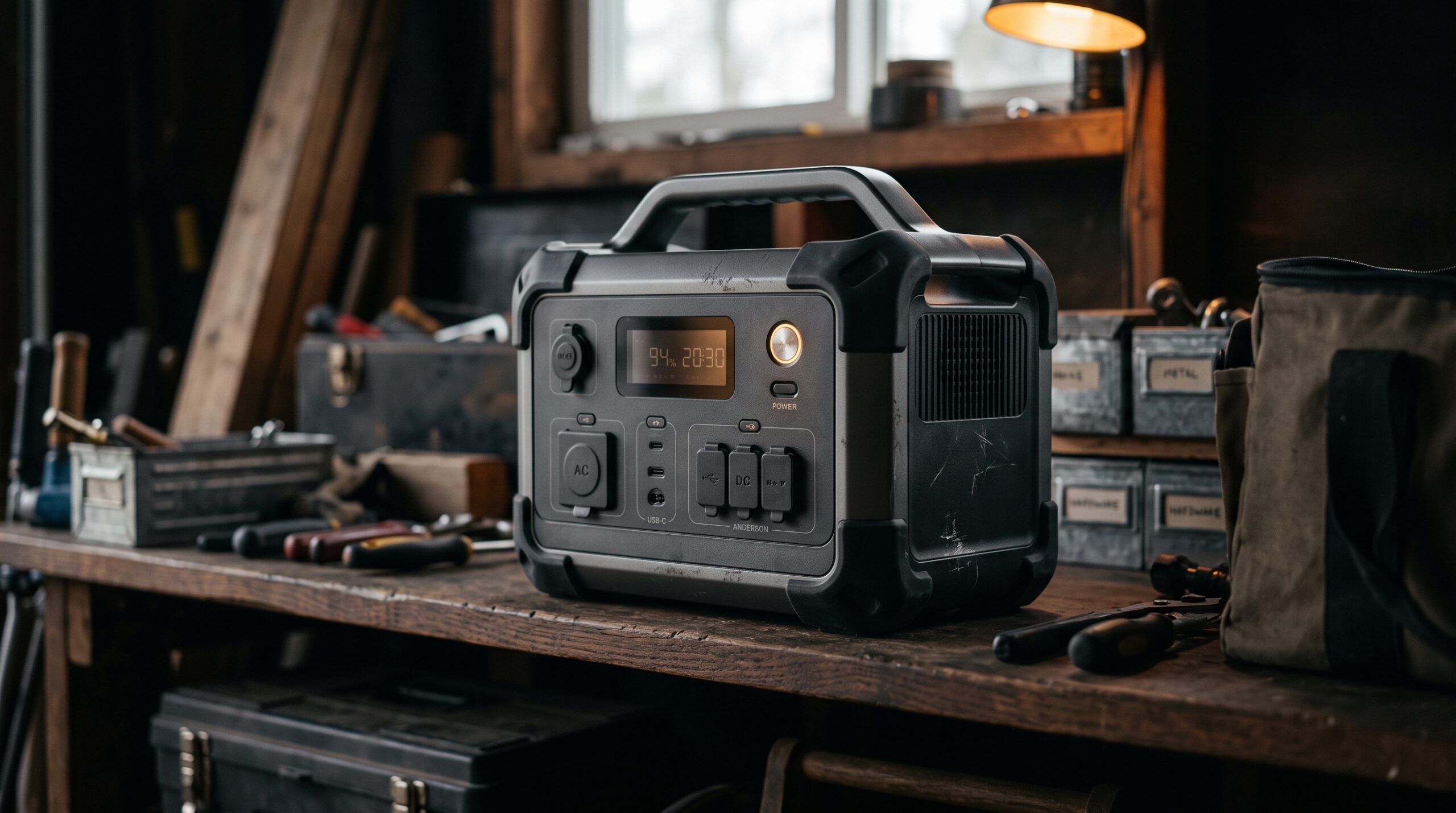
Short version: a modern LiFePO4 power station often lasts 10 or more years and 3,000-plus charge cycles before its battery fades to about 80 percent of its original capacity, while older lithium-ion (NMC) units are typically rated for only 500 to 800 cycles, or roughly three to six years of regular use. “Lasts” means two different things, though, and it helps to keep them apart: how long one charge runs your gear, and how many years the battery itself stays healthy.
This page is about the second one, the lifespan of the battery. A single charge might run a fridge for half a day or top up phones for a week, but the question most buyers really mean is how long the whole machine keeps working before it wears out. The answer depends almost entirely on the cell chemistry inside and on how you treat it.
What a battery cycle actually means
A cycle is one full charge’s worth of energy used, not one time you plug the unit in. Drain a station from full to empty and recharge it, that is one cycle. Use half the battery on Monday and half on Tuesday, recharging each night, and that also counts as one cycle, not two. So the cycle rating on a spec sheet is a measure of total energy throughput over the battery’s life, not a count of how many times you touched the charger.
Cycle life is the number a maker quotes alongside a capacity threshold, almost always “to 80 percent.” A rating of “3,000 cycles to 80 percent” means that after roughly 3,000 full cycles the battery is expected to still hold about 80 percent of the energy it did when new. It does not stop working at that point. It just holds a little less each year, the same way a phone battery slowly shrinks. A few makers quote the same idea against a 70 percent threshold instead, which makes the cycle number look bigger, so it is worth checking which threshold a spec uses before comparing two units.
LiFePO4 vs lithium-ion lifespan
The single biggest factor in how long a power station lasts is which lithium chemistry sits inside it. Most stations sold today use lithium iron phosphate, written LiFePO4 or LFP, and it is built for the long haul: makers commonly rate it at 3,000 to 6,000 or more cycles to 80 percent capacity, which works out to roughly 10 to 15 years even if you cycle it fairly often. Jackery rates its current LiFePO4 Explorer line at about 4,000 cycles, and EcoFlow puts its LFP units in the 3,000-to-6,000 range, both translating to 10-plus years of normal use.
Older and cheaper units often use a nickel-based lithium-ion chemistry (NMC or NCA), the same family found in laptops and many phones. It is lighter and more compact, but it wears out far sooner, typically rated around 500 to 800 cycles to 80 percent, sometimes up to a couple of thousand under gentle use. In day-to-day terms that is roughly three to six years of regular cycling before the runtime noticeably shrinks. If you are weighing the two, our LiFePO4 vs lithium-ion breakdown covers the full tradeoff, and our Jackery vs EcoFlow vs Bluetti comparison shows how the big three brands rate their cells.
| Battery chemistry | Typical cycles to 80% | Rough lifespan |
|---|---|---|
| LiFePO4 (LFP) | ~3,000–6,000+ | ~10–15 years |
| Lithium-ion (NMC / NCA) | ~500–800 (up to ~2,000 gentle) | ~3–6 years |
| Lead-acid (older/cheap units) | ~200–500 | ~2–4 years |
Treat these as ranges, not promises. The real number depends on how deeply you discharge the battery, how warm it runs, and how it is stored between uses. The same LiFePO4 pack can reach the top of its range with gentle, cool treatment or fall short of the bottom if it lives in a hot car at full charge.
What shortens a battery’s life
Three things age a lithium battery faster than its cycle count alone would suggest, and all three are within your control. The first is heat. Battery University’s testing shows elevated temperature permanently eats capacity: a cell sitting at about 40°C (104°F) loses far more over a year than one kept near room temperature, and the loss is worst when the battery is also full. Leaving a station in a hot trunk, a sunny window, or a sealed shed in summer quietly shortens its life whether you use it or not.
The second is deep discharging. Running the pack to empty and back, every time, is the hardest way to use it. Lab data shows that shallow cycles count for far more than deep ones, a battery cycled in small bites can last several times as many cycles as one routinely run flat. The third is storage state of charge. Parking a battery at 100 percent for weeks, especially while warm, is more stressful on the cells than gently using it. The combination of full charge plus heat is the single worst thing you can do to a lithium pack in storage.
Care tips to make it last
You do not have to baby a power station, but a few habits push it toward the top of its rated life rather than the bottom. Keep it cool and out of direct sun, and never leave it in a hot vehicle; a closet, garage, or basement that stays near room temperature is ideal. For everyday use, avoid the extremes: try not to run it all the way to zero, and there is no need to leave it pinned at 100 percent once it is charged. Cycling roughly between 20 and 80 percent, where it is convenient, is gentler than full empty-to-full swings.
For long storage, the makers’ own advice is to leave the battery around 50 to 60 percent charged in a cool, dry place, then top it up every three to six months so it never sits empty long enough to over-discharge. Keep the firmware updated, since the built-in battery management system improves with updates, and recharge with the unit’s own adapter or a solar setup configured for its chemistry. None of this changes a bad outage, but over years it is the difference between a battery that still holds most of its capacity and one that faded early. If you mostly want backup that sits ready for emergencies, a fixed portable vs home battery comparison is worth a look, since a wall-mounted system is built around the same storage-life concerns.
When it’s time to replace it
Hitting 80 percent capacity is not a death sentence. A battery at that point still runs everything it used to, just for a bit less time per charge, and plenty of stations stay useful well past their rated cycle count. The honest signal to replace is practical, not a number: when the runtime has shrunk enough that the unit no longer covers the outage you bought it for, it has earned retirement, even if the cells technically still work.
Replace sooner, regardless of age, if you see warning signs: a swollen or bulging case, a unit that runs hot or smells off while charging, error faults the battery management system will not clear, or runtime that collapses suddenly rather than fading gradually. Those point to a failing cell or a protection fault, not normal wear. The good news is that many newer LiFePO4 stations use modular or expansion batteries, so you can sometimes swap the worn pack and keep the inverter and case rather than replacing the whole machine.
To see how long a single charge actually lasts on your gear, rather than how long the battery lasts in years, run your devices through the Appliance Runtime calculator, which divides a station’s watt-hours by your real loads. And if you are sizing a new unit, the Power-Station Sizing calculator adds up your appliances plus their startup surge so you buy enough capacity to begin with, which means shallower cycles and a longer life down the road.
Frequently asked questions
How many years does a power station last?
A LiFePO4 power station typically lasts about 10 to 15 years before its battery fades to roughly 80 percent of its original capacity, even with fairly regular use. Older lithium-ion (NMC) units last less, around three to six years of regular cycling. The exact figure depends on how often you cycle it, how warm it runs, and how it is stored, so treat the range as a guide rather than a guarantee.
What does “3,000 cycles to 80%” mean?
It means that after about 3,000 full charge-and-discharge cycles, the battery is expected to still hold roughly 80 percent of the energy it did when new. A cycle is one full battery’s worth of energy used, so two half-discharges count as one cycle, not two. The battery does not stop at that point; it simply holds a little less each year afterward. Some makers quote the same idea against a 70 percent threshold, which inflates the cycle number, so check which threshold a spec uses.
Is it bad to leave a power station plugged in all the time?
Sitting at a full 100 percent charge for long stretches, especially in a warm spot, is one of the more stressful states for a lithium battery and can speed up capacity loss. Many modern units manage this for you, but if yours simply holds at 100 percent, it is gentler to unplug it once charged and store it around 50 to 60 percent, topping it up every few months. For a unit you keep as standby backup, a cool location matters more than keeping it constantly full.
Does running a power station to zero damage it?
Occasionally draining it fully will not wreck a modern station, since the battery management system shuts off before the cells are truly over-discharged. But doing it every time is the hardest way to use the battery, because deep cycles wear cells faster than shallow ones. Where it is convenient, cycling between roughly 20 and 80 percent stretches the battery’s life. The bigger risk is leaving it sitting empty for months, which can over-discharge the cells, so store it partly charged instead.
Which lasts longer, LiFePO4 or regular lithium-ion?
LiFePO4 lasts considerably longer. It is commonly rated for 3,000 to 6,000 or more cycles to 80 percent capacity, versus roughly 500 to 800 cycles for the nickel-based lithium-ion (NMC) chemistry used in older or budget units. In years, that is about 10 to 15 for LiFePO4 against three to six for NMC. LiFePO4 is heavier and bulkier for the same capacity, but for a backup unit that may sit for years, its longer life and steadier behavior are usually worth the extra weight.
Sources
- EcoFlow, How Long Do LiFePO4 Batteries Last (10–15 years / ~3,000–6,000 cycles to 80%, plus storage and temperature care tips)
- EcoFlow, LiFePO4 or NMC: Choose the Right Home Battery Backup (LFP ~3,000–6,000+ cycles vs NMC ~500–2,000)
- Jackery, What Is Battery Cycle Life and How to Extend It (definition of a cycle; LiFePO4 ~4,000-cycle rating)
- Jackery Explorer 1000 v2 product page (1,070Wh LiFePO4, retains 70%+ capacity after 4,000 cycles, 10+ year design life)
- Battery University, BU-808: How to Prolong Lithium-Based Batteries (depth-of-discharge, heat, and full-charge storage effects on cycle life)