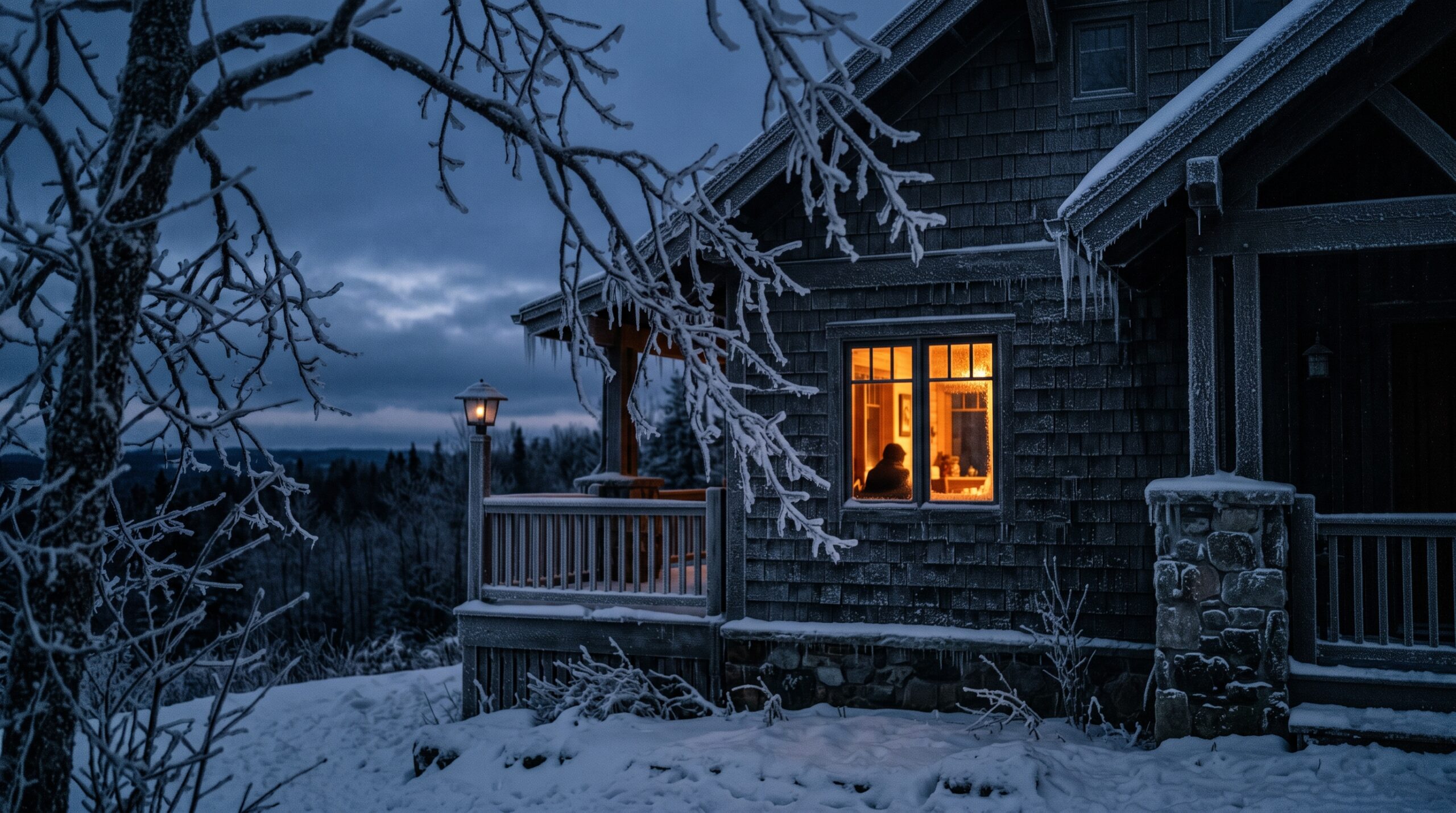
Ice storms are one of the most reliable ways to lose power for days at a time. When freezing rain glazes trees and overhead lines, the added weight snaps limbs and pulls down conductors, and repair crews often can’t safely reach every break until the ice starts to melt. The safest plan assumes a long, cold outage: keep your household warm, keep your water pipes from freezing, and keep combustion fumes out of the house. The federal guidance at Ready.gov is the backbone of everything below. Think of this as the ice-specific companion to our broader winter storm prep walkthrough.
⚠️ Never heat your home with fuel indoors
Never use a stove, oven, charcoal grill, or generator indoors to heat your home; the carbon monoxide it produces is colorless, odorless, and can be fatal. Run generators outdoors only, well away from doors, windows, and vents. Watch for hypothermia in children, older adults, and pets, who get cold first. And treat every downed line as live and energized: stay at least 35 feet away and call 911.
Prepare before the storm
Freezing rain gives you some warning. When the National Weather Service posts an ice storm warning or a winter storm warning, treat it as a cue to get ready for the power to go out and stay out. The goal is to have everything you need before the lines come down, because once the roads ice over, a run to the store may not be possible.
- Charge phones, battery banks, and any portable power station to full while you still have grid power.
- Fill containers with drinking water, and fill a tub or jugs so you can flush toilets if a well pump loses power.
- Stock a few days of food that needs no cooking, plus a manual can opener, and refill any prescription medications you are running low on.
- Set out flashlights and headlamps with spare batteries. Skip candles when you can, since open flames are a fire risk in a dark, crowded house.
- Locate your water main shutoff and your electrical panel now, while you can still see them clearly.
- Test the batteries in your carbon monoxide and smoke alarms.
If you are building your supplies from scratch, our emergency kit checklist walks through everything a cold-weather outage calls for. Keep refrigerator and freezer doors shut as much as possible once power fails: per Ready.gov, a closed refrigerator holds a safe temperature for about four hours, and a full freezer for about 48 hours.
Stay warm safely
The single biggest danger in a cold outage is not the cold itself, it is the shortcuts people take to fight it. Pick one small interior room, close it off, and keep everyone in it. Block drafts under the door with towels, wear several loose layers, and add a hat and gloves, since you lose a lot of heat through your head and hands. Sharing body heat and sipping warm, non-alcoholic drinks helps too. Our guide to staying warm safely covers this in more depth.
What you must not do is bring combustion indoors. The CDC warns never to use a gas stove or oven, a charcoal or gas grill, or a generator inside the home to stay warm, because they release carbon monoxide that you cannot see or smell. Keep a battery-backup CO alarm on every level of the house, and if it sounds, get everyone outside into fresh air and call 911.
Watch the people and pets who chill fastest. According to the CDC, warning signs of hypothermia in adults include shivering, exhaustion, confusion, fumbling hands, memory loss, slurred speech, and drowsiness; in infants, look for bright red, cold skin and very low energy. If you suspect hypothermia, take the person’s temperature, and if it is below 95°F, seek medical attention right away. While you wait, move them somewhere warmer, remove wet clothing, and warm the center of the body with dry layers or blankets.
| Ice-outage hazard | Why it spikes after freezing rain | What lowers the risk |
|---|---|---|
| Hypothermia | No heat and falling indoor temperatures; hits children, older adults, and pets first | Heat one room, layer up, share body heat, sip warm fluids, watch for warning signs |
| Carbon monoxide poisoning | People burn fuel indoors to stay warm or run a generator too close to the house | Never burn fuel inside; run generators outdoors only; keep a battery-backup CO alarm |
| Frozen or burst pipes | Unheated water lines drop below freezing and split | Let faucets drip, open cabinets, keep heat on if you can, know the main shutoff |
| Downed power lines | Ice-laden limbs and poles fall and pull conductors down with them | Assume every line is live, stay 35+ feet back, and call 911 and your utility |
Protect your pipes
When the heat goes off, water sitting in pipes along exterior walls and in unheated spaces can freeze, expand, and crack the pipe. The American Red Cross recommends letting a faucet drip with cold water so a trickle keeps moving through the line, and opening the cabinet doors under sinks so warmer room air can reach the plumbing. If you still have any source of heat, keep the home as warm as you safely can.
If a pipe does freeze, a faucet that will not run is the first clue. Keep that faucet open, then thaw the pipe gently with warm towels or a hair dryer. Never use an open flame or a blowtorch. If a pipe bursts, shut off the water at the main valve right away, which is why finding it before the storm matters.
Downed lines and falling ice
Ice storms bring down a lot of hardware. The Electrical Safety Foundation International notes that heavy ice is more than capable of bringing down utility poles and power lines, and that you should consider every downed line live and dangerous. If you come across one, stay at least 35 feet back, which is roughly three car lengths, and do not touch the line or anything it is touching, including fences, puddles, and tree limbs. Warn anyone nearby, then call 911 and your utility.
The ice itself is also a falling hazard. Loaded branches and chunks of ice can let go without warning, so give trees and sagging lines a wide berth when you go outside, and do not park under them. If a line falls across your car while you are in it, stay inside and call for help unless the car is on fire.
Backup power
Backup power buys you light, phone charging, and a way to keep a few essentials running, but only if it is used safely. A portable generator must run outdoors at least 20 feet from the house, with the exhaust pointed away from doors, windows, and vents, and it should never be plugged directly into a wall outlet. A battery power station produces no exhaust, so it is the safer choice for indoor use, charging phones and medical devices and running small loads from inside the warm room.
The trick is matching the equipment to what you actually need to power. To see whether a given power station can cover your essentials, run your list through our Power-Station Sizing calculator →, then check how long it will last on a charge with the Appliance Runtime calculator →. That keeps you from buying more than you need, or counting on a unit that runs flat in an hour.
After the storm
The hazards do not end when the rain stops. Lines and limbs can keep falling as ice melts and shifts, so stay clear of anything sagging or down until crews confirm it is safe. Keep your CO alarm in mind if you are still running any heat source, and do not move a generator indoors to refuel or warm up.
When power returns, check your food. Throw out perishable items that sat above 40°F for more than a couple of hours, and remember the four-hour refrigerator and 48-hour full-freezer windows from Ready.gov. When in doubt, throw it out. Watch for refreezing overnight if your heat is still out, and keep letting faucets drip until indoor temperatures are reliably back above freezing.
Frequently asked questions
How long do ice storm power outages usually last?
Ice storm outages are often measured in days rather than hours. Freezing rain brings down lines and trees across a wide area at once, and crews frequently cannot reach every break safely until the ice begins to melt. Plan for a multi-day outage so a shorter one is a pleasant surprise, not a crisis.
Can I heat my house with a gas stove or oven during an outage?
No. The CDC warns never to use a gas stove or oven to heat your home, because it releases carbon monoxide, an invisible, odorless gas that can be deadly. The same applies to charcoal and gas grills and to generators. Heat one room with safe methods, layer up, and keep a battery-backup CO alarm on every level.
How far should I stay from a downed power line?
Stay at least 35 feet away, about three car lengths, and assume the line is live. Do not touch the line or anything in contact with it, including puddles, fences, and tree limbs. Keep others back, then call 911 and your electric utility to report it.
How do I keep my pipes from freezing during an outage?
The Red Cross recommends letting a faucet drip cold water so a trickle keeps moving through the line, and opening the cabinet doors under sinks so warmer air can reach the pipes. Keep the home as warm as you safely can, and know where your main water shutoff is in case a pipe bursts.
Will a portable power station keep me warm in an ice storm?
A battery power station is best for light, phone and device charging, and small essentials, not for running an electric space heater for long, since heaters draw a lot of power and will drain most units quickly. Use it safely indoors because it produces no exhaust, and rely on layers and a single closed-off room for warmth. Run your appliance list through the sizing and runtime calculators to see what a given unit can realistically do.
Sources
- Ready.gov — Winter Weather
- Ready.gov — Power Outages
- National Weather Service — Winter Weather Safety
- CDC — Recognizing Hypothermia
- CDC — Avoiding Carbon Monoxide Poisoning
- American Red Cross — Preventing and Thawing Frozen Pipes
- Electrical Safety Foundation International — Winter Downed Power Lines