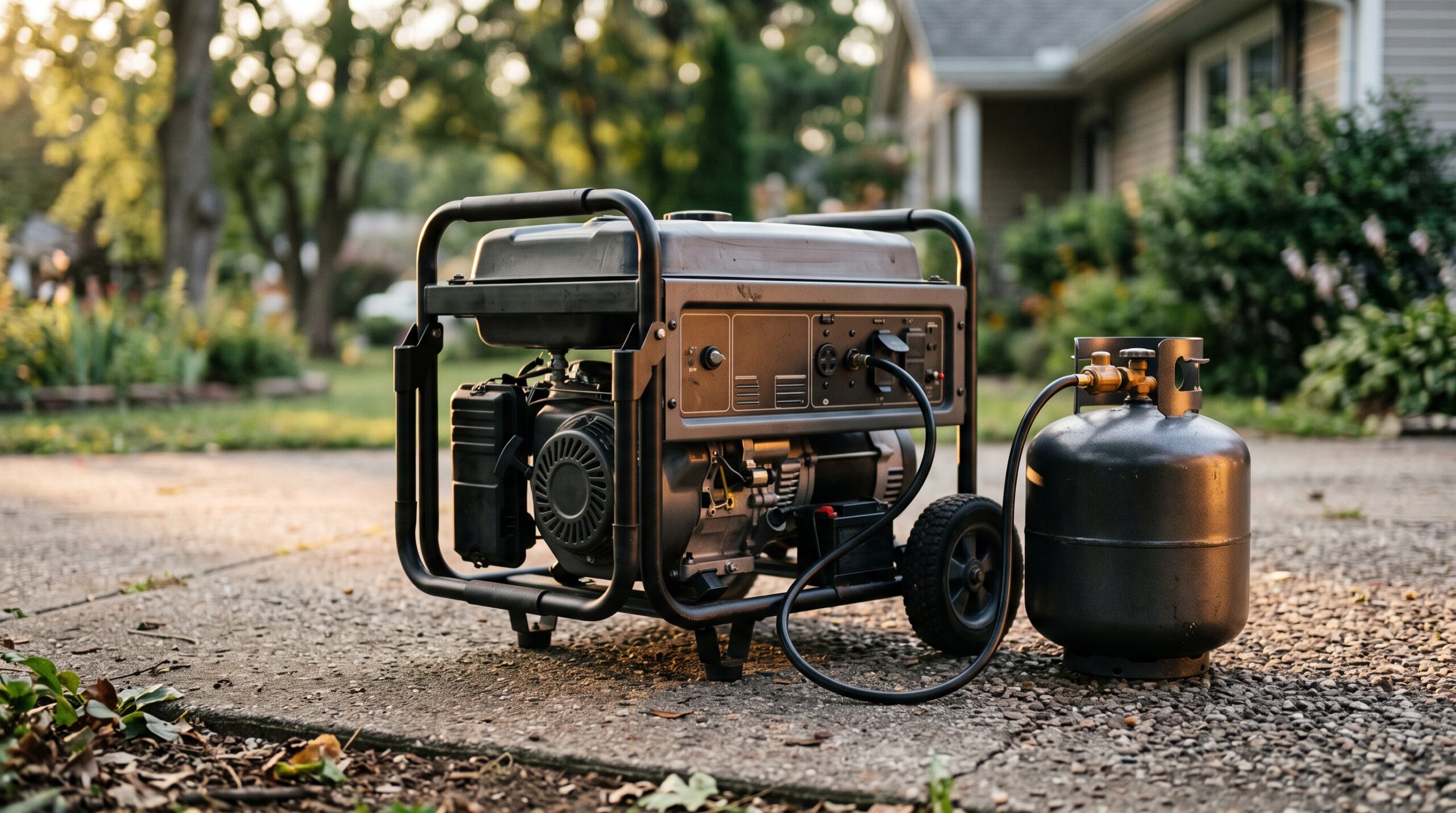
A dual-fuel generator runs on either gasoline or propane, while a gas-only generator runs on gasoline alone. The short version: choose dual-fuel if you want fuel flexibility and long-term storage, and choose gas-only if you want a simpler, cheaper machine and don’t mind keeping gasoline fresh. Propane stores almost indefinitely and burns cleaner, gasoline gives you a little more power and is usually easier to find in a pinch, and a dual-fuel unit simply lets you pick whichever fuel you have on hand at the moment. Below is a plain comparison across the things that actually decide it: fuel storage, power, cost, and upkeep.
⚠️ Either fuel, outdoors only
Both gasoline and propane generators run an internal-combustion engine, and both give off carbon monoxide. Propane is often cited as producing less CO than gasoline, but both still produce enough to kill. Run any generator outdoors only, at least 20 feet from windows, doors, and vents, with the exhaust pointed away from the house. Never run one in a garage, basement, crawlspace, or shed, even with the door open, and keep a working CO alarm inside.
What dual-fuel means
A dual-fuel generator is the same engine and alternator as a conventional gas generator, with an extra fuel system added. It has the usual gasoline tank on top, plus a hose fitting and regulator that connect to a standard propane (LPG) tank, the same kind you use for a gas grill. A selector switch or valve tells the engine which fuel to draw from, and you pick one or the other for a given run rather than burning both at once. Many people start the unit on gasoline, since it lights easily, and then keep it fed with propane for the longer haul.
A gas-only generator skips all of that. There’s one tank, one fuel, and one thing to think about. That simplicity is part of the appeal, and it’s also why gas-only units tend to cost less for the same wattage. If you’re still deciding between a fuel-burning generator and a battery unit in the first place, that’s a separate question we cover in generator vs power station; this comparison assumes you’ve landed on a gas-engine generator and are choosing how it’s fueled.
Fuel storage and shelf life
This is the single biggest practical difference, and it’s where propane shines. Gasoline degrades. Stored in a can, it can start to break down in as little as three months, and without a fuel stabilizer it tends to gum up carburetors and go stale, which is one of the most common reasons a generator won’t start when you finally need it. Stabilizer and a sealed container stretch that window, but gasoline is always on a clock, and storing large quantities of it safely is its own headache.
Propane does not have that clock. Sealed in its tank, propane essentially never goes bad; it holds its chemical composition indefinitely, which is why it’s a favorite for emergency equipment that might sit unused for years. Any expiration date stamped on a propane cylinder refers to the tank’s required re-inspection, not the fuel inside. For a generator you’re buying mainly for the occasional outage, that means you can keep a couple of full propane tanks in the garage or shed for years and trust they’ll be ready, where the same can of gasoline would need rotating every season. The trade-off is that propane tanks are bulky, and you have to keep enough on hand, since you can’t siphon it out of your car the way you can with gasoline.
Power output difference
Gasoline is the higher-output fuel. A gallon of propane carries roughly a quarter less energy than a gallon of gasoline, so running on propane usually drops a dual-fuel generator’s output by somewhere around 5 to 15 percent depending on the model. Manufacturers publish both ratings on the spec sheet. Champion, for example, lists some dual-fuel units at full wattage on gasoline and a few percent lower on propane, and a typical full-size unit like the Westinghouse WGen9500DF is rated around 9,500 running watts on gasoline versus about 8,500 on propane. Treat those as model-specific numbers, not a universal rule, and check the label on the unit you’re considering.
In practice, that gap only matters if you’re running close to the generator’s ceiling. If you’ve sized the unit with headroom for your fridge, sump pump, and a few circuits, the propane derate is invisible. If you’re trying to squeeze every last watt to start a big motor, gasoline gives you the margin. This is also a good moment to remember that starting (surge) watts matter as much as running watts for motor-driven appliances, and that an inverter generator behaves differently from a conventional one on partial loads, which we break down in inverter vs conventional.
Cost
Up front, a gas-only generator is the cheaper buy. You’re paying for one fuel system instead of two, so for the same wattage a gas-only model typically costs a bit less than the dual-fuel version of a comparable machine. If budget is the deciding factor and you’re comfortable managing fresh gasoline, that’s a legitimate reason to go gas-only.
Running costs are closer and depend on local fuel prices, which move around. Per unit of energy, gasoline and propane trade places depending on where and when you buy. What tends to tip the math over the life of the generator is waste: gasoline you bought and didn’t burn before it went stale is money poured out, while propane you stored will still be usable years later. Dual-fuel buyers are often paying the small premium less for cheaper fuel and more for flexibility and the peace of mind that their stored fuel won’t expire.
Noise and cleanliness
Propane is the cleaner-burning fuel. It produces fewer emissions than gasoline and leaves far less carbon buildup and gummy residue inside the engine, which means less frequent maintenance and a unit that’s more likely to start on the first pull after sitting. Gasoline engines accumulate deposits and need more attention to oil, filters, and fuel freshness over time. Many owners run propane specifically to keep the engine cleaner during long storage. Some people also find propane combustion runs a touch smoother and quieter, though the difference is small and depends far more on whether the unit is a conventional or inverter design than on the fuel itself.
None of this changes the safety picture, and it’s worth being blunt about it: cleaner-burning does not mean safe to run indoors. A propane generator still produces carbon monoxide, just like a gasoline one, and the same outdoor-only, 20-feet-away rules apply to both. If you want the full routine for placing, grounding, and refueling a generator without poisoning anyone, see using a generator safely.
Head-to-head comparison
| Dual-fuel | Gas-only | |
|---|---|---|
| Fuel options | Gasoline or propane (LPG); pick one per run | Gasoline only |
| Storage life | Propane stores almost indefinitely; gasoline still degrades | Gasoline only, stale in months without stabilizer |
| Power | Full output on gasoline; roughly 5–15% less on propane | Full rated output |
| Cost | Higher upfront; flexibility and longer fuel storage | Lower upfront; one simpler fuel system |
| Convenience | Use whatever fuel you have; cleaner propane for long storage | One fuel, one tank, less to manage |
Which to choose
Choose dual-fuel if: you’re buying mainly for emergencies that may be months or years apart, you want fuel you can store and forget, or you like the safety net of being able to switch fuels when one runs short during a long outage. The propane side stores indefinitely and keeps the engine clean, and the gasoline side is there for easy starts and maximum output when you need it.
Choose gas-only if: you want the lowest price for a given wattage, you’ll use and rotate the generator often enough that stale fuel isn’t a worry, or you simply prefer one fuel system with less to think about. For frequent users who keep fresh gasoline on hand, the dual-fuel premium buys flexibility you may not use.
For most people buying a generator that will sit and wait for the next storm, the flexibility and long fuel storage of dual-fuel are worth the modest extra cost. For the budget-focused or the frequent user, gas-only is a perfectly sound, simpler choice. Either way, size the unit to the loads you actually need to cover before you buy.
Not sure how many watts and watt-hours your gear actually needs? Size it first. Our Power-Station Sizing calculator turns your appliance list into the running and surge watts to look for, and the Appliance Runtime calculator shows how long a given fuel load or battery will hold those loads, so the ranges above become real numbers for your own setup.
Dual-fuel and gas-only, live prices

Champion 4500W Dual Fuel Inverter
Gas or propane, electric start, RV ready
$988.62Check price on Amazon →

Champion 9375W Dual Fuel
Home-backup open frame, electric start, gas or propane
$874.99Check price on Amazon →


Generac GP8000E
8,000 running / 10,000 starting watts, electric start
$1,299.00Check price on Amazon →
As an Amazon Associate we earn from qualifying purchases. Prices are pulled automatically from Amazon and may have changed.
Frequently asked questions
Should I just run my dual-fuel generator on propane all the time?
Many owners do, and it’s a reasonable default for a generator that sits between outages, because propane stores indefinitely and keeps the engine cleaner. The trade-offs are a small drop in maximum power, typically around 5 to 15 percent depending on the model, and slightly harder starts in very cold weather, where propane pressure can drop. A common approach is to start on gasoline and switch to propane for the long run, or keep gasoline in reserve for the rare moment you need the unit’s full output.
Does propane produce less carbon monoxide than gasoline?
Propane burns cleaner and is generally cited as producing less carbon monoxide than gasoline, but both fuels produce dangerous amounts. Any generator with an internal-combustion engine, propane or gasoline, emits CO that can build to deadly levels in an enclosed space. Cleaner-burning is not a license to run a propane generator indoors. Run either type outdoors only, at least 20 feet from windows, doors, and vents, and keep a working CO alarm inside.
How much power do I lose running on propane?
Usually somewhere around 5 to 15 percent less than on gasoline, varying by model, because propane carries less energy per unit than gasoline. Manufacturers print both numbers on the spec sheet, so you can see exactly how a given unit’s running and surge watts change between fuels. If you’ve sized the generator with headroom, that derate rarely matters; it only bites when you’re running close to the unit’s maximum output.
How long does propane last in storage compared to gasoline?
Propane stored in a sealed tank lasts essentially indefinitely; it doesn’t degrade over time, so it’s well suited to emergency fuel you rarely touch. Gasoline is the opposite: it can begin to go stale within a few months and needs a stabilizer and rotation to last longer. Any expiration date on a propane cylinder refers to the tank’s re-inspection schedule, not the fuel inside. That long shelf life is the main reason many emergency buyers prefer a dual-fuel unit fed by propane.
Is a dual-fuel generator worth the extra cost?
For occasional and emergency use, usually yes. The modest premium buys fuel flexibility and the ability to store propane for years without it going bad, which is valuable for a machine that mostly waits for the next outage. If you’ll use the generator frequently and keep fresh gasoline on hand, a gas-only unit costs less and does the same job with one simpler fuel system. The right answer depends on how often you’ll actually run it and how much you value storage and flexibility.
Sources
- U.S. Centers for Disease Control and Prevention, About Carbon Monoxide Poisoning
- U.S. Consumer Product Safety Commission, Carbon Monoxide Information Center
- Champion Power Equipment, Fuel Face-Off: Gasoline, Propane, and Natural Gas Compared
- Electric Generators Direct, Portable Dual Fuel Generator Buyer’s Guide
- Ferrellgas, Propane’s Shelf Life Makes It the Envy of Gasoline and Diesel
- EcoFlow, Propane vs. Gas Generator: Dual Fuel Technology