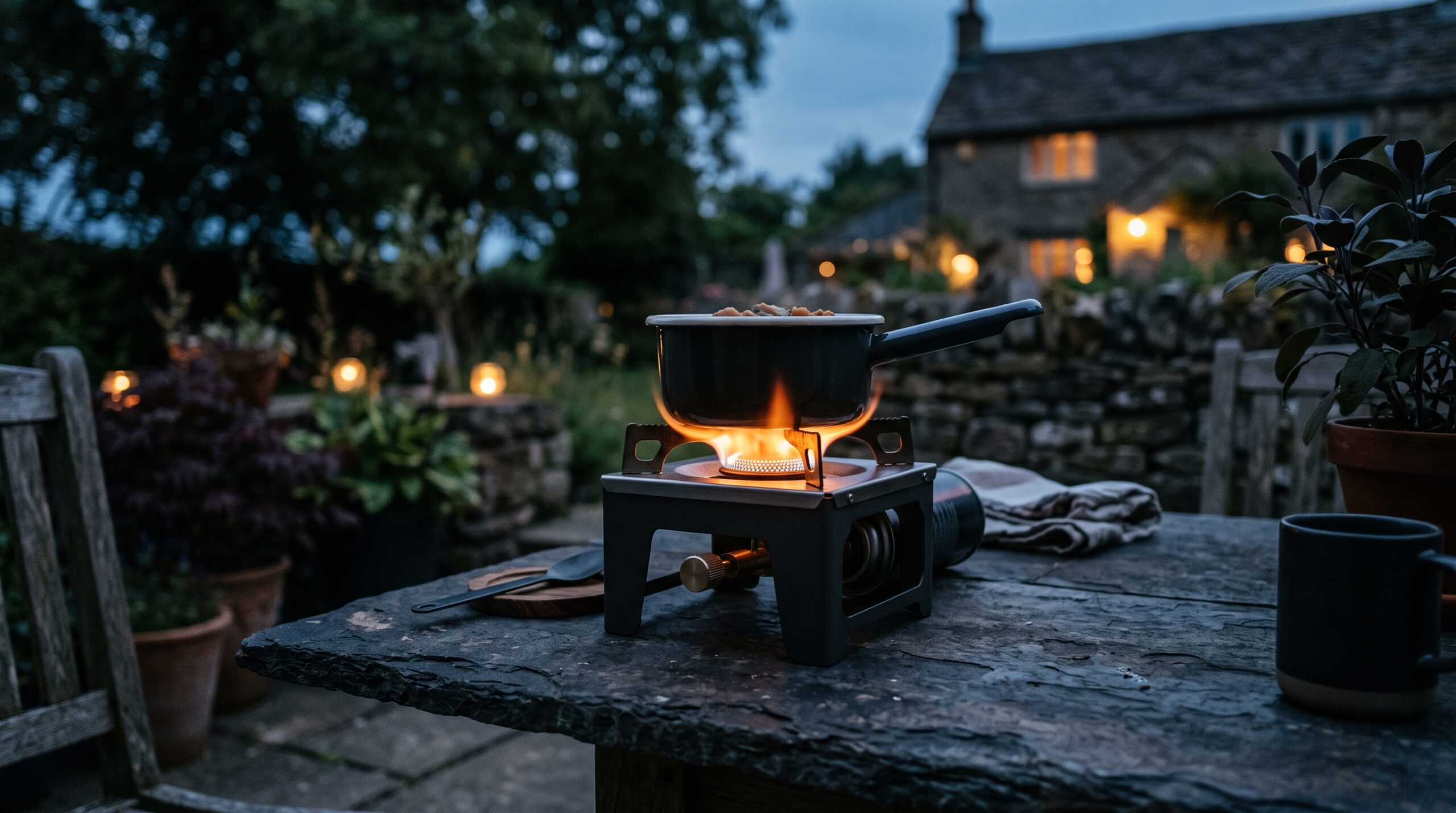
When the power goes out, the safest first move is to eat what does not need cooking at all. The single most important rule for cooking without power is this: never burn fuel inside your home. Charcoal and gas grills, camp stoves, and generators all give off carbon monoxide, an invisible gas that can kill before you notice anything is wrong. This guide walks through how to cook without power the safe way: what is fine to use, what is dangerous, and how to keep your food from making you sick while you do it.
⚠️ Never use a grill or camp stove indoors
Charcoal and gas grills, camp stoves, and any fuel-burning cooker give off carbon monoxide and must be used outdoors only, away from doors and windows. Never bring them inside or into a garage, basement, or tent, even with a window or door open. Carbon monoxide has no color and no smell. If anyone feels a headache, dizziness, weakness, nausea, or confusion, get to fresh air right away and call 911.
Start with no-cook foods
For a short outage, the smartest cooking strategy is to not cook at all. No-cook foods carry zero risk of carbon monoxide, zero fire risk, and they free up your fuel for when you really need it. Reach for shelf-stable items first and save anything that needs heat for later.
- Canned goods you can eat cold: beans, tuna, chicken, vegetables, fruit, soups, and chili.
- Peanut butter, crackers, bread, tortillas, granola bars, trail mix, and dried fruit.
- Pouched and ready-to-eat meals that need no water or heat.
- Perishables from the fridge first, while they are still cold, so they get eaten before they spoil.
Keep a manual can opener with your supplies so canned food is actually usable. For a full list of what to stock, see our guide to the best no-cook foods for an outage, and make sure these items are part of your emergency kit.
Cook outdoors safely: grill or camp stove
A charcoal or gas grill and a camping or backpacking stove are fine ways to cook during an outage, with one hard rule: they belong outside, and only outside. The Consumer Product Safety Commission and the CDC both warn that burning charcoal, gas, or propane in an enclosed space can build up lethal carbon monoxide in minutes. An average of about 100 people die each year in the United States from carbon monoxide produced by portable generators alone, and hundreds more from other fuel-burning devices.
- Set up on an open patio, deck, or yard, at least 20 feet from any window, door, or vent.
- Never cook on a porch, in a carport, in a garage, or inside a tent, even with the door open. Opening a door or window does not provide enough ventilation to keep you safe.
- Keep the grill or stove on a stable, level surface away from anything that can catch fire.
- Let charcoal cool fully before you move it, and never store a grill indoors while coals are warm.
A built-in kitchen gas range is a different thing from a portable camp stove. It is designed and vented for indoor cooking, and on many models you can light a burner with a match if the electric igniter is out. Check your owner’s manual, keep the kitchen ventilated, and if you ever smell gas, do not light anything and leave the area.
Use a power station for a small appliance
A battery power station produces no combustion and no carbon monoxide, so it is safe to run indoors. That makes it one of the cleanest ways to heat food during an outage. The catch is wattage: cooking appliances draw a lot of power, and a power station has a limited battery and a maximum output rating.
- Good matches: an electric kettle for hot water, a single-burner induction or hot plate used briefly, a small rice cooker, or a microwave if your station can handle the surge.
- Check the appliance label for its watts and compare it to your station’s continuous and surge output before you plug in.
- High-watt heating appliances drain a battery fast, so boil or warm in short bursts rather than long cooks.
Canned heat indoors, with caution
Canned cooking fuel like Sterno is made to warm food indoors, the way it is used under chafing dishes at a buffet. It is the one fuel-burning option that can be used inside, but it still produces some carbon monoxide and demands respect. Treat it as a way to warm food, not to cook raw meat or poultry to a safe temperature.
- Use only one or two cans at a time, in a well-ventilated room with a window cracked open.
- Never leave a lit can unattended, and keep it away from curtains, paper, and anything flammable.
- Put it on a heat-safe surface and let the can cool completely before handling or resealing it.
- Keep a working, battery-powered carbon monoxide alarm nearby whenever you burn any fuel indoors.
Keeping food safe while you cook
Cooking method aside, an outage is also a food-safety problem. Bacteria multiply quickly between 40°F and 140°F, so the order you eat things matters as much as how you heat them. Eat the most perishable refrigerated food first, then your frozen food, then your shelf-stable pantry items.
- Keep the refrigerator and freezer doors closed. An unopened fridge holds food safely for about 4 hours; a full freezer holds for about 48 hours, and a half-full freezer for about 24 hours.
- Throw out any perishable food, such as meat, poultry, fish, eggs, or leftovers, that has been above 40°F for 2 hours or more.
- When in doubt, throw it out. Never taste food to decide whether it is safe.
- Cooking does not undo spoilage. If food sat too long in the danger zone, heating it does not make it safe.
For the full playbook on stretching your cold storage, see how to keep food cold without power.
Cooking methods at a glance
| Method | Safe where | Notes |
|---|---|---|
| No-cook foods | Anywhere | No flame, no fuel. The safest option, so start here. |
| Charcoal or gas grill | Outdoors only | At least 20 ft from doors, windows, and vents. Never in a garage. |
| Camp or backpacking stove | Outdoors only | Same as a grill. Never inside a tent, camper, or home. |
| Power station + small appliance | Indoors OK | No combustion. Match the appliance watts to the station’s output. |
| Canned heat (Sterno) | Indoors with ventilation | Warms food only. Crack a window and never leave it unattended. |
| Generator powering an appliance | Outdoors only | 20+ ft from the home. Run cords inside to the appliance. |
Size it before you cook
If you plan to lean on a power station for cooking, run the numbers first so you do not drain the battery before dinner. Use the Appliance Runtime calculator to see how long your station can power a kettle, hot plate, or microwave, and the Power-Station Sizing calculator to find a unit that can actually handle those watts.
Frequently asked questions
Can I use a charcoal grill indoors if I open a window?
No. Burning charcoal indoors can produce lethal levels of carbon monoxide, and an open window or door does not provide enough ventilation to keep you safe. The CPSC says never to use charcoal indoors or in a garage, even with the door open. Grills belong outside, well away from windows and vents.
Is it safe to cook on my gas stove during a power outage?
A built-in kitchen gas range is designed and vented for indoor use, which is different from a portable camp stove. On many models you can light a burner with a match if the electric igniter is out. Check your owner’s manual, keep the kitchen ventilated, and if you smell gas, do not light anything and leave the area. Never substitute a camp stove or grill indoors.
What can I cook with a power station?
Anything within its wattage and battery limits. An electric kettle, a small induction or hot plate used in short bursts, a rice cooker, or a microwave can all work if your station’s continuous and surge output can handle them. Heating appliances drain batteries quickly, so run the Appliance Runtime calculator before you rely on it.
How do I know if my food is still safe to cook?
Throw out perishable food, such as meat, poultry, fish, eggs, or leftovers, that has been above 40°F for 2 hours or more. When in doubt, throw it out, and never taste food to check. Cooking spoiled food does not make it safe, because heat does not remove the toxins some bacteria leave behind.
Do I need a carbon monoxide detector during an outage?
Yes. A working, battery-powered or battery-backup carbon monoxide alarm is essential any time you burn fuel near your home, including canned heat indoors or a generator outside. Carbon monoxide is colorless and odorless, so an alarm is often the only warning you will get.