When the lights go out, the blackout itself is rarely what hurts people. Most serious injuries and deaths during an outage come from how we try to stay warm, lit, and powered: a generator run too close to the house, a candle left burning, or a fridge opened one too many times. The good news is that the worst mistakes are predictable, and avoiding them takes no special gear. Here are the do’s and don’ts that official agencies agree on, grouped so you can scan them fast when the power drops.
⚠️ Carbon monoxide and fire are the top dangers
Run generators outdoors only (20+ ft from windows, doors, and vents, with a battery-backup CO alarm inside); never use candles, grills, charcoal, or fuel-burning heaters indoors; and assume every downed power line is live and stay 35+ ft away.
Generator and carbon monoxide safety
Portable generators are the single deadliest item people bring out during an outage, and the cause is almost always carbon monoxide (CO), an odorless, colorless gas that builds up fast in enclosed air. The CDC and Ready.gov are blunt about placement: never run a generator inside the home, basement, garage, carport, or on a porch, even with doors and windows open.
- Outdoors only, 20+ feet away. Place the generator at least 20 feet from any window, door, or vent, with the exhaust pointed away from the house. Use a heavy outdoor extension cord longer than 20 feet to reach your appliances.
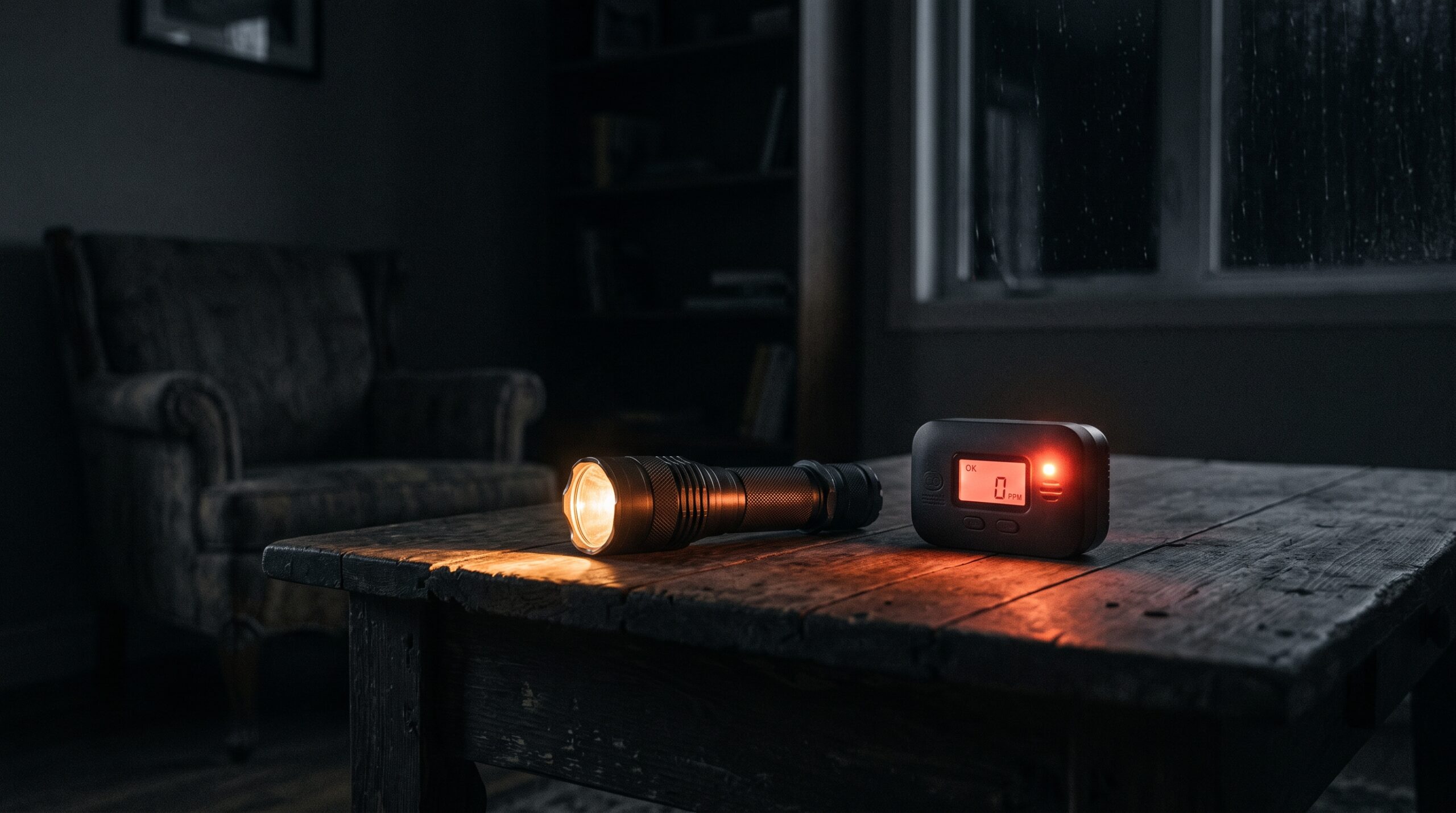
- Install battery-backup CO alarms. Put a CO alarm on every level of the home and near sleeping areas. If an alarm sounds, get everyone outside to fresh air and call 911.
- Never refuel a hot generator. Shut it off and let it cool before adding gasoline. Fuel spilled on a hot engine can ignite.
- Do not backfeed your wiring. Plugging a generator into a wall outlet can energize the lines and endanger utility crews. Run cords straight to appliances, or have an electrician install a transfer switch.
If a generator is part of your plan, walk through the full routine in our guide on using a generator safely before the next storm.
Lighting and fire
Candles feel like the obvious backup, but open flames are a leading cause of home fires during outages. The safer move is simple: reach for battery power instead.
- Use flashlights, lanterns, or headlamps powered by batteries rather than candles. Keep a few stocked where you can find them in the dark.
- If you must use a candle, set it on a stable, non-flammable surface, keep it well away from curtains and bedding, never leave it unattended, and keep it out of reach of children and pets.
- Do not use a gas stove or oven to heat the home. It is a major carbon monoxide risk, not a heating method.
For a stocked-and-ready setup, see our picks for the best emergency lighting to keep on hand.
Food and water
Your fridge and freezer hold the cold surprisingly well, but only if you leave the doors shut. Every time you open the door, you trade away safe storage time.
- Keep doors closed. An unopened refrigerator keeps food safe for about 4 hours. A full freezer holds a safe temperature for about 48 hours (24 hours if it is half full).
- Watch the 40°F line. Use an appliance thermometer. Throw out any perishable food (meat, poultry, fish, eggs, leftovers) that has been above 40°F for 2 hours or more.
- When in doubt, throw it out. Never taste food to decide if it is safe. You can refreeze items only if they still have ice crystals or are at 40°F or below.
- Toss refrigerated medications after a day without power unless the label says otherwise, and ask your pharmacist if you are unsure.
- Water: if local officials issue a boil-water or contamination notice, use bottled, boiled, or treated water for drinking and cooking.
Electrical and surge protection
The moment power returns can be rougher on your electronics than the outage itself. A surge as the grid comes back can fry sensitive gear.
- Unplug computers, TVs, and major appliances during the outage so a restoration surge cannot damage them.
- Leave one lamp switched on so you have an obvious signal when the power comes back.
- Bring electronics back gradually once power is stable, rather than turning everything on at once.
Downed power lines
A line on the ground does not have to spark or hum to be dangerous. Always treat a downed line as live and energized.
- Stay at least 35 feet away. The ground around a fallen line can be energized, and water spreads that current even farther.
- Do not touch anything in contact with it, including fences, puddles, tree limbs, or vehicles.
- If a line falls on your car, stay inside and call for help unless the vehicle is on fire. If you must get out, jump clear without touching the car and the ground at the same time, then hop away with both feet together.
- Call 911 and your utility to report the line, and keep others back until crews arrive.
Heat and cold
Losing heating or cooling is more than uncomfortable. In a long outage, extreme temperatures are a real health risk, especially for older adults, young children, and people with chronic conditions.
- Cold weather: layer clothing, use blankets and sleeping bags, and close off rooms you are not using to trap heat. Keep space heaters at least 3 feet from anything flammable and never leave them running unattended. Do not heat your home with a stove, oven, grill, or fuel-burning camp heater.
- Hot weather: drink plenty of water and move to an air-conditioned location such as a cooling center if your home gets too hot. In extreme heat, a fan alone may not be enough to prevent heat illness.
- Know the warning signs of hypothermia (shivering, confusion, drowsiness) and heat illness (heavy sweating, dizziness, nausea), and call for help if they appear.
Check on others
Outages hit some neighbors much harder than others. A quick knock on the door can matter most for people who cannot easily leave or who depend on electricity to stay well.
- Check on older adults, people with disabilities, and anyone living alone, especially in extreme heat or cold.
- Plan ahead for powered medical equipment such as oxygen concentrators or refrigerated medicine. Ask your utility about its medical-priority or registry program and keep a backup power option ready.
- Keep phones charged and conserve battery for emergency calls and outage updates.
For a step-by-step plan covering the first minutes through recovery, see what to do during an outage.
The do’s and don’ts at a glance
| Do | Don’t |
|---|---|
| Run generators outdoors, 20+ ft from the house | Run a generator in a garage, basement, or near a window |
| Use battery flashlights, lanterns, and headlamps | Light candles and walk away from them |
| Keep the fridge and freezer doors shut | Open the fridge to check on the food |
| Unplug electronics and major appliances | Leave sensitive gear plugged in for the surge |
| Stay 35+ ft from any downed line and call 911 | Touch or drive over a fallen line |
| Check on older neighbors and medical-device users | Heat your home with a stove, oven, or grill |
Plan your backup power before the next outage
Safety is easier when you are not scrambling. If you are deciding what to power and for how long, our Power-Station Sizing calculator helps you match a battery or generator to the gear you actually need, and the Appliance Runtime calculator shows how long that power will last for your fridge, lights, and devices.
Frequently asked questions
Where should I put a generator during a power outage?
Outdoors only, at least 20 feet from any window, door, or vent, with the exhaust pointed away from the house. Never run a generator inside the home, basement, garage, or carport, even with the doors and windows open, and keep a battery-backup carbon monoxide alarm inside.
Can I use candles during a power outage?
It is safer to use battery-powered flashlights, lanterns, or headlamps, because open flames are a leading cause of home fires during outages. If you do use a candle, set it on a stable non-flammable surface, keep it away from anything that can burn, and never leave it unattended.
How long will food last in the fridge during an outage?
A refrigerator keeps food safe for about 4 hours if you keep the door closed, and a full freezer holds a safe temperature for about 48 hours (24 hours if half full). Throw out perishable food that has been above 40°F for 2 hours or more, and when in doubt, throw it out.
How far should I stay from a downed power line?
Stay at least 35 feet away and assume the line is live, even if it is not sparking. The ground nearby can be energized, so do not touch anything in contact with the line, and call 911 and your utility to report it.
Should I unplug things during a power outage?
Yes. Unplug computers, TVs, and major appliances so a power surge when the electricity returns cannot damage them. Leave one lamp switched on so you can tell when the power is back, then turn everything else on gradually.
Sources
- Ready.gov, Power Outages
- CDC, What to Do to Protect Yourself During a Power Outage
- U.S. Consumer Product Safety Commission (CPSC), CPSC Warns of Deadly Carbon Monoxide and Fire Risks During Power Outages
- FoodSafety.gov, Food Safety During a Power Outage
- American Red Cross, Power Outage Safety
- Electrical Safety Foundation International (ESFI), Downed Power Line Safety: Always Assume Downed Lines Are Live