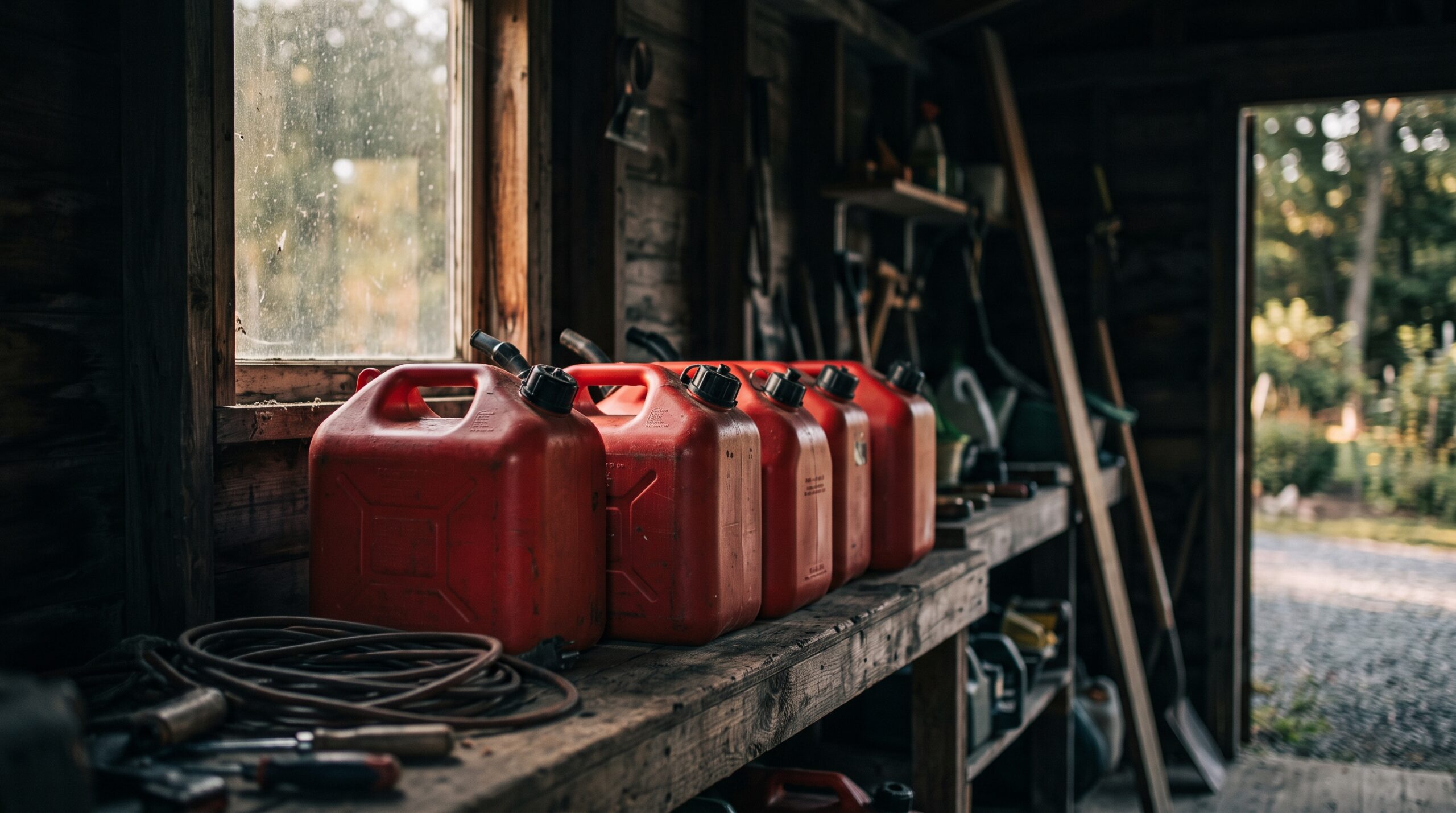
The gasoline you keep for a generator is also one of the most dangerous things you can store at home, so a few rules matter more than the rest. Keep it in approved containers, store it outside your living space, and keep it far from any flame, spark, or pilot light. Everything below is about doing that consistently and about keeping the fuel usable for the day the power actually goes out.
Use only approved gas cans
Buy containers that are sold and labeled for gasoline, not whatever happens to hold liquid. Consumer gas cans are typically red, hold five gallons or less each, and have a tight, self-closing cap. The U.S. Consumer Product Safety Commission now requires portable fuel containers made after July 12, 2023 to include a flame mitigation device, a small flame-arrestor screen in the opening that stops fire from flashing back into the can and turning it into a fireball. If your cans predate that rule, are cracked, or no longer seal, replace them.
Never use milk jugs, glass bottles, open buckets, or any container not rated for fuel. OSHA defines an “approved container” for flammable liquids for a reason: ordinary plastic degrades, glass shatters, and neither relieves pressure safely. Write the fill date on each can with a paint pen or a strip of tape so you always know which fuel is oldest.
Where to store gasoline safely
Gasoline does not belong inside your home, ever. That means no basements, no closets, and never a utility or furnace room. Gasoline vapors are heavier than air, so they sink and travel along the floor until they find an ignition source. The furnace, water heater, clothes dryer, or a pilot light can ignite fumes that have drifted a surprising distance from the can.
The best place is a detached shed or detached garage, well away from the house. If your only option is an attached garage, keep the quantity small and put the cans as far as possible from the door into the house and from any appliance with a flame or spark. Wherever you store fuel, follow these conditions:
- Keep it well away from heat, sparks, and open flame, including water heaters, furnaces, and electrical equipment. Fire-safety guidance commonly puts ignition sources at least 50 feet from stored fuel where that is possible.
- Choose a cool, well-ventilated spot out of direct sunlight. Heat builds pressure inside the can and speeds up fuel breakdown.
- Set cans off the floor on a shelf or pallet where practical, where a vehicle, mower, or foot traffic can’t knock them over.
- Store fuel out of reach of children and pets, and keep the child-resistant cap fully closed.
- Never set fuel next to a generator that is running. The same goes for storing it in the same enclosed space as a running engine.
The same outdoor, away-from-the-house thinking applies to the generator itself. Our guides on how to store a generator and how far a generator should be from the house cover the matching distances and placement.
How much gasoline you can keep at home
Two limits matter: the size of each container and the total you keep on hand. Individual consumer gas cans are limited to five gallons. For the total, fire codes restrict how much flammable liquid a household can store, and the exact figure depends on where you live. Many local codes that follow NFPA and the International Fire Code cap residential gasoline storage around 25 gallons, with tighter limits inside an attached garage and none allowed in living space or basements.
Because the numbers vary by jurisdiction, check with your local fire marshal or fire department before stocking up. A practical rule beats a legal one here anyway: only store what you can realistically rotate before it goes stale. If you want to size your supply to your runtime, see how much gas a generator uses.
Keep stored fuel fresh and rotate it
Gasoline does not keep forever. Untreated fuel can start to degrade in as little as a month, and most pump gas is an ethanol blend (E10) that absorbs moisture and breaks down faster. Stale gas gums up carburetors and can leave your generator unable to start on the night you need it.
Two habits solve this. First, add a fuel stabilizer when you fill the can, not months later. The maker of STA-BIL states that properly treated fuel can stay usable for up to 24 months, depending on the fuel and storage conditions. Second, rotate your supply: every few months, pour the oldest stabilized gasoline into your car’s tank and refill the cans with fresh, stabilized fuel. The fill date you wrote on each can tells you what to use first.
Fill cans and refuel without sparking a fire
Most gas-can fires start during filling, from static electricity. At the pump, take the can out of the truck bed or trunk and set it directly on the ground before you fill it. A plastic bed liner or carpeted trunk insulates the can and lets static build up, and a single spark at the nozzle can ignite the vapors. Keep the nozzle in contact with the can’s rim, fill slowly, and leave a few inches of air space so the fuel can expand. Never top it off to the brim.
Refueling the generator has its own rule: shut the engine off and let it cool down first. Fuel spilled on a hot engine or exhaust can ignite, so fueling is only safe once the surface temperature is well below the point where fuel would catch. Never pour gas into a running generator. Refuel outdoors, keep cigarettes and any open flame away, wipe up spills, and let the vapors clear before you restart. For the rest of the running routine, see how to use a generator safely.
Do’s, don’ts, and a storage checklist
Do:
- Use approved, sealed gas cans of five gallons or less with a flame mitigation device.
- Store fuel outside the home in a detached shed or garage, away from any ignition source.
- Add stabilizer at fill time, label the date, and rotate fuel every few months.
- Fill cans on the ground and let the generator cool before refueling.
- Keep a working fire extinguisher rated for flammable-liquid (Class B) fires nearby.
Don’t:
- Store gasoline indoors, in a basement, or near a water heater, furnace, dryer, or pilot light.
- Use milk jugs, glass, or any unapproved container.
- Fill a can while it sits in your vehicle or truck bed.
- Refuel a hot or running engine, or smoke anywhere near fuel.
- Pour old gasoline down a drain, onto the ground, or into the household trash.
When fuel does go bad or gets contaminated, don’t dump it. Take old gasoline to a household hazardous waste collection site; most cities and counties run one or hold periodic drop-off events. A quick search for your local program will point you to the nearest location.
Storage checklist:
- Approved red cans, five gallons or less, with flame mitigation device and tight caps
- Stored in a detached shed or garage, off the floor, out of sunlight
- At least 50 feet from furnaces, water heaters, and electrical equipment where possible
- Total quantity within your local fire code limit
- Stabilizer added and fill date labeled on every can
- Rotation schedule set (oldest fuel into the car every few months)
- Class B fire extinguisher within reach
If storing flammable fuel feels like more risk than you want at home, a battery unit sidesteps it entirely. Compare the trade-offs in generator or power station.
Frequently asked questions
Can I store gasoline in my house or basement?
No. Fire-safety guidance is consistent that gasoline should never be stored inside the home, and never in a basement or a room with a furnace, water heater, or other appliance. Vapors sink and travel to find an ignition source. Keep fuel in a detached shed or garage instead.
How long does stored gasoline last?
Untreated gasoline can begin to degrade within about a month, and ethanol-blended pump gas goes stale faster. With a fuel stabilizer added at fill time, the maker of STA-BIL says fuel can stay usable for up to 24 months, depending on the fuel and storage conditions. Rotating your supply keeps it dependable.
Is it safe to store gas in an attached garage?
A detached structure is always better. If an attached garage is your only option, keep the amount small, store it away from the door into the house and from any flame or spark, and confirm your local fire code allows it. Never store fuel in the living space or basement.
How much gasoline can I legally store at home?
Each consumer container is limited to five gallons, and total household limits are set by your local fire code. Many jurisdictions that follow NFPA and the International Fire Code cap residential storage around 25 gallons with stricter limits inside an attached garage. Check with your local fire marshal, because the rules vary.
What should I do with old or contaminated gasoline?
Don’t pour it down a drain, onto the ground, or into the trash. Take it to a household hazardous waste collection site or a local drop-off event. Many municipalities run these year-round, and they will dispose of the fuel safely.
Sources
- National Fire Protection Association (NFPA) — Generator Safety Tip Sheet
- U.S. Fire Administration (FEMA) — 5 Steps to Portable Generator Safety
- U.S. Consumer Product Safety Commission (CPSC) — Flame Mitigation Devices on Gas Cans
- OSHA 1910.106 — Flammable Liquids (approved containers)
- Gold Eagle — Shelf Life of STA-BIL Fuel Stabilizer