Carbon monoxide (CO) is a gas you cannot see, smell, or taste, and it can poison you before you ever feel sick. Power outages are when most home CO poisonings happen, because people improvise heat and electricity with fuel-burning gear that belongs outside. The one rule that prevents almost every case: never run a generator, grill, or any other fuel-burning device inside your home or garage, and keep a running generator outdoors at least 20 feet from the house with the exhaust pointed away.
Why outages cause a spike in carbon monoxide poisoning
When the power goes out, people reach for whatever produces heat or electricity: a portable generator, a camp stove, a charcoal grill, sometimes the gas oven. Each of those burns fuel, and burning fuel produces carbon monoxide. The CDC describes CO as “an odorless, colorless gas that kills more than 500 Americans each year.” The Consumer Product Safety Commission (CPSC) reports that an average of nearly 100 of those deaths come from portable generators alone.
What makes CO so dangerous in an outage is that you get no warning. The Red Cross notes that even if you cannot smell exhaust, you may still be exposed, and that CO “can rapidly lead to full incapacitation and death.” People who are asleep or who have been drinking can die before any symptoms appear. The fix is not better ventilation. It is keeping the source of CO out of your living space entirely.
Generators belong outside, at least 20 feet from the house
A portable generator is the single most common source of fatal CO poisoning during an outage, so it gets the strictest rule. The CPSC is direct: operate portable generators outside only, at least 20 feet away from the house, and never inside a home, garage, basement, crawlspace, shed, or other enclosed space. Opening doors or windows does not provide enough ventilation to prevent a lethal buildup of CO. Direct the exhaust away from your home and away from any building someone could enter.
- Do place the generator outdoors on a dry, flat surface, at least 20 feet from the house, with the exhaust aimed away from doors, windows, and vents.
- Don’t run it in a garage, carport, porch, shed, or basement, even with the door wide open.
- Do consider a generator with a built-in CO shut-off sensor, which the CPSC recommends as an added safeguard.
- Don’t let CO blow back inside. A generator under a window or against an exterior wall can still send fumes indoors.
For the full placement breakdown, see how far a generator should be from the house and our complete guide to using a generator safely. If weather is a factor, read whether you can run a generator in the rain before you start it.
Never burn fuel indoors for heat or cooking
Generators get the headlines, but plenty of CO deaths come from people trying to heat or cook with the wrong equipment. The CDC says to never use generators, grills, or other gasoline-, propane-, or charcoal-burning devices inside your home, garage, or carport, or near doors, windows, or vents. That covers more than you might expect.
- Never use a gas stove or oven to heat your home. It is built for short cooking bursts, not continuous use, and it releases CO into the room.
- Never bring a charcoal or gas grill indoors, into a garage, or onto an enclosed porch, for heat or for cooking.
- Never run a camp stove or other fuel-burning camping gear inside the house.
- Never warm up or idle a car or truck in an attached garage, even with the garage door open. CO seeps into the living space.
There are safe ways to stay warm without burning fuel indoors. Our guide on how to stay warm during a power outage covers layering, sealing off one room, and other no-CO methods that keep you safe through a cold outage.
Put working CO alarms on every level
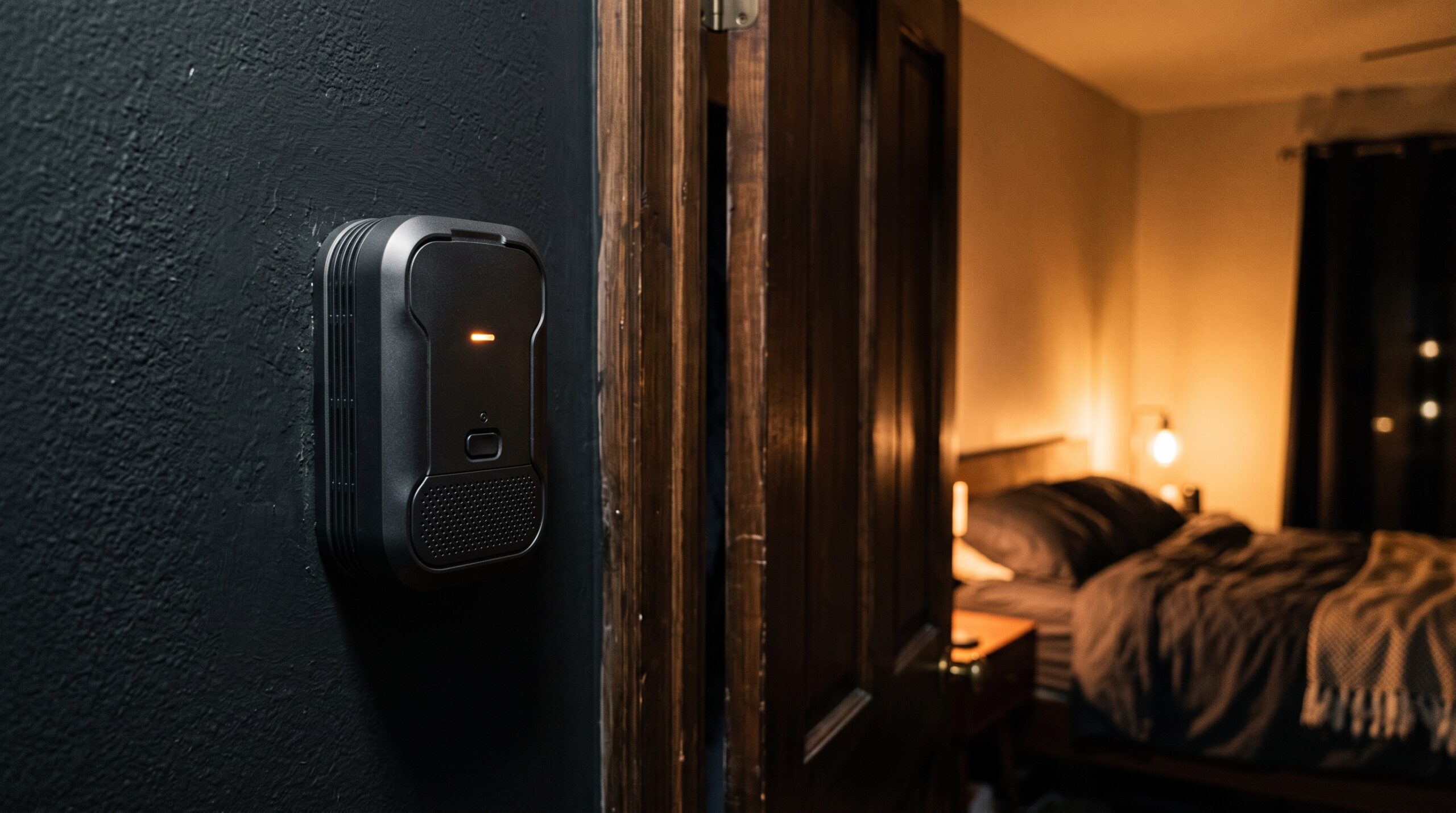
Because you cannot sense carbon monoxide, an alarm is your only early warning during an outage. The CPSC advises installing battery-operated CO alarms, or alarms with battery backup, on each level of the home and outside each separate sleeping area. The Red Cross gives the same guidance: central locations on every level, plus outside the bedrooms.
- Use alarms with battery backup so they keep working when the power is out, which is exactly when the risk is highest.
- Test each alarm now, before storm season, and replace the batteries on schedule.
- Replace any CO alarm that has reached its end-of-life date, usually printed on the back of the unit.
- If an alarm sounds, treat it as real. Get everyone to fresh air first, then sort out the cause.
Know the symptoms of carbon monoxide poisoning
CO poisoning is often mistaken for the flu, but without a fever. According to the CDC, the most common symptoms are headache, dizziness, weakness, upset stomach, vomiting, chest pain, and confusion. If more than one person in the home feels these symptoms at the same time, or pets seem sick too, suspect carbon monoxide.
- Headache
- Dizziness
- Weakness
- Upset stomach or vomiting
- Chest pain
- Confusion
What to do if you suspect CO poisoning
Speed matters. The CDC says that if you think you are experiencing symptoms of carbon monoxide poisoning, go outside and get fresh air immediately, because you could lose consciousness if you stay inside. The Red Cross adds that if you start to feel sick, dizzy, or weak while using a generator, get to fresh air right away and do not delay.
- Get everyone outdoors to fresh air right away. Do not stop to investigate first.
- Call 911 from your fresh-air location, or reach Poison Control at 1-800-222-1222.
- Do not go back inside until emergency responders say it is safe.
- Tell responders you suspect carbon monoxide so they can check the air and treat you correctly.
Carbon monoxide is one piece of staying safe in a blackout. For the broader picture, review our full list of power outage safety tips.
Frequently asked questions
Can I run a generator in the garage if the door is open?
No. The CPSC is clear that you should never operate a portable generator in a garage, basement, or other enclosed space, and that opening doors or windows does not provide enough ventilation to prevent a lethal buildup of carbon monoxide. Run it outside only, at least 20 feet from the house.
How far should a generator be from the house?
At least 20 feet, with the exhaust pointed away from doors, windows, and vents, according to both the CDC and CPSC. See our guide on generator distance from the house for placement details.
Is it safe to heat my home with a gas oven during an outage?
No. A gas stove or oven is designed for short cooking use, not for heating a room, and running it that way releases carbon monoxide indoors. Use safe, fuel-free methods to stay warm instead.
Where should I install carbon monoxide alarms?
Put a CO alarm on every level of your home and outside each separate sleeping area, and choose alarms with battery backup so they keep working during an outage. Test them regularly and replace the batteries on schedule.
What are the first signs of carbon monoxide poisoning?
Early signs are usually headache, dizziness, weakness, an upset stomach, and confusion, often described as flu-like but without a fever. If several people or pets feel sick at once, get to fresh air and call 911.