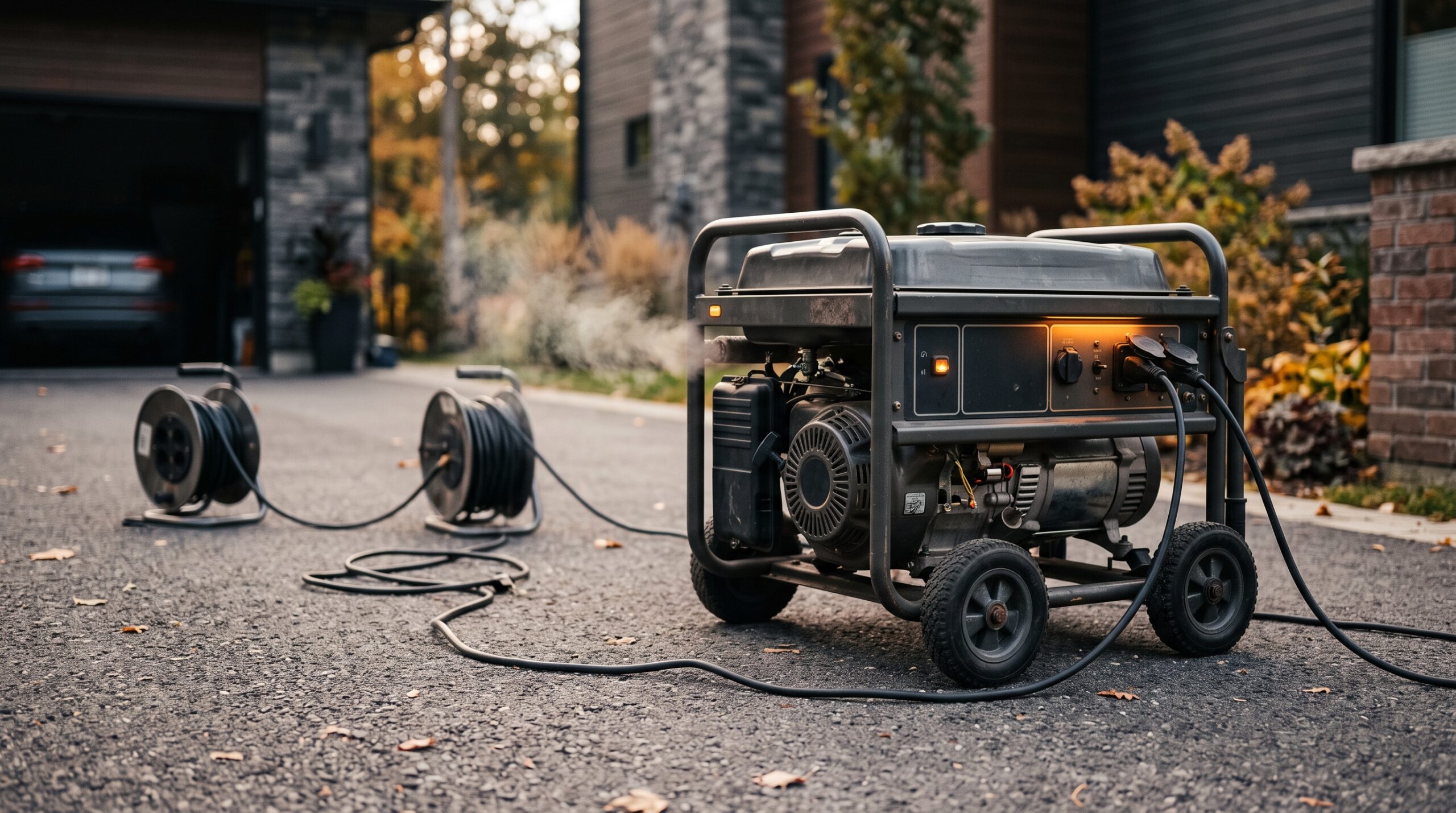
If your generator spends most of its life in storage, run it about once a month for 15 to 30 minutes under a light load. That short monthly “exercise” run keeps fresh fuel moving through the carburetor, tops up the battery on electric-start models, and keeps the internal seals lubricated. Skip it for too long and you set up the single most common reason a stored generator won’t start: stale fuel that turns to varnish and gums up the carburetor.
The short answer: run it about once a month
For a portable generator that sits in the garage between outages, a monthly run is the sweet spot. Champion Power Equipment, for example, suggests running the unit roughly once a month for about 20 minutes with a light to medium load. Honda takes the same idea from the other direction: if you use the generator less than once a month, you should drain the carburetor for storage instead. Either way, the message is that a generator left untouched for months is the one most likely to fail you.
Standby generators are different. Most permanently installed home standby units are set at the factory to test themselves automatically every week, so you don’t have to remember anything. More on that below.
Why running it matters when it is just sitting
A generator that never runs is quietly working against you in a few ways:
- Fuel goes stale fast. Modern pump gasoline can start to break down in as little as a month. As it degrades it leaves gum and varnish behind in the carburetor’s tiny passages, which is the leading cause of a no-start. If yours already won’t fire up, our generator won’t start troubleshooting guide walks through the usual suspects.
- Electric-start batteries drain. The small starter battery on push-button and remote-start models self-discharges over time. Running the engine lets it recharge so it has the punch to crank when you need it.
- Seals and rings dry out. Periodically running the engine circulates oil over the cylinder, rings, and seals so they stay coated instead of drying and stiffening.
How to exercise a portable generator
The routine takes about half an hour and is worth putting on your calendar. Do this outdoors, well away from the house, the same as you would during a real outage.
- Check the oil level before you start, and top it off if it is low.
- Move the generator outside, at least 20 feet from the house with the exhaust pointed away from doors, windows, and vents.
- Start it and let it run for 15 to 30 minutes.
- Plug in a light load while it runs, such as a couple of work lights, a fan, or a battery charger. A small load makes the engine work the way it does in real use, which is more useful than idling with nothing connected.
- Listen and look. The run is also your chance to catch a rough idle, a fuel leak, or a low-oil shutdown before you actually depend on the machine.
If you keep stabilized fuel in the tank between runs, that monthly start also cycles the treated gas through the whole fuel system. For more on the connection between fuel use and runtime, see how much gas a generator uses.
Standby generators usually exercise themselves
Permanently installed home standby generators handle this for you. Generac, for instance, ships its home standby units with an exercise timer set to run a brief self-test once a week from the factory. The cycle is short, commonly somewhere in the 5 to 15 minute range, and it checks that the engine, battery, and electrical system all come to life on demand.
You can usually adjust the day and time, and on many models change the frequency to every two weeks or monthly, through the control panel or the manufacturer’s app. There is rarely a reason to disable it. The weekly run is exactly what keeps a standby unit ready, and a generator that hasn’t exercised in months is a generator you can’t fully trust. If you are still deciding between a portable engine and a battery system, our comparison of a generator versus a power station lays out the trade-offs.
How often to run it during an actual outage
During a real power outage the question flips: now you are trying to run it as much as you reasonably can without overworking it. A few habits keep it safe and reliable through a long outage:
- Give it rest cycles. Many portable generators are not built to run nonstop for days. Shutting down periodically lets the engine cool, gives you a chance to check the oil, and saves fuel when your loads are light, such as overnight.
- Never refuel a hot or running engine. Gasoline spilled on hot engine parts can ignite. Turn the generator off and let it cool for at least a couple of minutes before you remove the fuel cap and add gas.
- Keep checking the oil. Long runs burn through oil. A low-oil shutdown in the middle of an outage is avoidable if you check the level at each refuel or rest stop.
- Run it outdoors, always. The exhaust contains carbon monoxide, which is deadly and invisible. Keep it outside and well away from the house no matter the weather. Our guide to using a generator safely covers placement, grounding, and connection in detail.
Oil changes and the rest of the maintenance schedule
Hours of runtime, not the calendar, drive most generator maintenance. The first oil change comes early, right after the break-in period. Briggs & Stratton, for example, calls for changing the oil after the first 5 hours on its small engines; some generator manuals push the first change out toward 25 hours. After that initial change, a common interval is every 50 to 100 hours of running, though units with an oil filter may go longer. Always defer to the schedule in your own owner’s manual, since it varies by engine.
Beyond oil, plan to check or clean the air filter, inspect the spark plug, and keep the unit clean. During a multi-day outage those hours add up quickly, so it is normal to do an oil change mid-event on a generator that has been running around the clock.
Running it before and after storage
How you put a generator away decides how it starts months later. If you plan to keep running it monthly, store it with stabilized fuel in the tank and run it long enough each time for the treated gas to reach the carburetor. If it is going to sit untouched for longer than a month, the safer path is to drain the carburetor or run it dry so there is no fuel left to turn to varnish. For storage longer than a year, most manufacturers say to drain the fuel tank and carburetor completely.
The full step-by-step, including fuel stabilizer, fogging, and battery care, is in our guide on how to store a generator. Get storage right and the monthly run becomes a quick check rather than a rescue mission.
Frequently asked questions
How long should I run my generator each month?
About 15 to 30 minutes is enough for a monthly exercise run. Adding a light load, such as a few lights or a fan, makes the engine work more like it does in real use and is better than running it with nothing plugged in.
Is it bad to let a generator sit for months without running it?
Yes. Fuel left sitting can degrade in a matter of weeks and gum up the carburetor, which is the number one reason a stored generator won’t start. If you truly can’t run it monthly, store it with the fuel drained instead of leaving old gas in the tank.
Can I run my generator with no load?
You can, and an unloaded run is far better than no run at all. But a light load is more useful, because it makes the engine and alternator do real work and gives you a more honest sense of whether the unit is healthy.
Do I need to manually exercise a home standby generator?
Usually not. Most home standby units run an automatic self-test weekly from the factory, so the exercise happens on its own. It is still worth confirming the schedule is enabled and set to a convenient time on the control panel or app.
How long can a portable generator run continuously during an outage?
It depends on the model, but many portable generators are not rated to run nonstop for days. Build in rest cycles so the engine cools, check the oil regularly, and always shut it down and let it cool before refueling.
Sources
- Honda Power Equipment — Fuel Recommendations & Storage Tips for Generators
- Briggs & Stratton — Small Engine Maintenance Schedule
- Champion Power Equipment — Generator and Inverter Storage
- Generac — What Does the Exercise Timer Do on a Home Standby Generator?
- U.S. Consumer Product Safety Commission (CPSC) — Generator Safety Tips