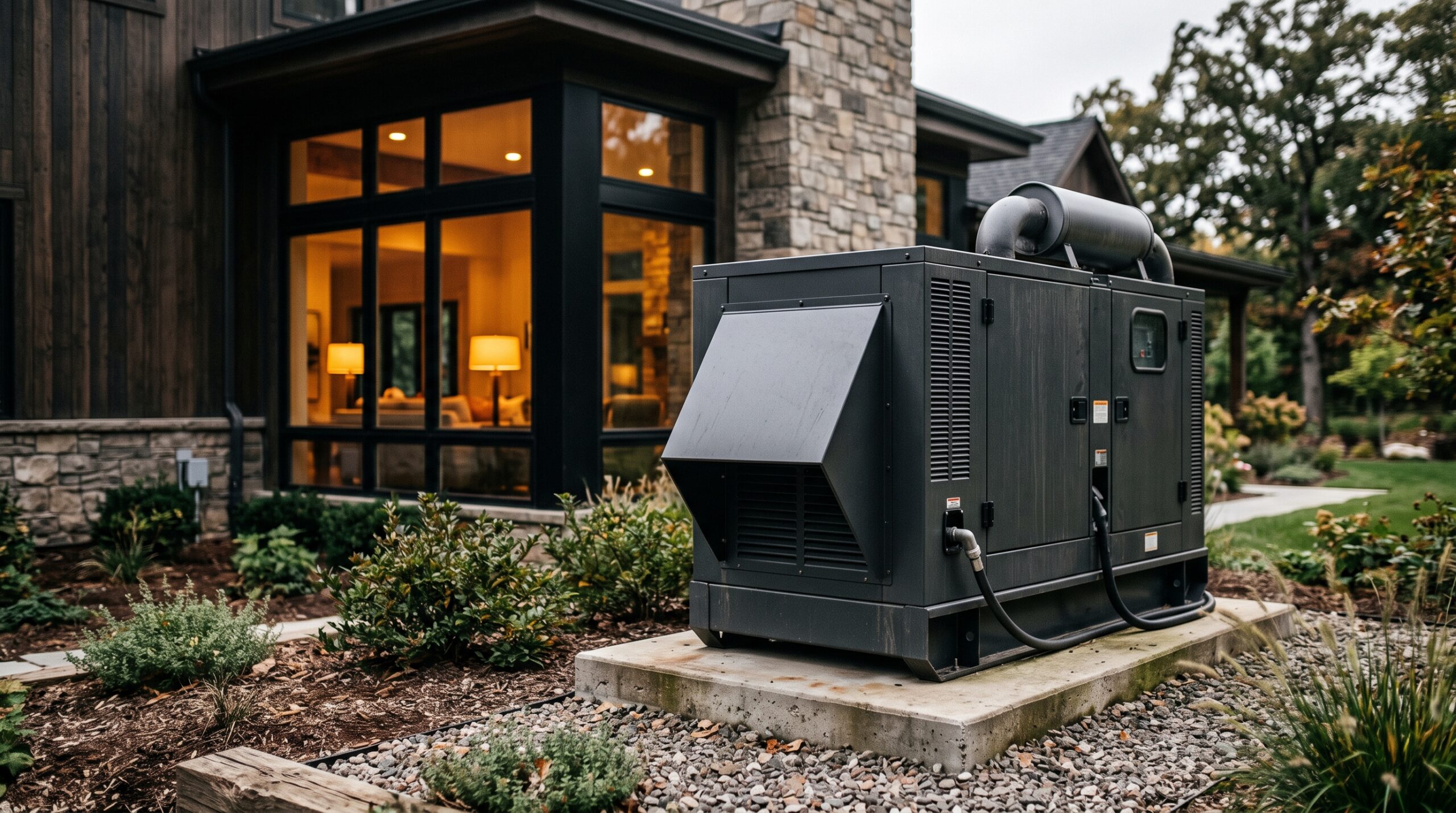
The best whole-house generator is the one sized correctly for your home and installed by a licensed pro, not whichever brand has the loudest marketing. For most houses, an air-cooled standby unit in the 18 to 22 kW range covers central air, the fridge, well or sump pumps, and the furnace at once. Smaller homes that only need essential circuits can do well with a 10 to 14 kW model, while large all-electric homes with heavy HVAC often step up to a 24 kW air-cooled unit or a liquid-cooled system. Below is how to choose, plus genuinely popular current models grouped by home-size tier.
Size it first, because watts matter more than the badge
Sizing is the single decision that makes or breaks a standby system. Buy too small and the generator trips or refuses to start your air conditioner. Buy too big and you pay thousands extra for capacity you never use. Generator output is rated in kilowatts (kW), and the figure is usually a little lower on natural gas than on propane, so check both numbers on the spec sheet.
There are two ways to size a unit. An essential-circuits approach powers a chosen set of loads such as the refrigerator, furnace blower, sump pump, and some lights, and typically lands in the 10 to 14 kW range. A whole-home (managed) approach runs nearly everything, often using load management to stagger big draws like a second AC compressor, and usually calls for 18 kW and up. A rough starting point: most average homes are well served by 18 to 22 kW, larger homes by 24 kW or more.
Get a real number before you shop. Run your appliances through our generator sizing calculator, then read what size generator you need to run a whole house for the load-by-load math. If you are still weighing the whole category, our guide on how to choose a generator walks through the trade-offs.
Air-cooled vs liquid-cooled
Nearly every residential standby generator up to about 22 to 26 kW is air-cooled, meaning a fan pushes air across the engine the way a lawn mower or motorcycle is cooled. Air-cooled units are smaller, lighter, cheaper to buy and install, and fine for the vast majority of homes, according to Generac.
Liquid-cooled generators use a radiator and coolant loop like a car engine. They generally start around 30 kW, run cooler under sustained heavy load, and last longer in demanding use, but they cost roughly double to install. For a typical home you almost certainly do not need one. Consider liquid-cooled only if your calculated load is genuinely large, you run long high-load stretches, or you live where summer temperatures push air-cooled units toward thermal shutdown.
Fuel, transfer switch, noise, and monitoring
- Natural gas vs propane. If your home has a natural gas line, that is usually the easy choice, since the unit runs indefinitely without refueling. Propane stores well and works where there is no gas main, and most home standby units are dual-fuel, so they accept either. Output is typically a bit higher on propane than on natural gas.
- Automatic transfer switch (ATS). This is what makes a standby system “automatic.” It senses an outage, disconnects you from the grid, and starts the generator within seconds, then switches back when utility power returns. A whole-home switch handles your full panel; a smaller switch covers selected circuits. It is a required part of the install and must be done by a licensed electrician. See how a generator connects to your house for the wiring side.
- Noise. Air-cooled home standby units commonly run in the low to high 60s dB(A) measured at about 23 feet, with manufacturers citing figures like 62 dB(A) for some 14 kW models and around 65 dB(A) for many 22 kW units. Many run a quieter, low-speed weekly self-test. Placement and local sound ordinances matter, so confirm setback rules before install.
- Warranty. Coverage varies a lot by brand, generally from 5 years up to 10 years. Read what is actually covered (parts, labor, travel) and for how many run hours, not just the headline number.
- Monitoring and app. Most current units include free Wi-Fi or cellular remote monitoring with a phone app, so you get alerts about self-tests, faults, and outages. It is genuinely useful and now close to standard.
Strong options by home-size tier
These are widely sold, well-reviewed current models, not a tested ranking. Treat them as solid starting points to price out with local dealers. Specs are manufacturer-stated and natural gas output runs slightly below the propane rating on most units.
Essential circuits, about 10 to 14 kW
Good for smaller homes or anyone covering a defined set of must-run circuits. Popular picks include the Generac Guardian 14 kW, the Champion 14 kW aXis (notable for a long warranty and a stated 62 dB(A)), and the Kohler 14RCA, which uses a commercial-grade Command PRO engine.
Most homes, about 18 to 22 kW
The sweet spot for whole-home comfort on a managed system. Common choices are the Generac Guardian 18 kW and 22 kW (the 22 kW is one of the most popular air-cooled units sold), the Kohler 20RCA, the Briggs & Stratton PowerProtect PP22 (rated for full output on natural gas with a 7-year warranty), and the Cummins QuietConnect RS air-cooled line, which leans on a commercial engine and cold-weather capability.
Large or all-in, about 24 kW and up
For big or all-electric homes with heavy HVAC, well pumps, or electric heat. The Generac Guardian 24 kW is among the largest air-cooled units available, and the Kohler 26RCA pushes air-cooled output to about 24 kW on natural gas. If your calculated load runs higher, or you need sustained heavy-load capacity, that is the point to price a liquid-cooled system such as Generac’s Protector series or Cummins’ liquid-cooled QuietConnect units, typically 30 kW and up.
Compare common models at a glance
| Model / class | Approx. kW (NG / LP) | Fuel | Approx. noise | Warranty | Approx. installed price |
|---|---|---|---|---|---|
| Champion 14 kW aXis (air-cooled) | 12.5 / 14 | NG or LP | ~62 dB(A) | 10-year limited | ~$9,500–$12,000 |
| Kohler 14RCA (air-cooled) | ~12 / 14 | NG or LP | low-to-mid 60s dB(A) | 5-year / 2,000 hr | ~$9,500–$12,000 |
| Generac Guardian 18 kW (air-cooled) | 17 / 18 | NG or LP | ~65–67 dB(A) | 5-year limited | ~$9,500–$12,000 |
| Generac Guardian 22 kW (air-cooled) | ~19.5 / 22 | NG or LP | ~65–67 dB(A) | 5-year limited | ~$12,000–$14,500 |
| Briggs & Stratton PowerProtect PP22 (air-cooled) | 22 / 22 | NG or LP | ~65 dB(A) | 7-year limited | ~$12,000–$14,500 |
| Kohler 26RCA (air-cooled) | 24 / 26 | NG or LP | mid-60s dB(A) | 5-year / 2,000 hr | ~$14,500–$17,500 |
| Liquid-cooled (e.g. Generac Protector, Cummins QC) | ~30+ / 30+ | NG or LP | varies | varies by brand | ~$17,000–$20,000+ |
What it really costs, and how to buy
The number that matters is the installed cost, not the unit price on a product page. The generator itself is often less than half of the total. The rest goes to the transfer switch, the concrete or composite pad, gas or propane plumbing, electrical work and permits, and labor. Industry estimates put a typical air-cooled standby install around $8,000 to $12,000 or more, with larger units higher and liquid-cooled systems roughly $17,000 to $20,000. A transfer switch alone runs a few hundred to a couple thousand dollars installed, per Angi. For a fuller breakdown, see our guides on how much a whole-house generator costs and whether a whole-house generator is worth it.
Home standby generators are sold and installed through dealers and licensed electricians, not as a plug-in appliance. Get at least two or three written quotes that itemize the unit, the transfer switch, fuel hookup, electrical, the pad, and permits. Ask about the warranty terms, the weekly self-test, and who handles annual maintenance. Comparing two specific brands first? Our Generac vs Champion comparison is a useful place to start.
Air-cooled standby units, live prices

Generac 22kW Whole Home
Transfer switch included, cellular monitoring, NG or propane
$6,506.10Check price on Amazon →
Generac Guardian 22kW
Transfer switch plus WiFi monitoring, air-cooled
$8,145.01Check price on Amazon →
Generac Guardian 26kW
200A transfer switch — the large-home air-cooled tier
$7,749.00Check price on Amazon →
As an Amazon Associate we earn from qualifying purchases. Prices are pulled automatically from Amazon and may have changed.
Frequently asked questions
What size whole-house generator do I need?
It depends on what you want to run at once. Many homes covering essential circuits do fine with 10 to 14 kW, most homes wanting whole-home comfort land at 18 to 22 kW, and large or all-electric homes often need 24 kW or more. Add up your real loads with a sizing calculator first, then confirm with an installer.
Will a 22 kW generator run a whole house?
For many average homes, yes, especially with a managed transfer switch that staggers large loads like a second air conditioner. Very large homes with multiple AC units, electric heat, or a big well pump may exceed what a 22 kW air-cooled unit can carry, which is when a 24 kW or liquid-cooled system makes sense.
Natural gas or propane: which is better?
If you already have a natural gas line, it is usually the simpler option because the fuel supply is effectively unlimited. Propane is the answer where there is no gas main and it stores well for long outages. Most home standby units accept either, though rated output is typically a little higher on propane.
Do I need a transfer switch?
Yes. An automatic transfer switch is what disconnects your home from the grid and starts the generator safely. It is required, both for safety and for code, and must be installed by a licensed electrician. Running a generator into your panel without one is dangerous and illegal in most places.
Is a more expensive brand always better?
No. Correct sizing and a clean professional install matter more than the badge. Generac, Kohler, Cummins, Briggs & Stratton, and Champion all make reliable standby units. Focus on the right kW for your loads, warranty terms, local dealer support for service, and the total installed quote rather than the brand name alone.
Sources
- Consumer Reports – Best Home Standby Generators (lab-tested)
- Forbes Home – Best Whole House Generators
- Generac – Air-Cooled vs Liquid-Cooled Standby Generators
- Kohler – RCA Series Home Standby Generator Spec Sheet (PDF)
- Angi – Generator Transfer Switch Installation Cost (2026)