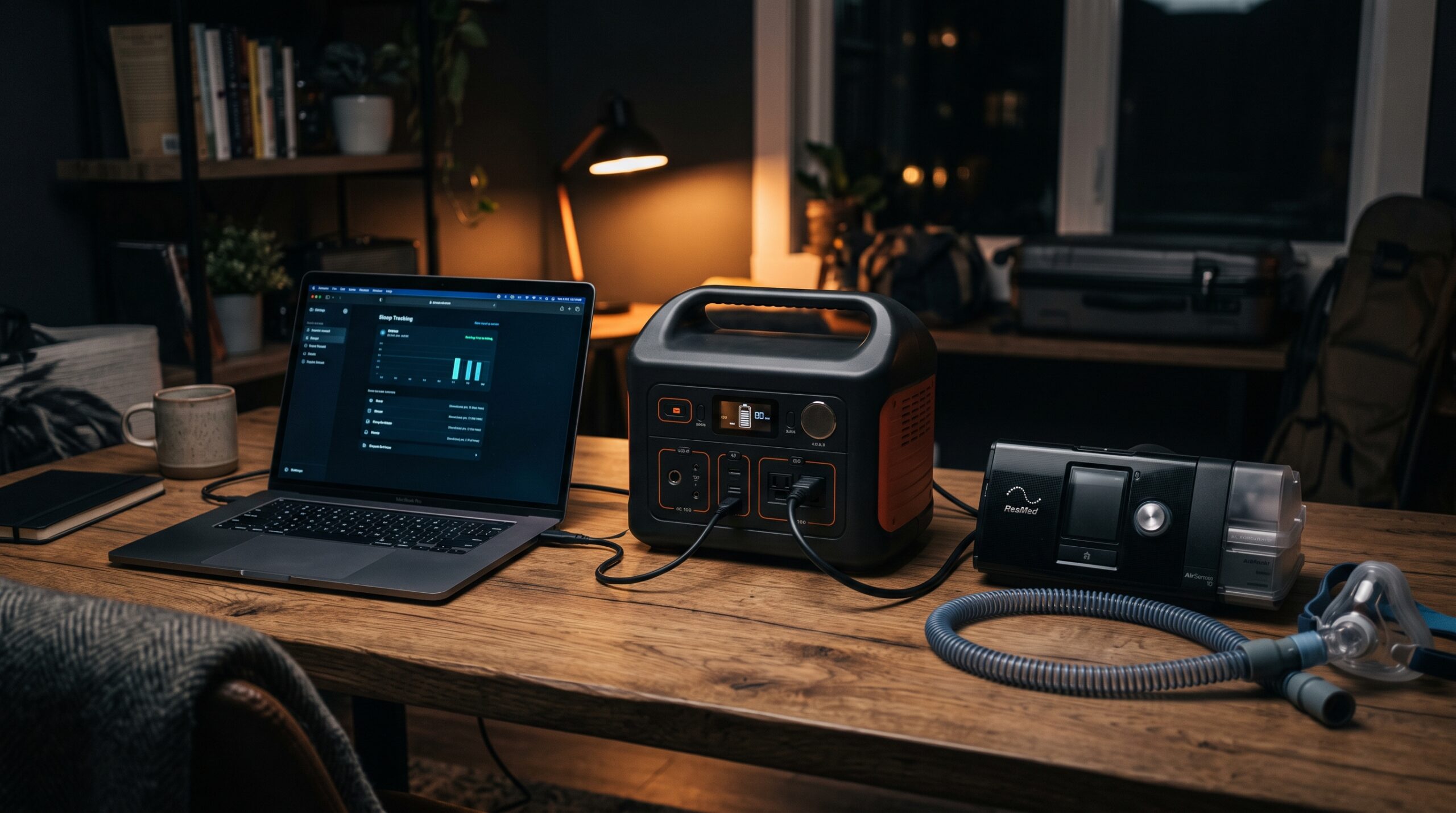
If you are choosing a power station or inverter for backup power, the waveform it produces decides what you can safely plug in. The short version: pure sine wave is clean, grid-like power that is safe for everything, while modified sine wave is cheaper but can buzz, overheat, or damage sensitive gear, and some devices will not run on it at all. Pure sine matches the smooth power your wall outlets deliver. Modified sine fakes that shape with a blocky, stepped signal that simpler devices tolerate but precise electronics do not.
The good news is that most quality portable power stations already use pure sine wave inverters, so the trap is mainly the cheap inverters and a few budget units. Below is what each waveform actually is, what each can and cannot run, why medical devices and electronics care so much, and how to confirm which one you have before you trust it with anything important.
What a pure sine wave is
A pure sine wave is the smooth, rolling up-and-down voltage curve your utility delivers to every outlet in your home. A pure sine wave inverter recreates that same curve from a battery, producing power that is a near-perfect replica of grid AC. Because the shape is clean, it has low harmonic distortion, which is the technical way of saying there are no jagged edges for a device’s power supply to choke on.
That clean shape is why pure sine power is safe for everything. Anything designed to run off a wall outlet, from a laptop to a refrigerator to a CPAP, sees power it recognizes. There is no compatibility guessing, no buzzing, and no extra heat created by a waveform the device was not built for. This is the standard you want for backup power, and it is what the better portable power stations from the major brands are built around.
What a modified sine wave is
A modified sine wave is a cheaper approximation. Instead of a smooth curve, the inverter switches the voltage in a few abrupt steps to roughly trace the shape of a sine wave. From a distance it averages out to something usable, but up close it is a stepped, block-like signal with high harmonic distortion. The appeal is cost: modified sine wave inverters are notably cheaper to build than pure sine units of the same wattage, which is why you still find them in low-end inverters and a handful of budget products.
The trouble is that many modern devices read that stepped power as dirty or unstable. Simple, dumb loads do not care. But anything with a motor, a microprocessor, or a sensitive power supply has to work harder to deal with the harshness, and that is where the buzzing, the extra heat, and the outright failures come from. Modified sine wave inverters are also less efficient overall, wasting more of the battery’s energy as heat than a pure sine unit does.
What each can and cannot run safely
Pure sine wave power runs everything, full stop. The interesting question is what modified sine wave can and cannot handle. As a rule, simple resistive loads are fine: incandescent and basic heating elements just turn electricity into heat or light and do not mind the stepped shape. The problems start with three groups of devices.
The first is anything with a motor, such as a refrigerator compressor, a fan, a pump, or a power tool. On modified sine these run hotter and less efficiently, can hum or buzz audibly, and some will not reach full speed or start at all. Variable-speed tools and anything with electronic speed control often misbehave. The second is appliances with built-in electronics and timing, including microwaves, which typically still run but at reduced output and longer cook times, plus laser printers and photocopiers, which frequently refuse to work. Digital clocks and timers can keep the wrong time. The third is sensitive electronics and medical equipment, covered in the next section. If you want a fuller picture of the loads a real unit handles, see what a power station can run.
| Device type | Pure sine wave | Modified sine wave |
|---|---|---|
| Phones, laptops, tablets | Safe | Usually works, can run warm |
| TVs and audio gear | Safe | Buzzing, screen lines, possible damage |
| Refrigerator, pumps, motors | Safe | Runs hot and less efficiently, may not start |
| Microwave | Safe | Often slower and weaker, may buzz |
| Variable-speed power tools | Safe | Speed control may fail |
| Laser printer or photocopier | Safe | Frequently will not run |
| CPAP and medical devices | Safe (recommended) | Risky; confirm with your provider |
| Digital clocks and timers | Safe | May keep the wrong time |
| Incandescent bulbs, basic heaters | Safe | Usually fine |
Medical devices and sensitive electronics
This is the category where the waveform stops being a convenience question and becomes a safety one. Devices built around microprocessors and precise power supplies, including laptops, high-end audio and video gear, and smart-home equipment, can overheat or malfunction on modified sine. Some testing has found electronics running on a modified sine wave generate meaningfully more heat than the same gear on pure sine, and over time that extra heat shortens the life of the components inside.
Medical equipment is the clearest case for pure sine. A CPAP machine, especially one running a heated humidifier or heated tube, depends on a steady motor speed and predictable heating, and a stepped waveform can throw off the sensors, trigger error codes, or cause airflow fluctuations. Many CPAP manuals and manufacturers recommend pure sine wave power for exactly this reason. If you rely on a CPAP or any other medical device, use a pure sine wave source and confirm the power requirement with your equipment provider or the device manual before depending on it in an outage. For a full walkthrough of the runtime and setup side, see running a CPAP on backup power.
How to tell what you have
The fastest check is the spec sheet. A pure sine wave product almost always advertises it, because it is a selling point: look for the exact phrase “pure sine wave” or “pure sine” in the product listing, the manual, or printed on the unit itself. Some brands say “true sine wave,” which means the same thing. If you see a continuous and surge wattage rating but no mention of the waveform at all, that silence is a clue. Inverters that do not state pure sine output are usually modified sine.
If the listing is ambiguous, check the manufacturer’s full specifications or ask their support directly before trusting the unit with electronics or medical gear. Most current portable power stations from the well-known brands are pure sine wave, so if you are buying a reputable station rather than a bargain-bin car inverter, you are likely already covered. The waveform is separate from the battery chemistry inside, which is its own decision covered in power station battery types. When in doubt, treat an unlabeled unit as modified sine and keep sensitive devices off it.
Once you have confirmed pure sine power, the next question is whether the unit is big enough for your loads. Run your appliances through the Power-Station Sizing calculator to find the capacity and continuous-watt rating you need, then use the Appliance Runtime calculator to estimate how many hours a given station will keep each device going. Clean power only helps if the station also has the watts and watt-hours to back it up.
Frequently asked questions
Are most power stations pure sine wave?
Yes. Most current portable power stations from the major brands use pure sine wave inverters, which they advertise as a feature. The waveform problem mostly lives in cheap standalone inverters and a few budget units, so if you are buying a reputable power station, check the spec sheet to confirm but expect pure sine.
Can a modified sine wave inverter damage electronics?
It can. Sensitive electronics with microprocessors and precise power supplies can overheat, malfunction, or wear out faster on modified sine wave power. Many simpler devices run without obvious harm, but the risk is real for laptops, audio and video gear, and medical equipment, which is why pure sine is the safer choice for anything you care about.
Will a CPAP run on a modified sine wave inverter?
Sometimes, but it is not recommended. A modified sine wave can cause buzzing, heat, error codes, or airflow fluctuations on a CPAP, and the risk is higher when a heated humidifier or heated tube is in use. Many CPAP makers recommend pure sine wave power. Use a pure sine source and confirm the requirement with your provider or the device manual.
What runs fine on a modified sine wave inverter?
Simple resistive loads are the safe bet, such as incandescent bulbs, basic heating elements, and plain tools without electronic controls. These just convert electricity to heat or light and do not mind the stepped waveform. Anything with a motor, a microprocessor, or a delicate power supply is where modified sine starts causing buzzing, heat, or failure.
How do I know if my inverter is pure or modified sine wave?
Check the spec sheet, manual, or label for the words “pure sine wave” or “true sine wave.” Pure sine products almost always advertise it because it is a selling point. If the waveform is not stated anywhere, the unit is usually modified sine. When the listing is unclear, ask the manufacturer before trusting the inverter with electronics or medical devices.
Sources
- Samlex America – Differences Between Modified and Pure Sine Wave Power Inverters (devices that buzz, overheat, or will not run)
- EcoFlow – Pure Sine Wave vs Modified Sine Wave (efficiency, device compatibility, heat and noise)
- Nature’s Generator – Pure Sine Wave vs. Modified Sine Wave Inverters (grid-identical power, heat in electronics)
- Jackery – Ultimate Guide to Pure Sine Wave Inverter (power stations and pure sine output)
- ResMed – Travel FAQs (CPAP power and travel; confirm device requirements with the manufacturer)