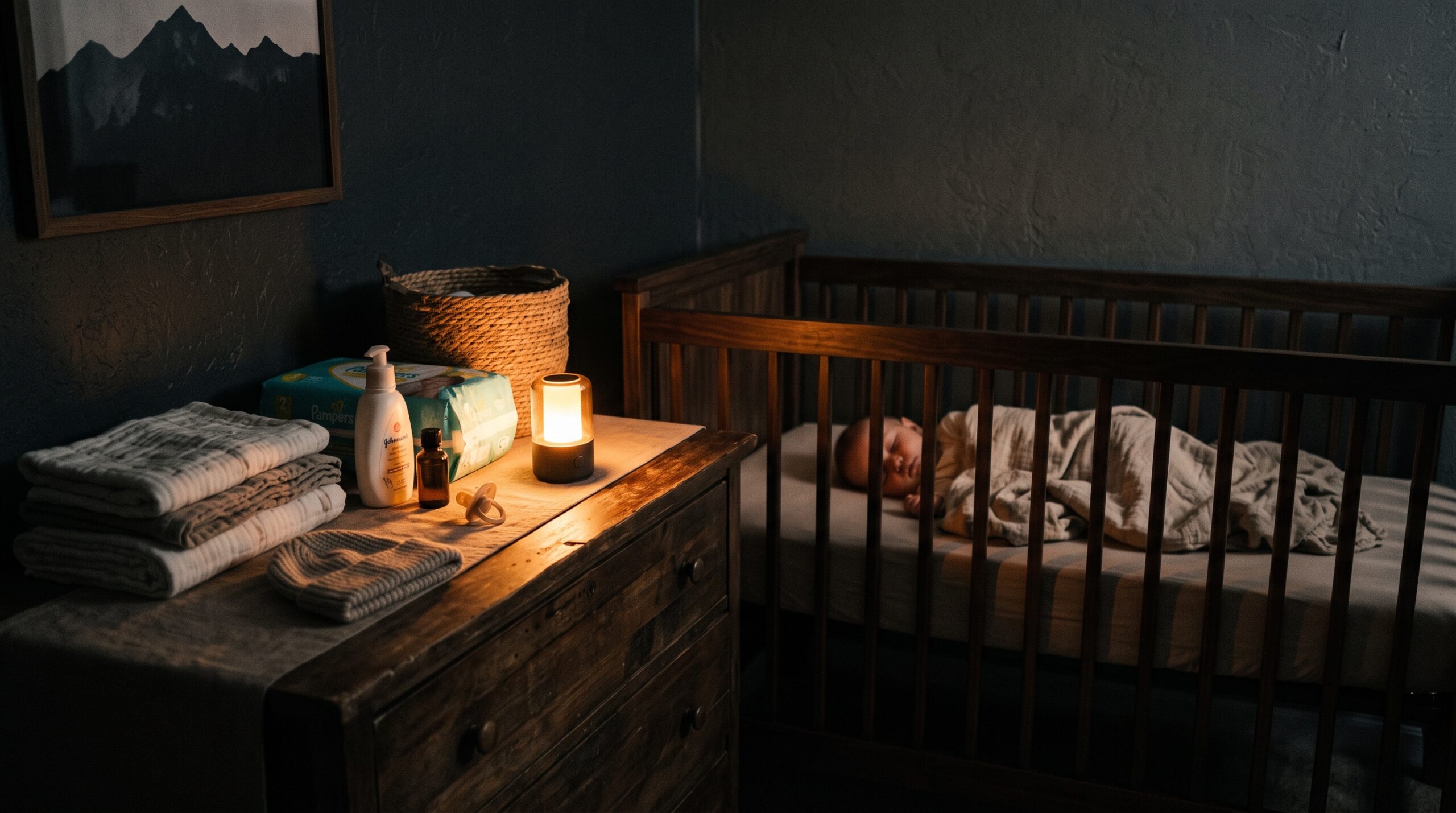
A power outage with a baby is manageable, and a short one rarely changes much about your day. The safest plan is to hold your baby’s temperature steady, feed on your normal schedule with milk or formula you know is safe, and decide in advance the point at which you leave for a warmer or cooler place. Babies cannot regulate their own temperature or tell you something is wrong, so your job is mostly to watch closely and keep the basics, warmth, feeding, and light, running calmly.
This guide walks through each of those basics for an outage. It is planning information only. Anything to do with how your baby is fed or how your baby is doing belongs to your pediatrician and to official FDA and CDC guidance, not to a general article, so when a feeding or your baby’s health is in question, call your pediatrician or seek care.
⚠️ This is planning guidance, not medical advice
Follow your pediatrician and FDA/CDC guidance on infant formula and breast-milk safety. The timing figures here are general CDC guidelines, not a ruling on your baby’s specific milk, formula, or health. Never use formula or milk you are unsure about, do not change a feeding schedule or formula mix to stretch supplies, and when in doubt about a feeding or how your baby is doing, call your pediatrician or seek care.
Keeping your baby warm
In a cold outage, the goal is a steady, comfortable temperature, not as much heat as possible. A useful rule from the American Academy of Pediatrics is to dress your baby in one more layer than an adult would wear in the same room. Several thin layers trap warm air better than one bulky one, and a hat indoors helps because babies lose a lot of heat through the head. Close off one room, keep the doors shut, and keep your baby there with you so the space stays warmer.
For sleep, warmth and safe sleep have to work together. The AAP advises keeping loose blankets, quilts, pillows, and bumpers out of an infant’s sleep space because they are linked to suffocation, so add warmth with a wearable blanket or sleep sack and a one-piece sleeper rather than piling on loose bedding. Skin-to-skin contact under your own clothing is a safe, reliable way to share body heat with a young baby. Avoid overheating too: the AAP notes that getting too warm raises the risk of SIDS, so aim for snug and comfortable, not hot and sweaty.
Check your baby often, because young babies cannot shiver well to warm themselves and will not tell you they are cold. Watch for cold skin, an unusually bright red face, or low energy and poor feeding, and warm your baby and call your pediatrician if you see them. One more rule matters more than any of this: never warm a room by burning something indoors. Gas ovens, charcoal or propane grills, camp stoves, and generators all release carbon monoxide and must never be used inside to make heat.
Keeping your baby cool
When the air conditioning is off in hot weather, babies overheat faster than adults because they do not sweat efficiently and cannot move themselves out of the heat. Set up in the coolest part of the home: lower floors usually stay cooler, and closing blinds and curtains on the sunny side keeps rooms from heating up through the windows. Dress your baby down to light-colored, loose clothing or just a diaper, and never leave a baby in a parked car, which heats to dangerous levels within minutes even with the windows cracked.
Hydration in the heat comes from milk, not water. The AAP advises that babies under six months should not be given water; instead, offer extra breast milk or formula feeds. A fan can help move air, but in very high heat a fan alone does not cool a baby below body temperature, so it is a comfort measure, not a substitute for a genuinely cooler space.
Know the warning signs of overheating: flushed cheeks, rapid breathing, damp hair, fussiness or unusual sleepiness, and fewer wet diapers than normal. The soft spot on the head may look sunken if a baby is getting dehydrated. The AAP says to contact your pediatrician for symptoms like fever, extreme tiredness, intense thirst, or not urinating for many hours, and to seek care right away if your baby seems very unwell.
Feeding and formula safety
Feeding is where an outage matters most, and the single most useful thing to know is that ready-to-feed formula needs no water and no power. The CDC calls ready-to-feed the safest option during an emergency, which makes a few cans the simplest backup you can keep on a shelf. Powdered formula is not sterile, so ready-to-feed is especially worth having for babies under two months, premature babies, or babies with weakened immune systems. If you do prepare powdered formula and your tap water is not safe, the CDC says to use bottled water until local authorities say the tap is safe again.
The key change in an outage is that you may not have a working refrigerator, and a fridge only keeps its contents cold for about 4 hours once the power is off and the door stays shut. The CDC’s emergency guidance is direct about what to do: during power outages, prepare fresh formula for every feeding rather than mixing ahead and storing it. The table below summarizes the general CDC timing for milk and formula. Treat it as a starting point and confirm anything you are unsure about with your pediatrician.
| Milk or formula | How long it generally stays safe | What changes in an outage |
|---|---|---|
| Ready-to-feed formula, unopened | Shelf-stable until opened | Needs no water and no power; the safest emergency option |
| Powdered formula, freshly prepared | Within 2 hours of preparing, and within 1 hour once feeding starts | With no working fridge, mix fresh for every feeding |
| Prepared formula, refrigerated | Up to 24 hours if the fridge is at 40°F or below | Only if the fridge is still cold; once it has been off about 4 hours, treat it as no longer safe |
| Leftover formula in the bottle | Throw out after the feeding | Saliva mixed with formula grows bacteria; never save a partly finished bottle |
| Freshly expressed breast milk | Up to 4 hours at room temperature; up to 4 days refrigerated | An insulated cooler with frozen ice packs keeps it cold for up to 24 hours |
| Thawed breast milk | 24 hours in the fridge; 2 hours once warmed to room temperature | Never refreeze breast milk that has thawed |
If you are nursing, breastfeeding itself is unaffected by an outage and stays the most reliable feeding option of all. For pumped milk, an insulated cooler packed with frozen ice packs holds it safely for up to 24 hours, which often outlasts a typical outage. Whatever you feed, do not warm milk or formula in a way that depends on having power back, and do not delay a feeding just to warm a bottle. Babies can take milk or formula at room temperature or cool, so a warm bottle is a comfort, not a requirement.
Light and comfort
Light makes night feeds and diaper changes far easier, and the safe choice is battery light, not candles. Candles are a fire risk in a home with a baby, and they give off almost no usable light, so keep flashlights, battery lanterns, and a headlamp on hand instead. A headlamp is especially handy because it keeps both of your hands free for the baby. Set a soft battery lantern or nightlight near the changing spot so you are not handling your baby in the dark.
Babies pick up on stress, so a calm routine helps as much as any gadget. Keep to your usual feed and sleep rhythm where you can, and a battery-powered white-noise machine or a phone app can preserve a familiar sleep cue. Your phone is also your link to outage updates and your pediatrician, so protect its battery: dim the screen, close apps, and keep a charged power bank for it rather than burning through the battery on anything nonessential.
Supplies to keep on hand
Most of an outage with a baby goes smoothly if a small kit is ready before you need it. Keep these together so you are not searching by flashlight:
- Ready-to-feed formula, a few cans or bottles, if you formula feed, plus bottled water for mixing powdered formula and clean bottles or single-use nipples.
- An insulated cooler and several frozen ice packs to keep pumped breast milk or refrigerated items cold for up to 24 hours.
- Extra diapers, wipes, and diaper cream, more than you think you need, plus a few changes of clothing and waterproof pads.
- A baby thermometer and a refrigerator thermometer so you can check your baby and tell whether the fridge is still at or below 40°F.
- Wearable blankets or sleep sacks and layers for cold weather; light, loose clothing for hot weather.
- Battery lanterns, flashlights, a headlamp, and spare batteries, plus a charged power bank for your phone.
- Any baby medications, and a written note of doses, your pediatrician’s number, and your nearest warming or cooling center.
- A manual breast pump as a backup if you normally use an electric one.
When to leave for a warm or cool place
Riding out a short outage at home is usually fine. The decision that matters is knowing in advance the point at which you stop toughing it out and go somewhere with stable power. Set that trigger early, while everyone is calm, so it is not a judgment call in the middle of a stressful night.
- The home is getting too cold to keep your baby warm, or you cannot hold a comfortable temperature in even one closed-off room. Many communities open warming centers; the Red Cross advises going to one rather than staying in a dangerously cold home.
- The home is heating up and you cannot keep your baby cool, especially in a heat wave with the air conditioning out. Towns and cities often open cooling centers in gyms or public buildings, and a relative’s home with power works just as well.
- Your baby shows warning signs of being too cold (cold or unusually red skin, low energy, poor feeding) or too hot (flushed, rapid breathing, very sleepy, fewer wet diapers). Move to a stable environment and contact your pediatrician.
- Your baby relies on any powered medical equipment and your backup is running low. Move before it runs out, not after, and follow the plan you set with your equipment supplier and clinician.
If your baby ever seems very unwell, hard to wake, struggling to breathe, or you simply are not sure, do not wait on any of this. Call your pediatrician, or call 911 for an emergency.
Backup power for a fan, light, or bottle warmer
The good news is that the things that help most with a baby, a fan, an LED light, a white-noise machine, and a phone charger, are tiny electrical loads that a modest battery power station can run for a long time. A bottle warmer draws a little more, though ready-to-feed formula and room-temperature feeds mean you rarely need one. To see what your own setup would take, our Power-Station Sizing calculator helps you match a station to the items you want to keep running, and the Appliance Runtime calculator shows how long a given battery holds a fan, a light, or a bottle warmer. Enter your real wattages for an answer you can plan around.
Frequently asked questions
Is formula that was in the fridge still safe after a power outage?
It depends on how cold the fridge stayed. A refrigerator keeps its contents safe for only about 4 hours once the power is off and the door stays shut, and prepared formula is meant to be kept at 40°F or below and used within 24 hours. Once the fridge has been off longer than about 4 hours or has warmed above 40°F, treat refrigerated prepared formula as no longer safe. The CDC’s emergency guidance is to prepare fresh formula for each feeding during an outage, and ready-to-feed formula is the safest option of all. When in doubt, throw it out and confirm with your pediatrician.
How long does breast milk last without power?
By CDC guidelines, freshly expressed breast milk keeps for up to 4 hours at room temperature and up to 4 days in a working refrigerator. During an outage, an insulated cooler packed with frozen ice packs keeps pumped milk cold for up to 24 hours, which often outlasts the outage. Milk thawed in the fridge should be used within 24 hours and within 2 hours once warmed, and you should never refreeze thawed milk. If you are unsure whether a given bottle is still safe, do not use it, and ask your pediatrician.
How do I keep my baby warm without heat?
Dress your baby in layers, about one more layer than you are wearing, add a hat indoors, and close off one room to share body heat. For sleep, use a wearable blanket or sleep sack and a one-piece sleeper instead of loose blankets, which the AAP warns are a suffocation risk. Skin-to-skin contact under your clothing warms a young baby reliably. Check often, since babies cannot shiver well to warm themselves, and never heat a room by burning anything indoors, such as a gas oven, grill, or generator, because of carbon monoxide.
How do I keep my baby cool if the air conditioning is out?
Move to the coolest part of the home, usually a lower floor with the blinds closed, and dress your baby in light, loose clothing or just a diaper. Offer extra breast milk or formula rather than water, since the AAP advises against giving water to babies under six months. A fan can help move air but does not cool a baby below body temperature in extreme heat. Watch for flushed skin, rapid breathing, unusual sleepiness, or fewer wet diapers, and move to a cooling center or a home with power, and contact your pediatrician, if your baby seems to be overheating.
Do I need to warm a bottle during an outage?
No. Babies can safely take breast milk or formula at room temperature or cool, so warming is a comfort, not a requirement, and you should not delay a feeding to warm a bottle you cannot warm without power. Ready-to-feed formula can be served straight from the can. If you do want to take the chill off, a cup of warm water from a kettle heated on a safe outdoor or battery source works, but never warm milk or formula in a way that risks uneven hot spots. Follow your pediatrician’s guidance on what suits your baby.
Sources
- CDC, infant formula preparation and storage: https://www.cdc.gov/infant-toddler-nutrition/formula-feeding/preparation-and-storage.html
- CDC, prepare and store powdered infant formula in an emergency: https://www.cdc.gov/infant-feeding-emergencies-toolkit/php/powdered-infant-formula.html
- CDC, breast milk storage and preparation: https://www.cdc.gov/breastfeeding/breast-milk-preparation-and-storage/handling-breastmilk.html
- U.S. Food and Drug Administration, handling infant formula safely: https://www.fda.gov/food/buy-store-serve-safe-food/handling-infant-formula-safely-what-you-need-know
- FoodSafety.gov, food safety during a power outage (4-hour refrigerator rule): https://www.foodsafety.gov/food-safety-charts/food-safety-during-power-outage
- American Academy of Pediatrics (HealthyChildren.org), tips for dressing your baby: https://www.healthychildren.org/English/ages-stages/baby/diapers-clothing/Pages/Dressing-Your-Newborn.aspx
- American Academy of Pediatrics (HealthyChildren.org), a parent’s guide to safe sleep: https://www.healthychildren.org/English/ages-stages/baby/sleep/Pages/A-Parents-Guide-to-Safe-Sleep.aspx
- American Academy of Pediatrics (HealthyChildren.org), extreme heat tips to keep kids safe: https://www.healthychildren.org/English/safety-prevention/at-home/Pages/Protecting-Children-from-Extreme-Heat-Information-for-Parents.aspx
- Ready.gov, power outages: https://www.ready.gov/power-outages