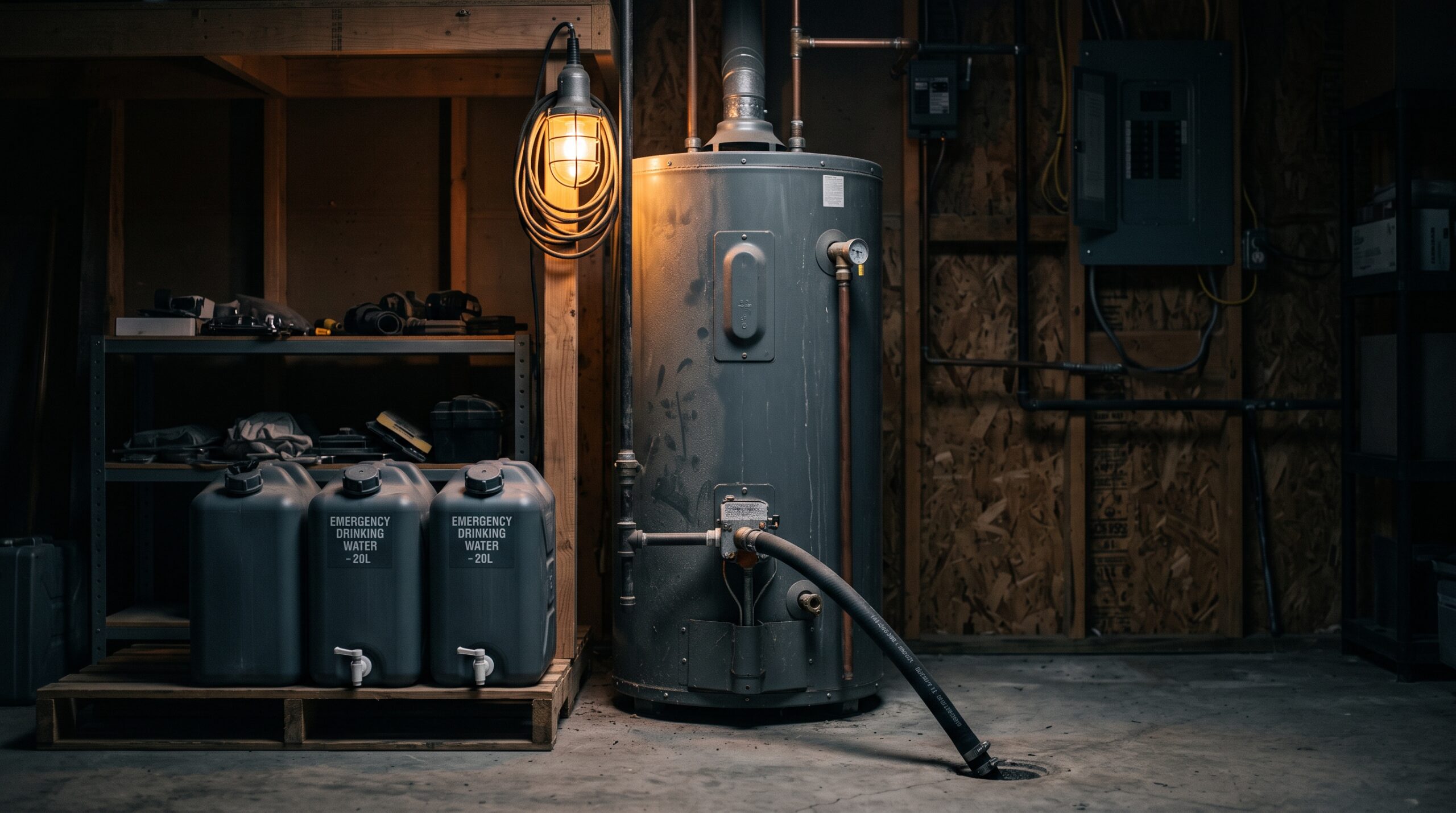
When the bottles you set aside run low, the best emergency water sources in your home are usually hiding in plain sight. Your water heater tank holds tens of gallons of drinkable water, and several more gallons sit trapped in your household pipes. With the power out and tap water unsafe or cut off, knowing how to reach that water, roughly how much each source holds, and which sources to leave alone can stretch your supply for days.
This guide covers the safe in-home sources recognized by the CDC, EPA, and Ready.gov, how to access each one without hurting yourself or your plumbing, and the simple rule that keeps you out of trouble: when in doubt, treat the water before you drink it.
Your water heater: the biggest hidden tank
A typical residential water heater holds about 30 to 50 gallons, and larger units hold more. That is often more drinkable water than most households keep in stored bottles. The water inside is the same water that feeds your faucets and showerheads, so it is usually safe to drink as long as the supply was not contaminated before the outage.
One important caveat from the CDC: use the tap water heater tank, the one connected to your household water. Do not use the separate tank that supplies hot water to radiators in some older homes. That heating-system water is not meant for drinking.
To drain it safely:
- Turn off the power or gas first. For an electric heater, switch off its breaker. For a gas heater, set the gas control to “off” or pilot. This keeps the burner or element from firing on a tank that is draining empty, which can damage the unit or create a hazard.
- Shut the cold-water inlet valve at the top of the tank so no questionable supply water flows in.
- Let air into the system by opening a hot-water faucet somewhere in the house. Water will not flow freely otherwise.
- Open the drain valve at the bottom of the tank and collect water in a clean container. The water can be very hot, so let it cool and use caution.
Water trapped in your pipes
Your home’s plumbing holds water even after the supply stops, and you can drain it using gravity. Turn on the faucet at the highest point in the house first. This lets air into the lines. Then collect the water that flows from the lowest faucet, such as one on the ground floor or in the basement. Depending on your plumbing, this can yield a few useful gallons.
Melted ice and the toilet tank
A few smaller sources can add up. Ice cubes made with uncontaminated water are safe once melted, and a full freezer or ice maker can hold a surprising amount. The liquid from canned fruit and vegetables counts too, as long as the can is not damaged.
The CDC also lists the toilet tank, meaning the upper reservoir behind the seat, not the bowl. It is usable only if the water is clear and you have not added chemical cleaners such as drop-in tablets or the dyed “blue water” cleaners. If you are not certain it is clean, treat it before drinking, and never use water from the toilet bowl.
How much each source yields, and whether to treat it
| Source | Approximate yield | Treat before drinking? |
|---|---|---|
| Tap water heater tank | ~30–50 gallons | Usually safe; treat if unsure |
| Household pipes | A few gallons | Treat if unsure |
| Melted ice cubes | Varies (small) | Safe if made from clean water |
| Toilet tank (not bowl) | ~3 gallons | Yes; only if no chemicals added |
| Canned fruit/vegetable liquid | Small | Safe to use |
Yields vary by home. The numbers above are rough planning figures, not guarantees. For context on how much you should keep on hand before an outage, see how much water to store for a power outage and our guide to storing water for an emergency.
Sources to avoid
Some water in the home looks tempting but is not safe to drink, even after treatment. Skip these:
- Toilet bowl water (the tank above it may be usable; the bowl is not).
- Radiators and hot-water heating or boiler system tanks, which can contain rust, sediment, or additives.
- Waterbeds, which often contain chemicals such as fungicides.
- Swimming pools and spas. The CDC says pool and spa water can be used for personal hygiene and cleaning, but not for drinking, because of the chemicals it contains.
- Any water that is dark, has floating material, or smells off. The EPA warns against using it.
Treat it if you are not sure
When you cannot vouch for a source, make it safe before drinking. Boiling is the most reliable method. The EPA advises bringing clear water to a rolling boil for at least one minute, and for three minutes at altitudes above 5,000 feet. Let it cool before use.
If you cannot boil, you can disinfect clear water with unscented household chlorine bleach following the EPA’s measured ratios (about 8 drops of 6% bleach per gallon, or 6 drops of 8.25% bleach per gallon), then stir and let it stand 30 minutes; a slight chlorine smell means it worked. Boiling is still preferred, because chemical disinfectants do not reliably kill some parasites such as Cryptosporidium and Giardia. For the full step-by-step, see how to purify water during an emergency.
It is worth knowing these sources before you need them, and worth keeping a basic supply ready so you are not relying on them at all. A few cases of bottled water and a treatment plan belong in every power outage emergency kit.
Frequently asked questions
How many gallons of water can I get from my water heater?
Most residential water heaters hold about 30 to 50 gallons, and larger units hold more. Use the tap water heater that feeds your faucets, not a separate boiler tank that serves radiators in some older homes.
Is toilet tank water safe to drink?
The CDC says water from the toilet tank, the reservoir behind the seat and not the bowl, can be usable if it is clear and you have not added chemical cleaners such as tablets or dyed bowl cleaners. Treat it before drinking to be safe, and never drink from the toilet bowl.
Can I drink swimming pool or hot tub water?
No. The chemicals used to treat pools and spas are too concentrated to drink safely, even after boiling. The CDC says this water is fine for personal hygiene and cleaning, but not for drinking.
Do I need to treat water from my water heater?
Water heater water is usually drinkable if your water supply and the heater were not contaminated. If you are unsure about the quality, or there is a boil-water advisory in your area, treat it first by boiling or disinfecting.
How much water should I store before an outage?
Ready.gov recommends storing at least one gallon of water per person per day for several days, and a two-week supply is better if you can manage it. Commercially bottled water keeps well; see how long bottled water lasts for storage and shelf-life details.