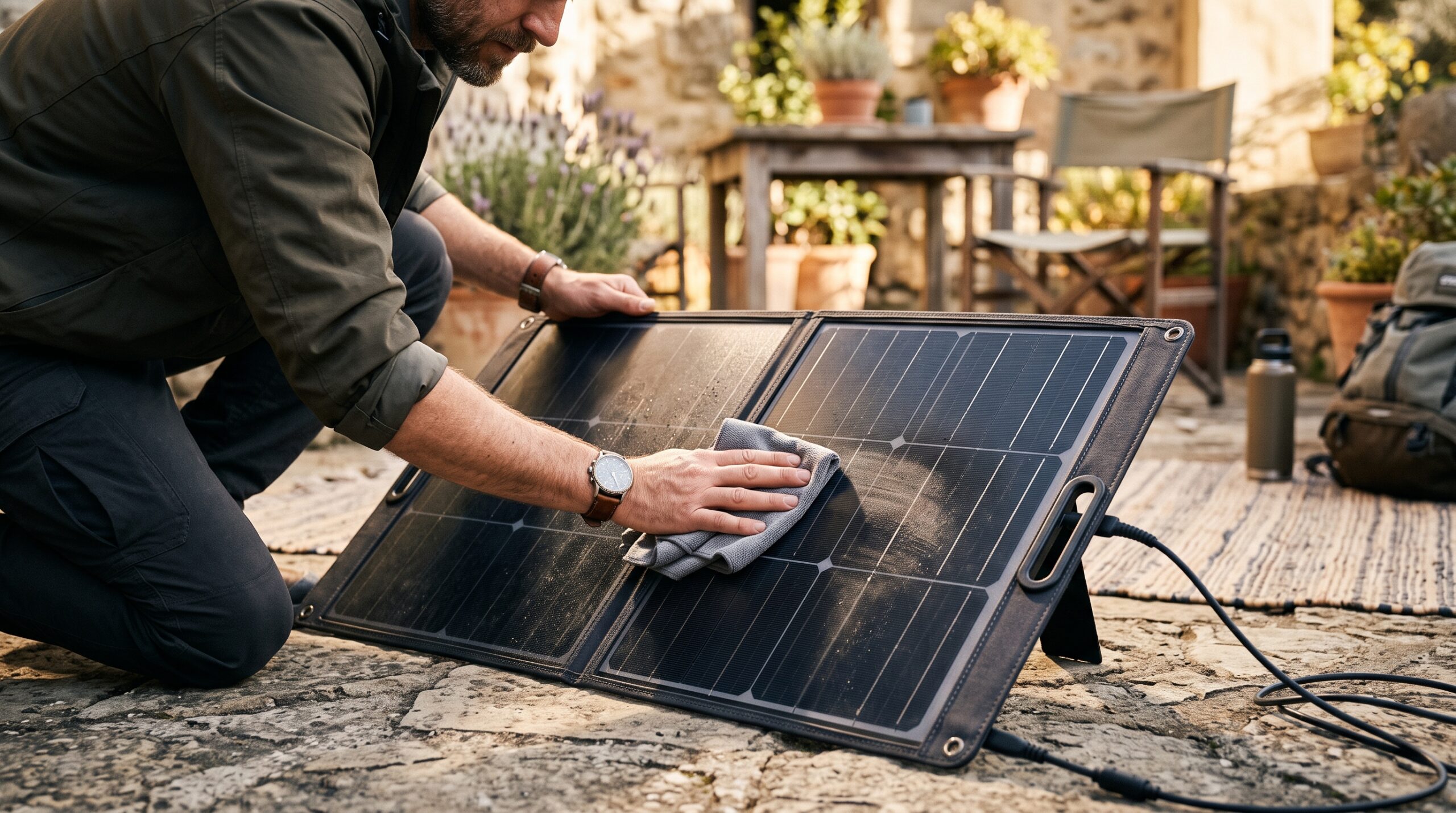
Dust, pollen, and bird droppings sit on the glass and block the light your panels are trying to catch, which means slower charging right when you need power. The good news: cleaning solar panels is mostly soap-free, takes a few minutes, and uses things you already own. This guide focuses on portable panels you set out for camping or a power station, with the rooftop basics covered too.
Why dirty panels charge slower
A solar panel only makes power from the sunlight that actually reaches its cells. Anything sitting on top of the glass, what the industry calls “soiling,” gets in the way. The U.S. Department of Energy notes that dust, particles, and dirt reduce the sunlight reaching the modules and cut electrical output. Field studies have measured losses in the range of 20 to 30 percent on heavily soiled panels, and a thick, even film of dust can drop output further. You will not always see that as a single big problem; more often it shows up as a power station that charges noticeably slower than it used to.
Rain helps, but it does not fully reset a panel. Wind-blown grit, tree pollen, and especially bird droppings cling to the surface, and panels that cool overnight collect morning dew that can cement loose dust into a harder layer. That is why an occasional hands-on clean still pays off, and it ties directly into how long it takes to charge a power station with solar.
What you need
You do not need special chemicals or equipment. A basic kit covers almost every job:
- Clean water (a hose, watering can, or bottle). Distilled or filtered water is better in hard-water areas because tap minerals can dry into chalky spots.
- A soft cloth, microfiber towel, or soft sponge.
- A soft-bristle brush for larger or rigid panels.
- A squeegee to pull off water and avoid streaks.
- A small amount of mild dish soap, only if greasy grime or droppings will not rinse off.
Many portable panels are weather-resistant and rated to handle a gentle stream of water, but check your model’s manual before soaking it, since the cables and ports are the parts to keep an eye on.
How to clean a portable solar panel
Portable panels are the easy case because you can lay them flat, reach every corner, and work at your own pace. Pick a cool, low-light moment, early morning or evening, so the glass is not hot and water does not evaporate into spots before you wipe it.
- Unplug the panel from your power station or device first.
- Brush or shake off loose dust and debris so you are not grinding grit into the glass.
- Rinse with low-pressure water to lift the bulk of the dirt.
- Wipe gently with a damp soft cloth or sponge. For stuck-on grime or bird droppings, let a little water sit to soften it, then add a drop of mild soap if needed.
- Rinse again with clean water to remove any soap film.
- Pull the water off with a squeegee or pat dry with a clean microfiber towel to prevent streaks.
- Let it dry fully, check the connectors are dry, then plug back in.
Folding panels often need less attention than fixed ones because you can pack them away between trips. A quick wipe after a dusty or muddy outing usually keeps them performing. If you are still deciding which panel suits your setup, see our guide to the best portable solar panels.
Cleaning rooftop panels safely
The same gentle approach applies to rooftop and RV panels: clean water, a soft brush or cloth, low pressure, and no harsh chemicals. The difference is the danger of the location. Walking on a roof is a fall risk, and walking on the panels themselves can crack the cells or seals. Wet panels and a sloped roof are a bad combination.
Where you safely can, clean from the ground using a hose and a soft brush on an extension pole, and do it on a cool, overcast day. If panels are out of safe reach, or the roof is steep, slick, or high, hire a professional. The cost is small compared with a fall or a damaged array, and it is the advice manufacturers themselves give for roof-mounted systems. Never try to clean wet rooftop panels yourself.
What to avoid
Most panel damage comes from cleaning too aggressively, not from dirt. Steer clear of these:
- Abrasive pads, scouring sponges, or stiff brushes. They scratch the glass and the anti-reflective coating, and scratches are permanent.
- High-pressure washers. The force can drive water past the seals into the junction box and cause micro-cracks. Major manufacturers warn against them and may void the warranty.
- Harsh chemicals, solvents, or strong detergents. They can degrade the coating and leave a film that attracts more dirt.
- Cleaning hot panels in full sun. Water dries instantly and leaves mineral spots, and cold water on hot glass adds thermal stress.
- Walking on the panels or onto an unsafe roof. Not worth the risk to you or the equipment.
How often to clean
For most people, a few times a year is enough, and many manufacturers suggest cleaning once or twice annually as a baseline. Your real schedule depends on where you are. Dusty, sandy, or high-pollen areas, farm country, or spots under trees where birds perch will need more frequent attention, sometimes every one to two months. Portable panels are simpler: clean them when you can see buildup or after a trip that left them muddy or dusty.
A good habit is to glance at the glass whenever you set up, and to watch your charging speed. If a panel is suddenly slow to top up your battery on a sunny day, dirt is a likely culprit, though weak winter sun can do the same thing, as we cover in do solar panels work in winter. Keeping panels clean is one of the cheapest ways to protect your charge when the grid is down. For how the whole setup fits together, see how a solar generator works, and to size a system to your needs, try the solar calculator.
Frequently asked questions
Can I just use a hose and water?
Usually, yes. Plain water on a low-pressure setting plus a soft cloth handles most dust and pollen. Save mild soap for greasy grime or bird droppings that will not rinse away, and always rinse the soap off afterward.
What is the best time of day to clean panels?
Early morning or evening, or any cool, overcast time. The glass should be cool to the touch so water does not evaporate into spots and so cold water does not shock hot glass.
Will a pressure washer clean them faster?
Don’t use one. The pressure can force water past the seals, reach the wiring, and create micro-cracks in the cells. Most manufacturers warn against pressure washers, and the damage can void your warranty. Low-pressure water is all you need.
Do I need special solar panel cleaning soap?
No. For occasional cleaning, water does most of the work, and a drop of mild dish soap covers the rest. Avoid harsh detergents and solvents, which can leave a film or damage the panel’s coating.
Should I clean my rooftop panels myself?
Only if you can reach them safely from the ground with a hose and soft brush. If that means climbing onto the roof or working near wet, sloped panels, hire a professional. Falls and cracked panels cost far more than a cleaning service.