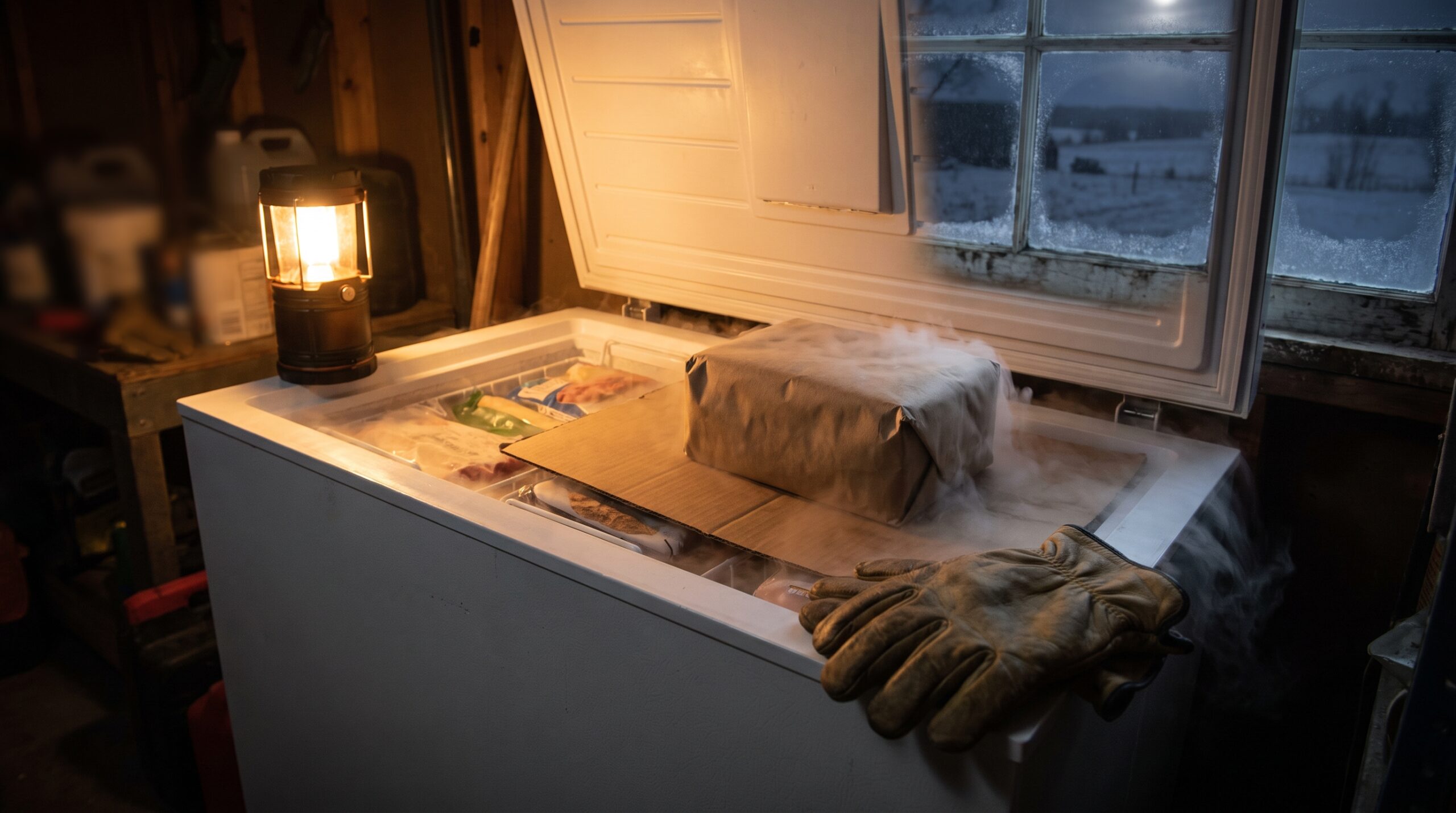
Plan on about 2½ to 3 pounds of dry ice for every cubic foot of freezer space. USDA says 50 pounds of dry ice should keep a full 18-cubic-foot freezer cold for about 2 days. (USDA FSIS; Clemson Extension) Never touch it with bare hands, keep it off the food with a piece of cardboard, and keep the room aired out.
A short outage may not need dry ice. USDA says a full freezer holds its temperature for about 48 hours (24 hours if it is half full) as long as the door stays closed. Dry ice is for outages that run longer. For the fridge, a cooler with regular ice works better: see the best cooler for a power outage.
How much dry ice does your freezer need?
The table uses the 2½ to 3 pounds per cubic foot rate from Clemson Extension and NDSU Extension. NDSU puts it this way: a 50-pound block should keep a full 18-cubic-foot freezer safe for at least two days. Your freezer’s size is on the label inside the lid or door, or in the manual.
| Freezer size | Dry ice to plan on (about 2 days, full freezer) |
|---|---|
| 5 cu ft | 12.5 to 15 lb |
| 7 cu ft | 17.5 to 21 lb |
| 10 cu ft | 25 to 30 lb |
| 15 cu ft | 37.5 to 45 lb |
| 18 cu ft | 45 to 54 lb |
| 21 cu ft | 52.5 to 63 lb |
- Upright freezers need more than chest freezers, because the dry ice has to go on each shelf (Clemson, NDSU).
- A half-empty freezer warms faster. NDSU suggests packing the food tightly in coolers with dry ice, or filling the empty space with crumpled newspaper or clean towels.
- Treat these as planning numbers. Room temperature, how often the door opens and how full the freezer is all change the result, so check with a thermometer.
Dry ice, block ice or backup power?
| Option | Best for | Watch out for |
|---|---|---|
| Dry ice | Keeping a freezer frozen past the first 1 to 2 days | Burns skin, gives off carbon dioxide gas, can freeze fridge food solid |
| Block ice or bags of ice | A cooler for fridge food (milk, meat, leftovers) | Melts into water; add more as it melts (USDA) |
| Frozen jugs of water | Filling empty freezer space before an outage (USDA) | Only helps if they were frozen beforehand |
| A power station or generator | Running the freezer itself so no ice is needed | Upfront cost; gas generators only outdoors because of carbon monoxide |
How to use dry ice in a freezer, step by step
- Find a seller before you need one. USDA’s advice is to find out ahead of time where dry ice and block ice are sold near you. In a big outage, call before you drive.
- Bring gloves and an insulated cooler to pick it up. Handle it only with insulated gloves or tongs, never bare hands (USDA, OSHA). OSHA says gloves for this should fit loosely so you can pull them off fast.
- Give it fresh air in the car. MSU Extension says if it rides inside the car for more than 15 minutes, make sure fresh air is coming in. Don’t carry it in a sealed, airtight container: the gas builds up pressure and can burst it (OSHA).
- Wrap the block in brown paper or several layers of newspaper. NDSU and MSU say this makes it last longer and protects your skin.
- Chest freezer: cardboard over the food, dry ice on top. MSU says to lay cardboard or newspaper over the food and set the dry ice on it, because dry ice freezes whatever it touches. Upright freezer: put some on each shelf, again with cardboard between ice and food.
- Fill empty space with crumpled newspaper or towels to cut air movement (NDSU), and don’t cover the freezer’s air vents (Clemson).
- Keep the door shut. When you do open it, stand back from an upright freezer, or wait a few minutes after opening a chest freezer before reaching in, so the gas can clear (NDSU).
- Check the temperature with a thermometer, not by touch. A freezer should be at 0°F or below (USDA).
Dry ice safety at home
Dry ice is frozen carbon dioxide. As it warms it turns straight into gas, and that gas pushes oxygen out of a closed space. Washington’s Department of Labor & Industries warns that even a 10-pound block can lower the oxygen in a 15 x 10 foot room with an 8-foot ceiling once it has turned to gas (WA L&I).
- Keep the room ventilated. A freezer in a small closet, basement corner or closed car needs fresh air. Get to fresh air right away if anyone feels dizzy or short of breath (WA L&I).
- Never in an airtight container. No screw-top jars, bottles or sealed boxes (OSHA).
- Keep children and pets away, and never eat or taste it (MSU Extension).
- Don’t set it on tile or a stone counter; MSU says the cold can crack it.
- Leftover dry ice: let it turn to gas in a well-ventilated spot away from people. Don’t put it in the sink, toilet, trash or a closet (WA L&I).
- A carbon monoxide alarm won’t warn you about it. CO alarms are made to detect carbon monoxide, a different gas.
Insulated gloves for handling dry ice, live prices
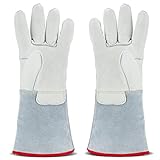
Bonvoisin cryogenic gloves, 14 in
Cow-leather insulated gloves sold for dry ice and cold storage
$23.45Check price on Amazon →
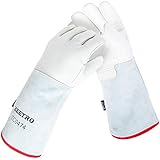
BEETRO antifreeze gloves
Long insulated gloves sold for dry ice handling
$19.99Check price on Amazon →
As an Amazon Associate we earn from qualifying purchases. Amazon prices as of Nov 27, 7:02 AM ET. Prices and deals change often; the price on Amazon at checkout applies.
What about the refrigerator?
Use regular ice for the fridge, not dry ice. MSU Extension notes that dairy and other refrigerated foods can freeze solid in a short time next to dry ice, and suggests an ice chest with block ice instead. USDA says a closed fridge keeps food safe for about 4 hours. After that, move perishables to a cooler with ice or frozen gel packs and keep it at 40°F or below. More in how to keep food cold without power and how to make ice last longer in a cooler.
Coolers for fridge food, live prices

Black Friday Deal
Igloo Polar 120 qt cooler
Large chest, room for a whole fridge shelf of perishables
$110.19Check price on Amazon →
List price $129.99, 15% off (Amazon)
As an Amazon Associate we earn from qualifying purchases. Amazon prices as of Nov 27, 7:02 AM ET. Prices and deals change often; the price on Amazon at checkout applies.
Or keep the freezer running instead
Where outages are common, backup power can be easier than buying dry ice every time. A chest freezer uses fairly little power once it is cold, so a mid-size power station can run one for a while: see can a power station run a chest freezer and what size power station to run a freezer. Our best power stations guide compares sizes.
A gas generator can run a freezer too, but only outdoors.
⚠️ Carbon monoxide: run fuel-burning equipment outdoors only
Generators, grills, camp stoves, and other gasoline-, propane-, or charcoal-burning devices give off carbon monoxide, an odorless, colorless gas that can kill within minutes. Never use them inside your home, garage, carport, or basement, or near doors, windows, or vents, even with doors and windows open. Keep a portable generator outdoors at least 20 feet from the house with the exhaust pointed away, and install battery-operated or battery-backup CO alarms. If an alarm sounds or anyone feels dizzy, weak, or sick, get to fresh air right away and call 911. Read our carbon monoxide safety guide (based on CDC and U.S. CPSC guidance).
Read the carbon monoxide safety guide and how far a generator should be from the house before you start one.
When the power comes back
Check each package before you cook it. USDA says thawed food that still has ice crystals, or has stayed at 40°F or below, can be refrozen, though quality may suffer. Never taste food to decide if it is safe. USDA’s rule is “When in doubt, throw it out.” See how long a freezer lasts without power and is food safe after a power outage for the full keep-or-toss list.
Freezer thermometers, live prices

Taylor fridge/freezer thermometer
Dial reads -20 to 80°F with freezer and danger zones marked
List price $7.99, 15% off (Amazon)

Black Friday Deal
Rubbermaid fridge/freezer thermometer
Stainless dial thermometer, reads 20 to 80°F
List price $12.99, 24% off (Amazon)
As an Amazon Associate we earn from qualifying purchases. Amazon prices as of Nov 27, 7:02 AM ET. Prices and deals change often; the price on Amazon at checkout applies.
For the rest of your prep, use the power outage checklist and our power outage safety tips.
Frequently asked questions
How much dry ice do I need for a chest freezer?
Plan on about 2½ to 3 pounds per cubic foot of freezer space, per Clemson and NDSU Extension. USDA says 50 pounds should keep a full 18-cubic-foot freezer cold for about 2 days. Upright freezers need more because the ice goes on each shelf.
How long does dry ice keep a freezer frozen?
USDA says 50 pounds of dry ice should hold an 18-cubic-foot freezer for about 2 days. Results depend on how full the freezer is, room temperature and how often you open it, so check with a thermometer.
Do I put dry ice on top of or under the food?
On top, in a chest freezer. MSU Extension says to lay cardboard or newspaper over the food and set the wrapped dry ice on that, because it freezes anything it touches. In an upright freezer, put some on each shelf.
Can I put dry ice in the refrigerator?
It is better not to. Dry ice can freeze milk and other fridge food solid. MSU Extension suggests a cooler with block ice for refrigerated food. Keep it at 40°F or below, as USDA advises.
Is dry ice dangerous in a house?
It can be if the space is closed. Dry ice turns into carbon dioxide gas, which pushes out oxygen. Keep the room ventilated, never seal it in an airtight container, keep kids and pets away, and handle it only with insulated gloves.
Do I need dry ice if the power will be out for one day?
Often not. USDA says a full freezer holds its temperature for about 48 hours and a half-full one for about 24 hours if the door stays closed. Dry ice helps when the outage will run longer.
Sources
- USDA FSIS, Keep Your Food Safe During Emergencies: Power Outages, Floods & Fires
- Clemson Cooperative Extension (HGIC), Food Safety in Freezer Failure
- Clemson Cooperative Extension (HGIC), Food Safety in Power Outages
- NDSU Extension, Keep Foods Safe During a Power Outage
- Michigan State University Extension, Safe Handling of Dry Ice During a Power Outage (WO1032)
- OSHA QuickFacts, Laboratory Safety: Cryogens and Dry Ice
- Washington State Dept. of Labor & Industries, Hazard Alert: Dry Ice and Liquid Nitrogen
Run your own numbers
Thinking about backup power for the freezer instead? Enter its watts to see how long a power station could keep it running.