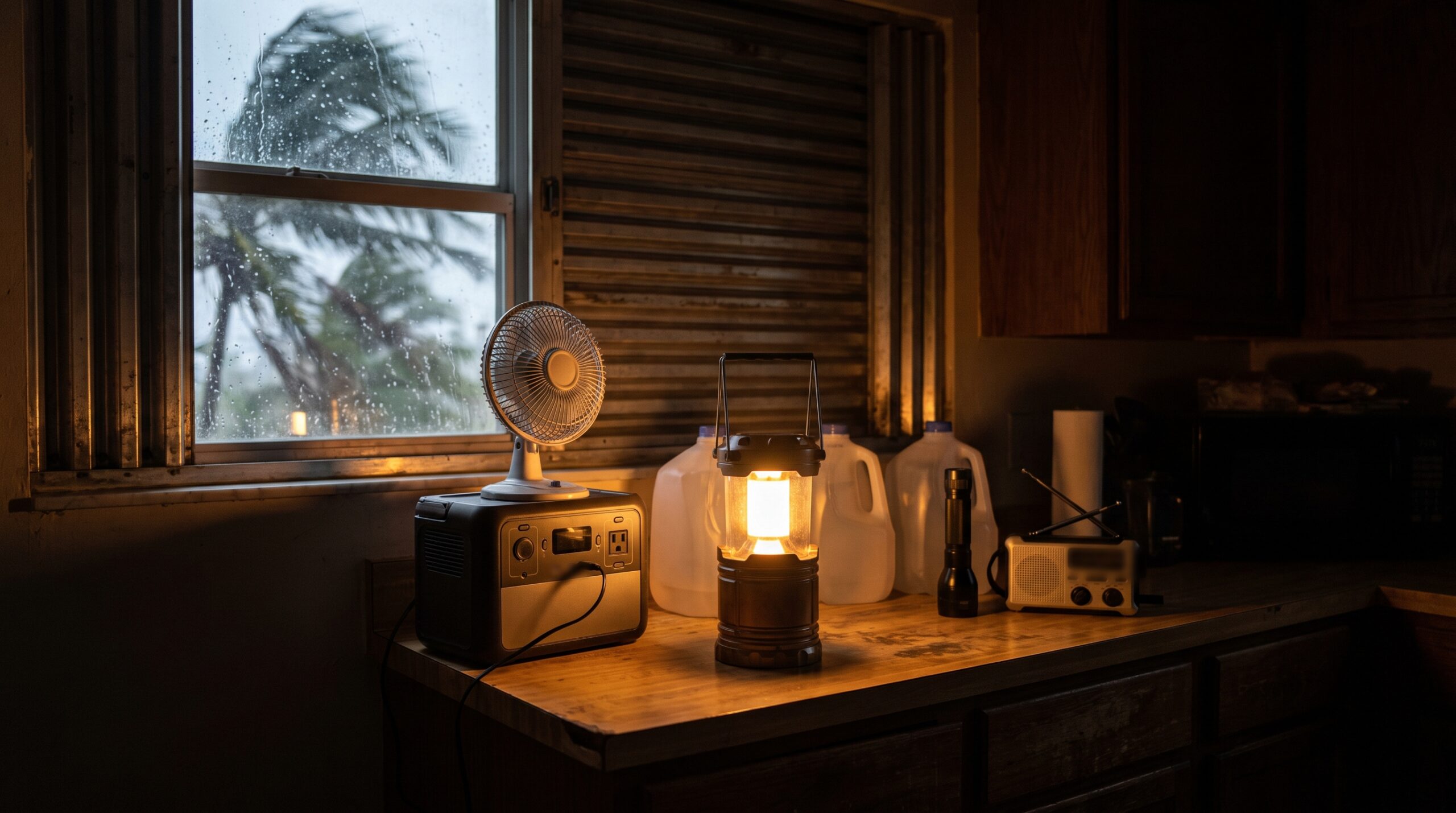
Plan for a Florida hurricane to cut your power for several days. After Hurricane Ian in 2022, outages in Florida peaked at just under 2.7 million (Florida Public Service Commission), and in 2017, the year of Hurricane Irma, the average Florida customer went 44.9 hours without power, the most of any state (EIA). Start the checklist below as soon as the National Hurricane Center issues a Hurricane Watch, which comes about 48 hours before tropical-storm-force winds are expected (NHC).
Below: 11 years of Florida outage data, what Irma, Ian and Milton did to the grid, a checklist for each stage of a storm, generator safety rules and the utility outage maps to bookmark. For the general version, see our hurricane power outage checklist.
How long do power outages last in Florida?
The U.S. Energy Information Administration publishes the average hours without power per customer for every state each year. We converted its SAIDI figures (minutes per customer per year) into hours. “All events” counts everything, including hurricanes. “Routine” leaves out major event days, so it shows everyday reliability (EIA, Electric Power Annual, Table 11.4, data for 2025 released October 21, 2026).
| Year | Florida, all events (h) | Florida rank (1 = most hours) | Florida, routine (h) | U.S., all events (h) | U.S., routine (h) |
|---|---|---|---|---|---|
| 2025 | 1.2 | 49 of 51 | 1.1 | 4.5 | 2.1 |
| 2024 | 24.8 | 5 of 51 | 1.1 | 11.0 | 2.2 |
| 2023 | 2.9 | 31 of 51 | 1.2 | 6.1 | 2.1 |
| 2022 | 16.9 | 2 of 50 | 1.2 | 5.5 | 2.2 |
| 2021 | 1.4 | 48 of 50 | 1.1 | 7.9 | 2.1 |
| 2020 | 3.3 | 36 of 51 | 1.2 | 7.6 | 1.9 |
| 2019 | 1.5 | 47 of 51 | 1.2 | 4.9 | 2.0 |
| 2018 | 5.1 | 20 of 51 | 1.3 | 5.8 | 2.0 |
| 2017 | 44.9 | 1 of 51 | 1.3 | 8.4 | 1.9 |
| 2016 | 6.5 | 8 of 51 | 1.4 | 4.5 | 2.0 |
| 2015 | 1.4 | 50 of 51 | 1.3 | 3.5 | 1.9 |
What the numbers show:
- On a normal day, Florida’s grid is one of the most reliable. Its routine outage time was 1.1 to 1.4 hours a year from 2015 to 2025, below the U.S. figure of 1.9 to 2.2 hours in every one of those years.
- Hurricane years push the total way up. Florida ranked first of all states in 2017 at 44.9 hours, second in 2022 at 16.9 hours and fifth in 2024 at 24.8 hours.
- In a quiet year, outages are short. In 2025 the average Florida customer was without power for 1.2 hours, 49th of 51, while the U.S. average was 4.5 hours.
- Your outage can be much longer. These are statewide averages per customer. After the worst storms, some neighborhoods waited weeks, so plan for that.
Compare all 50 states in our power outage statistics by state, or read how long power outages last in general.
What recent hurricanes did to Florida’s grid
Hurricane Irma, 2017. Irma knocked out power to more than 4.4 million Florida Power & Light customers, the most in the company’s history. FPL said the vast majority had power back within a week, and it finished restoration 10 days after the storm left its service area (FPL).
Hurricane Ian, 2022. Ian made landfall on September 28, and statewide outages peaked at just under 2.7 million (Florida PSC). A week later, on October 5, Lee County Electric Cooperative still had 125,691 customers out in Lee County, with restoration estimated at more than five days (Florida PSC outage report). On October 24, almost four weeks after landfall, 8,290 accounts in Lee County still had no power (Florida PSC).
Hurricane Milton, 2024. On October 11, 2024, 2,342,904 Florida accounts were without power, about 20% of accounts statewide (Florida PSC). By October 17 the number was down to 9,220 (Florida PSC). FPL warned that homes damaged by the storm needed a licensed electrician to make repairs before it could safely restore power, and that salt on equipment and weakened trees could cause more outages in the following weeks (FPL).
In all three storms, most homes had power back within days and the hardest-hit areas waited much longer, so plan as if yours will be one of them.
Hurricane watch vs. warning: when to do what
The National Hurricane Center uses these alerts. The timing is what matters for your power plan (NHC glossary).
| Alert | What it means | What to do about power |
|---|---|---|
| Tropical Storm Watch | Winds of 39 to 73 mph are possible within 48 hours | Check your kit, fuel and batteries |
| Hurricane Watch | Winds of 74 mph or more are possible; issued 48 hours before tropical-storm-force winds are expected | Charge everything, fill water, get fuel |
| Tropical Storm Warning | Winds of 39 to 73 mph are expected within 36 hours | Finish storm prep and secure outdoor items |
| Hurricane Warning | Winds of 74 mph or more are expected; issued 36 hours before tropical-storm-force winds are expected | Finish prep now, or leave if officials order it |
| Storm Surge Warning | Life-threatening flooding from rising seawater, generally within 36 hours | Follow evacuation orders |
Florida hurricane power outage checklist
Before hurricane season (June 1 to November 30)
- Know your evacuation zone with the state’s Know Your Zone lookup. Ready.gov says that if local officials tell you to evacuate, go right away (Ready.gov).
- Find your utility’s outage page in the table below, sign up for its outage texts, and save its outage phone number.
- Test your carbon monoxide alarms. Ready.gov says to install CO detectors with battery backup on every level of your home.
- If someone in your home relies on electric medical equipment, ask the equipment maker or your provider how to keep it running, and look at Florida’s Special Needs Registry. The state says registering does not guarantee a special needs shelter or help, so keep your own plan too.
- Decide on backup power now, not when stores are sold out. Our generator or power station guide helps you pick.
- Build a kit. Our emergency kit builder makes a list for your household.
When a Hurricane Watch is issued
- Charge everything. Phones, power banks, a power station, laptop and spare flashlight batteries. Ready.gov says to keep your phone charged when a hurricane is in the forecast and to have backup charging devices.
- Fill water jugs. Our guide on how much water to store has the amounts. If you are on a well, the pump stops when the power does.
- Get fuel for the car and the generator, and store it safely. See how to store gasoline safely.
- Bring in outdoor furniture and clear drains and gutters, as Ready.gov advises.
- Fill empty freezer space with containers of water and let them freeze. Ready.gov says a full freezer holds its temperature for about 48 hours.
- Set up a backup for alerts. A NOAA weather radio keeps working when cell service and internet go down (NOAA Weather Radio).
During the storm and the outage
- Stay in an interior room. Ready.gov says to take refuge in an interior room or a designated shelter for high winds.
- Report the outage to your utility once it is safe. Don’t assume someone else has.
- Stay out of flood water. Ready.gov warns that downed or underground power lines can electrically charge the water.
- Don’t touch electrical equipment if it is wet or if you are standing in water. If it is safe to do so, turn off power at the main breaker (Ready.gov).
- Keep the fridge and freezer closed. Ready.gov says a closed fridge keeps food cold for about four hours and a full freezer holds its temperature for about 48 hours.
- Run a generator only outdoors, at least 20 feet from windows, doors and attached garages (Ready.gov). Never run one in a garage, even with the door open.
- Stay cool. Florida outages often come with heat and humidity. See how to stay cool during a power outage.
After the power comes back
- Check your food. Ready.gov says to throw out food that has been at 40°F or warmer for two hours or more. See is food safe after a power outage.
- Turn appliances back on one at a time. See what to do when the power comes back on.
- Look for damage to the meter, the service line or anything that got wet. FPL says damaged homes need a licensed electrician to make repairs before power can be restored.
- Expect more flickers. FPL warns that weakened trees and salt on equipment can cause new outages in the weeks after a storm, so recharge every battery right away.
Using a generator safely after a Florida hurricane
A gas generator can run your fridge, fans and more for days, as long as you have fuel. Its exhaust also has carbon monoxide, which can kill in minutes.
- Set it up outdoors, at least 20 feet from the house, with the exhaust pointed away from windows, doors and vents. Our guide on how far a generator should be from the house explains why.
- Keep it dry. Read can you run a generator in the rain before the outer bands arrive.
- Plug appliances straight into the generator with outdoor-rated cords. Duke Energy says never to wire a generator directly into your breaker box, because it can backfeed power lines and injure line crews (Duke Energy).
- Size it to your loads. Use our guide to what size generator you need and see how much gas a generator uses to plan fuel.
- Shut it off and let it cool before refueling. Our generator safety guide covers the rest.
⚠️ Carbon monoxide: run fuel-burning equipment outdoors only
Generators, grills, camp stoves, and other gasoline-, propane-, or charcoal-burning devices give off carbon monoxide, an odorless, colorless gas that can kill within minutes. Never use them inside your home, garage, carport, or basement, or near doors, windows, or vents, even with doors and windows open. Keep a portable generator outdoors at least 20 feet from the house with the exhaust pointed away, and install battery-operated or battery-backup CO alarms. If an alarm sounds or anyone feels dizzy, weak, or sick, get to fresh air right away and call 911. Read our carbon monoxide safety guide (based on CDC and U.S. CPSC guidance).
To run house circuits from a generator, you need a transfer switch or an interlock installed by a licensed electrician. Learn the difference in transfer switch vs. interlock before you call one.
⚠️ Panel, transfer switch, and interlock work: hire a licensed electrician
Installing a transfer switch, a generator interlock kit, a power inlet box, or any connection to your home’s electrical panel is a job for a licensed electrician, and most areas require a permit and inspection. Never backfeed a generator or power station through a wall outlet: it can energize utility lines and electrocute line workers. Power Outage Planner is not an electrical contractor, and this page is general information, not installation advice.
Florida utility outage maps
Report outages and check restoration times on your utility’s own page. If you are not sure who serves you, check your bill. Many Floridians are served by a co-op or a city utility, not one of the big companies.
| Utility | Where it serves | Outage page |
|---|---|---|
| Florida Power & Light (FPL) | Much of the east coast, South Florida, Southwest Florida and the Panhandle | FPL outages and FPL storm center |
| Duke Energy Florida | Pinellas and Pasco counties and parts of Central and North Florida | Duke Energy outages |
| Tampa Electric (TECO) | Hillsborough County and parts of Pasco, Pinellas and Polk counties | Tampa Electric outages or (888) 223-0800 |
| JEA | Jacksonville | jea.com |
| Orlando Utilities Commission (OUC) | Orlando area | OUC outage reporting, text OUT to 69682 or call (407) 423-9018 |
| Lee County Electric Cooperative (LCEC) | Lee County and parts of Collier and Charlotte counties | LCEC outage map |
| Florida Public Utilities (FPU) | Parts of Northwest and Northeast Florida | fpuc.com |
| Gainesville Regional Utilities, City of Tallahassee and other city utilities and co-ops | Their own areas | gru.com, talgov.com, or the outage page or phone number on your bill |
Backup power options for a Florida hurricane outage
Pick by what has to keep running and for how long. Figures are maker specs, and real runtimes depend on what you plug in.
| Option | Good for | Limits | Safety |
|---|---|---|---|
| Power banks | Phones, small lights, a small fan | Hours to a day of charging | Safe indoors |
| 1,000Wh power station | Phones, WiFi, lights, fans, a fridge for part of a day | Not enough for central air | Safe indoors, no fumes |
| 2,000 to 3,000Wh power station | Fridge, freezer, fans, a window AC for a while if its watts fit | Heavy (about 40 lb and up); recharging needs sun or a generator | Safe indoors, no fumes |
| Portable gas generator | Many circuits for days if you have fuel | Fuel can be hard to find after a storm; noise; must stay outdoors | Carbon monoxide risk: outdoors only, 20 feet from openings |
| Standby generator | Whole home, automatic | Cost; needs a licensed installer | Installed outdoors to code |
A portable power station can’t run central AC for long. See can a power station run an air conditioner and our heat wave power outage guide. If you depend on a CPAP, oxygen or other medical device, ask its maker or your provider how to keep it powered, and ask your utility about its medical programs. To size a battery for your own devices, use the calculator below or compare models in the best power stations guide and the best portable generators guide.
1,000Wh class: phones, WiFi, fans and the fridge
1,000Wh power stations, live prices


As an Amazon Associate we earn from qualifying purchases. Amazon prices as of Nov 27, 6:15 AM ET. Prices and deals change often; the price on Amazon at checkout applies.
2,000Wh class: longer outages
2,000Wh power stations, live prices

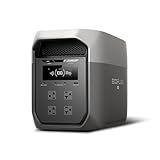
EcoFlow DELTA 3 Max
2,048Wh, 2,400W (3,400W X-Boost)
$879.00Check price on Amazon →
List price $1,199.00, 27% off (Amazon)
As an Amazon Associate we earn from qualifying purchases. Amazon prices as of Nov 27, 6:15 AM ET. Prices and deals change often; the price on Amazon at checkout applies.
Dual-fuel generators (outdoors only)
Dual-fuel portable generators, live prices

Champion 4500W Dual Fuel Inverter
4,500 starting / 3,500 running W, CO Shield
$999.00Check price on Amazon →

Westinghouse 12500W Dual Fuel
12,500 peak / 9,500 running W (gas), 120/240V 14-50R
$999.00Check price on Amazon →
As an Amazon Associate we earn from qualifying purchases. Amazon prices as of Nov 27, 2:51 AM ET. Prices and deals change often; the price on Amazon at checkout applies.
Alerts and carbon monoxide alarms
Weather radio and battery CO alarms, live prices


As an Amazon Associate we earn from qualifying purchases. Amazon prices as of Nov 27, 6:15 AM ET. Prices and deals change often; the price on Amazon at checkout applies.
Read our carbon monoxide safety guide before you start a gas generator, and keep our power outage safety tips handy. For the full list, use the power outage checklist.
Live farther north? See our Carolinas power outage guide for hurricane and ice storm prep in North and South Carolina.
Frequently asked questions
How long does power stay out after a hurricane in Florida?
Most homes get power back within days, but the hardest-hit areas can wait weeks. After Hurricane Irma, FPL finished restoring its 4.4 million affected customers in 10 days. After Hurricane Ian, some Lee County accounts were still without power almost four weeks after landfall, according to Florida PSC outage reports.
When should I start preparing for a hurricane power outage?
Before the season starts on June 1, and no later than a Hurricane Watch. The National Hurricane Center issues a Hurricane Watch 48 hours before tropical-storm-force winds are expected, and a Hurricane Warning 36 hours before. Once the wind picks up, prep gets hard.
Can I run a generator in my garage during a hurricane?
No. Ready.gov says generators must be used only outdoors and at least 20 feet from windows, doors and attached garages. Carbon monoxide can kill in minutes, even with the garage door open. Set it up outside and protect it from rain.
Can I plug my generator into my house?
Not through a wall outlet or by wiring it into the breaker box. Duke Energy warns this can backfeed power lines and injure line crews. Plug appliances straight into the generator, or have a licensed electrician install a transfer switch or interlock.
Why does my power keep going out after the hurricane?
FPL says weakened trees and branches can fall on lines, and salt on equipment along the coast can cause new outages and flickers in the weeks after a storm. Keep your batteries charged until things settle.
What size power station do I need for a Florida outage?
A 1,000Wh station covers phones, WiFi, lights, fans and a fridge for part of a day. For a full day or more, look at 2,000Wh and up. Central air needs far more than a portable station can give. Use the sizing calculator with your own devices.
Sources
- U.S. Energy Information Administration, Electric Power Annual, Table 11.4: SAIDI values by state, 2015 to 2025
- U.S. Energy Information Administration, Electric Power Annual (data for 2025, released October 21, 2026)
- National Hurricane Center, Glossary of NHC Terms
- Florida Public Service Commission, 2022 Annual Report
- Florida Public Service Commission, Hurricane Ian power outage data, October 5, 2022
- Florida Public Service Commission, Hurricane Ian power outage data, October 24, 2022
- Florida Public Service Commission, Hurricane Milton power outage data, October 11, 2024
- Florida Public Service Commission, Hurricane Milton power outage data, October 17, 2024
- Florida Power & Light, FPL completes service restoration after Hurricane Irma (September 22, 2017)
- Florida Power & Light, FPL essentially completes restoration following Hurricane Milton (October 15, 2024)
- Duke Energy, Outages
- Ready.gov, Hurricanes
- Ready.gov, Power Outages
- Florida Division of Emergency Management, Know Your Zone
- Florida Division of Emergency Management, Special Needs Registry
- National Weather Service, NOAA Weather Radio
Run your own numbers
List the devices you want to keep running through a hurricane outage to see what size power station fits.