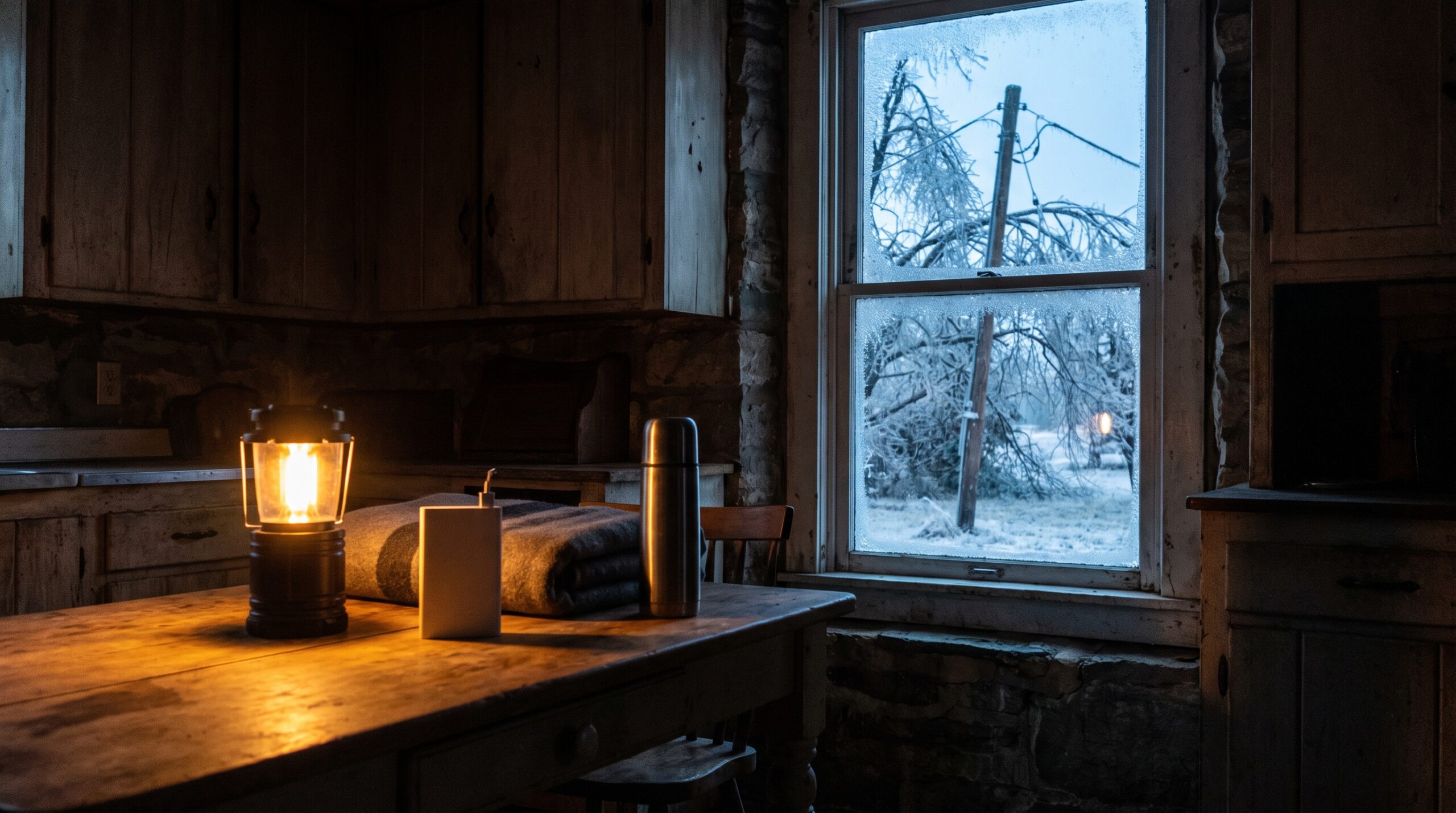
Plan for an Ohio outage to last up to a week or more after a major windstorm or ice storm. After the June 2012 derecho, more than 1 million Ohioans lost power and many were without it for seven to 10 days (Ohio Consumers’ Counsel). Four years earlier, the leftover winds of Hurricane Ike knocked out power to almost 2.6 million people in Ohio (National Hurricane Center).
Ohio’s worst outages come from wind as often as from ice, and a summer windstorm can arrive with little warning. Below: 11 years of Ohio outage data, what the biggest storms did to the grid, a checklist for ice storms and windstorms, why your gas furnace stops when the power does, generator safety and the outage page for every major Ohio utility. For the general versions, see our ice storm power outage prep and winter storm power outage prep.
How long do power outages last in Ohio?
The U.S. Energy Information Administration publishes the average hours without power per customer for every state each year. We converted its SAIDI figures (minutes per customer per year) into hours. “All events” counts everything, including big storms. “Routine” leaves out major event days, so it shows everyday reliability (EIA, Electric Power Annual, Table 11.4, data for 2025 released October 21, 2026).
| Year | Ohio, all events, h (rank) | U.S., all events (h) | Ohio, routine (h) | U.S., routine (h) |
|---|---|---|---|---|
| 2025 | 3.4 (32 of 51) | 4.5 | 2.2 | 2.1 |
| 2024 | 8.5 (18 of 51) | 11.0 | 2.2 | 2.2 |
| 2023 | 6.1 (17 of 51) | 6.1 | 2.1 | 2.1 |
| 2022 | 6.9 (14 of 50) | 5.5 | 2.4 | 2.2 |
| 2021 | 4.1 (24 of 50) | 7.9 | 2.3 | 2.1 |
| 2020 | 4.7 (29 of 51) | 7.6 | 2.2 | 1.9 |
| 2019 | 5.1 (15 of 51) | 4.9 | 2.4 | 2.0 |
| 2018 | 4.0 (25 of 51) | 5.8 | 2.5 | 2.0 |
| 2017 | 4.1 (25 of 51) | 8.4 | 2.4 | 1.9 |
| 2016 | 2.8 (31 of 51) | 4.5 | 2.1 | 2.0 |
| 2015 | 2.8 (30 of 51) | 3.5 | 2.3 | 1.9 |
What the numbers show:
- The last 11 years were fairly calm for Ohio. Ohio’s total outage time was below the U.S. average in most years and above it only in 2019 and 2022. Its worst year in this table was 2024, at 8.5 hours, 18th of 51, while the U.S. average was 11.0 hours.
- On a normal day, Ohio’s grid has a little more downtime than average. Its routine outage time was 2.1 to 2.5 hours a year from 2015 to 2025, above the U.S. figure (1.9 to 2.2 hours) every year.
- The biggest Ohio storms happened before this table starts. Hurricane Ike’s winds in 2008, the January 2005 ice storm and the 2012 derecho each left hundreds of thousands to millions of Ohio customers in the dark. Those storms fall outside EIA’s 2015 to 2025 window, so the table understates what a bad year in Ohio can look like.
- Your outage can be far longer than the average. These are statewide averages per customer. In the 2005 ice storm, some north central Ohio homes were out for as long as ten days.
Compare all 50 states in our power outage statistics by state, or read how long power outages last in general.
What Ohio’s biggest storms did to the grid
Hurricane Ike’s winds, September 2008. Ike came ashore in Texas, but its remnants brought hurricane-force gusts to Cincinnati, Columbus and Wilmington, Ohio, on September 14. Almost 2.6 million people in Ohio lost power, with the worst damage near Cincinnati, Columbus and Dayton (National Hurricane Center). AEP Ohio alone had a peak of 650,000 customers out, and two days later about 493,000 were still waiting (AEP Ohio).
The June 2012 derecho. A derecho is a widespread, severe windstorm produced by a large, organized cluster of thunderstorms (NOAA Storm Prediction Center). This one crossed from Illinois through the Ohio Valley to the Mid-Atlantic in about 10 hours, and the morning after, about 4.2 million customers in 11 states and DC were without power (U.S. Department of Energy). The Ohio Consumers’ Counsel says more than 1 million Ohioans lost power (Ohio Consumers’ Counsel). The DOE review found that the forecast the evening before did not put southern Ohio in the expected storm area, so utilities had little time to prepare. Four days in, only about 71% of Ohio customers who lost power had it back. A heat wave followed, with average temperatures after the storm staying above 94°F in the affected area, and AEP Ohio reported five workers treated for heat-related injuries (DOE).
The January 2005 ice storm. On January 5 and 6, 2005, more than three quarters of an inch of ice built up from Hancock County east to Ashland County. Up to 80% of electric customers in nine north central Ohio counties lost service, some for as long as ten days, and as many as one million people lost power. Several power companies reported the most outages in their history (NWS Cleveland).
The February 2007 ice storm. From the northern Cincinnati suburbs to Wilmington and south of Columbus, half an inch to an inch of ice built up (NWS Wilmington, OH), bringing down trees and power lines along the I-71 corridor. Duke Energy had 125,000 customers out at the peak and more than 330,000 lost power at some point, which it called the worst wintertime outage in 18 years for Hamilton and Clermont counties (NWS Wilmington, OH).
Superstorm Sandy reached Ohio too: in October 2012 it cut power to about 245,000 FirstEnergy customers in northern Ohio (Ohio Consumers’ Counsel).
So plan for wind as much as ice. The derecho gave utilities little warning, and both the derecho and the 2005 ice storm left some Ohioans without power for up to 10 days, one in summer heat and one in winter cold.
Ohio storm alerts: when to do what
The National Weather Service issues these alerts. Each NWS office uses its own local criteria, so the exact thresholds can vary across Ohio (NWS winter alerts, NWS wind and thunderstorm alerts).
| Alert | What it means | What to do about power |
|---|---|---|
| Winter Storm Watch | Conditions are favorable for a significant winter storm, such as heavy snow, sleet or an ice storm | Charge everything, check fuel, batteries and CO alarms |
| Ice Storm Warning | Usually issued for about 1/4 inch of ice or more; the NWS says this is likely to snap power lines and bring down branches | Expect outages; finish prep, fill water, get warm layers out |
| Winter Storm Warning | A significant winter storm with snow, ice, sleet or blowing snow is expected | Finish prep and stay off the roads |
| High Wind Warning | Strong sustained winds with even stronger gusts are happening | Secure outdoor items, charge devices, expect falling limbs |
| Severe Thunderstorm Warning | A storm with winds of 58 mph or more, hail 1 inch or larger, or both is happening or about to | Get inside a sturdy building, away from windows; prep is over |
A derecho moves fast, so the wind can arrive soon after the warning. Charge devices and fill water when a Severe Thunderstorm Watch or a hot, stormy forecast comes out. By the time the warning reaches your phone, there may not be time.
Ohio power outage checklist
Before winter and storm season
- Find your utility’s outage page in the table below, sign up for its outage texts and save its outage phone number. The Public Utilities Commission of Ohio (PUCO) says to report every outage to your electric company right away (PUCO).
- Know what stops when the power goes out. PUCO warns that gas appliances with electronic ignitions won’t work without electricity, and neither will appliances that need fans, such as central heating units and gas dryers (PUCO). See the furnace section below.
- Build a storm kit. The Ohio Consumers’ Counsel suggests a three-day supply of non-perishable food, one gallon of water per person per day, medications with a paper list of doses, a battery radio, a flashlight with extra batteries and a manual can opener (Ohio Consumers’ Counsel). Our emergency kit builder makes a list for your household.
- Test your carbon monoxide alarms. Ready.gov says to install CO detectors with battery backups on every level of your home (Ready.gov).
- If someone in your home relies on electric medical equipment, ask your utility about its critical customer program. PUCO requires Ohio electric companies to keep a list of critical customers, but says being on it does not guarantee uninterrupted service or faster restoration, so plan a backup (PUCO).
- Learn how to open your garage door by hand. PUCO says to know how to manually open electric garage doors and gates. See power outages and your garage door.
- Decide on backup power now, not when stores are sold out. Our generator or power station guide helps you pick.
When an ice storm or High Wind Warning is in the forecast
- Charge everything. Phones, power banks, a power station and spare flashlight batteries.
- Get supplies for several days at home. Ready.gov says to gather supplies in case you need to stay home for several days without power, and to keep a full tank of gas (Ready.gov).
- Get warm gear ready. Blankets, sleeping bags and layers for everyone. See how to stay warm during a power outage.
- Protect your pipes. See how to keep pipes from freezing during a power outage.
- Fill water jugs. Our guide on how much water to store has the amounts. If you are on a well, the pump stops when the power does.
- Set up a backup for alerts. A NOAA weather radio keeps working when cell service and internet go down (NOAA Weather Radio).
When summer storms are in the forecast
- Charge everything and fill water jugs as soon as a Severe Thunderstorm Watch is issued.
- Freeze water bottles to fill empty freezer space and to use in a cooler later. Ready.gov says a full freezer holds its temperature for about 48 hours.
- Plan for heat. After the 2012 derecho, a heat wave set in while Ohio waited for power. See our heat wave power outage survival guide and how to stay cool during a power outage.
- Know where to go. The Ohio Consumers’ Counsel says to know where you can go for heating or cooling, such as a community center or a friend’s home (OCC).
- When the warning comes, get inside a sturdy building and stay away from windows, as the NWS advises. For tornado warnings, see tornado power outage prep.
During the outage
- Report the outage to your utility. PUCO says you may not reach a live person when many customers are calling, but the automated line still records your outage (PUCO).
- Stay away from downed lines. PUCO says not to touch or move a downed line, to stay a safe distance away and to call emergency services and your electric company (PUCO).
- Unplug electronics and leave one light on. PUCO and the Ohio Consumers’ Counsel both suggest this, so a surge can’t hit your electronics when power returns and you can tell when it’s back (OCC).
- In cold weather, close off rooms you aren’t using to slow heat loss, as the Ohio Consumers’ Counsel suggests (OCC).
- Keep the fridge and freezer closed. Ready.gov says a closed fridge keeps food cold for about four hours and a full freezer holds its temperature for about 48 hours.
- Don’t heat your home with a gas stove, kerosene space heater, charcoal grill or other open flame. PUCO warns that deadly carbon monoxide can build up in your home without you noticing (PUCO).
After the power comes back
- Check your food. Ready.gov says to throw out food that has been at 40°F or warmer for two hours or more. See is food safe after a power outage.
- Turn appliances back on one at a time. See what to do when the power comes back on.
- Look for damage to the meter, the line to your house or anything that got wet. Have a licensed electrician check damage on your side before you use it.
- If outages keep happening, report them to PUCO. The Ohio Consumers’ Counsel says customers with frequent or long outages can call PUCO at 1-800-686-7826 (OCC).
Why your gas furnace stops in an Ohio outage
If you heat with natural gas, you might expect the heat to stay on in an outage. PUCO says gas appliances with electronic ignitions need electricity to light the gas, and central heating units that use fans won’t run either (PUCO). Without power, the blower stops and no warm air moves through the house.
- Find your furnace’s power draw. The blower motor is the big load. Our guide on how long a power station will run a furnace shows how to estimate it.
- Check how it connects. If your furnace is hard-wired rather than plugged in, don’t splice in a cord yourself. A licensed electrician can add a proper connection or a transfer switch.
- Know how long the house holds heat. See how long a house stays warm without power.
- Have a plan B. Layers, sleeping bags, one warm room with the doors closed, and a place to go if the outage drags on.
Using a generator safely in an Ohio storm
A gas generator can keep a fridge, a furnace blower and lights going for days, as long as you have fuel. Its exhaust also has carbon monoxide, which can kill in minutes. Winter makes this worse, because people are tempted to keep doors shut and the generator close.
- Set it up outdoors, at least 20 feet from the house, with the exhaust pointed away from windows, doors and vents. Our guide on how far a generator should be from the house explains why.
- Keep it dry. Ready.gov says to keep the generator dry and protected from rain or flooding, because touching a wet generator can cause shock (Ready.gov). Read can you run a generator in the rain.
- Never plug a generator into your circuit box. AEP Ohio warns that a portable generator plugged into the circuit box backfeeds electricity up the line and puts repair workers and the public at risk. Plug essential appliances straight into the generator (AEP Ohio).
- Size it to your loads. Use our guide to what size generator you need.
- Shut it off and let it cool before refueling. Ready.gov warns that fuel spilled on hot engine parts can ignite. Our generator safety guide covers the rest, and how to store gasoline safely covers the fuel.
⚠️ Carbon monoxide: run fuel-burning equipment outdoors only
Generators, grills, camp stoves, and other gasoline-, propane-, or charcoal-burning devices give off carbon monoxide, an odorless, colorless gas that can kill within minutes. Never use them inside your home, garage, carport, or basement, or near doors, windows, or vents, even with doors and windows open. Keep a portable generator outdoors at least 20 feet from the house with the exhaust pointed away, and install battery-operated or battery-backup CO alarms. If an alarm sounds or anyone feels dizzy, weak, or sick, get to fresh air right away and call 911. Read our carbon monoxide safety guide (based on CDC and U.S. CPSC guidance).
To run house circuits, including a hard-wired furnace, from a generator, you need a transfer switch or an interlock installed by a licensed electrician. Learn the difference in transfer switch vs. interlock before you call one.
⚠️ Panel, transfer switch, and interlock work: hire a licensed electrician
Installing a transfer switch, a generator interlock kit, a power inlet box, or any connection to your home’s electrical panel is a job for a licensed electrician, and most areas require a permit and inspection. Never backfeed a generator or power station through a wall outlet: it can energize utility lines and electrocute line workers. Power Outage Planner is not an electrical contractor, and this page is general information, not installation advice.
Ohio utility outage maps
Report outages and check restoration times on your utility’s own page. If you are not sure who serves you, check your bill. Phone numbers below are the ones PUCO lists for reporting outages (PUCO).
| Utility | Area | Outage map or phone |
|---|---|---|
| AEP Ohio (Ohio Power Company) | Columbus, Canton and much of the rest of Ohio | AEP Ohio outages or (800) 672-2231 |
| FirstEnergy: The Illuminating Company, Ohio Edison, Toledo Edison | Northern Ohio | FirstEnergy Ohio outage map; (800) 589-3101 (Illuminating Co.), (800) 633-4766 (Ohio Edison), (800) 447-3333 (Toledo Edison) |
| Duke Energy Ohio | Cincinnati area | Duke Energy outages or (800) 543-5599 |
| AES Ohio | Dayton area | AES Ohio outages, (800) 433-8500 or (937) 331-3900 |
| Electric cooperatives | Mostly rural Ohio | Your co-op’s outage line (on your bill); co-op list at Ohio’s Electric Cooperatives |
| City utilities | Many Ohio towns | The outage page or phone number on your bill |
Backup power options for an Ohio outage
Pick by what has to keep running and for how long. Figures are maker specs, and real runtimes depend on what you plug in.
| Option | Good for | Limits | Safety |
|---|---|---|---|
| Power banks | Phones, small lights, a radio | Hours to a day of charging | Safe indoors |
| 1,000Wh power station | Phones, WiFi, lights, a fridge for part of a day, an electric blanket | Not enough for electric heat or central air | Safe indoors, no fumes |
| 2,000 to 3,000Wh power station | Fridge, freezer, a gas furnace blower if its watts fit | Heavy (about 40 lb and up); recharging needs sun or a generator | Safe indoors, no fumes |
| Portable gas generator | Many circuits for days if you have fuel | Fuel runs out; roads may be iced or blocked; noise; must stay outdoors | Carbon monoxide risk: outdoors only, 20 feet from openings |
| Standby generator | Whole home, automatic | Cost; needs a licensed installer | Installed outdoors to code |
A portable power station can’t heat a house. See can a power station run a space heater and can a power station run an electric blanket. If you depend on a CPAP, oxygen or other medical device, ask its maker or your provider how to keep it powered. To size a battery for your own devices, use the calculator below or compare models in the best power stations guide and the best portable generators guide.
1,000Wh class: phones, WiFi, lights and the fridge
1,000Wh power stations, live prices


As an Amazon Associate we earn from qualifying purchases. Amazon prices as of Nov 27, 2:51 AM ET. Prices and deals change often; the price on Amazon at checkout applies.
2,000Wh class: longer outages and a furnace blower
2,000Wh power stations, live prices

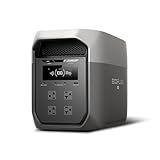
EcoFlow DELTA 3 Max
2,048Wh, 2,400W (3,400W X-Boost)
$879.00Check price on Amazon →
List price $1,199.00, 27% off (Amazon)
As an Amazon Associate we earn from qualifying purchases. Amazon prices as of Nov 27, 2:51 AM ET. Prices and deals change often; the price on Amazon at checkout applies.
Dual-fuel generators (outdoors only)
Dual-fuel portable generators, live prices

Champion 4500W Dual Fuel Inverter
4,500 starting / 3,500 running W, CO Shield
$999.00Check price on Amazon →

Westinghouse 12500W Dual Fuel
12,500 peak / 9,500 running W (gas), 120/240V 14-50R
$999.00Check price on Amazon →
As an Amazon Associate we earn from qualifying purchases. Amazon prices as of Nov 27, 2:51 AM ET. Prices and deals change often; the price on Amazon at checkout applies.
Alerts and carbon monoxide alarms
Weather radio and battery CO alarms, live prices

Midland WR400 NOAA Weather Radio
NOAA weather radio with SAME county alerts and battery backup
$98.00Check price on Amazon →


As an Amazon Associate we earn from qualifying purchases. Amazon prices as of Nov 27, 2:59 AM ET. Prices and deals change often; the price on Amazon at checkout applies.
Read our carbon monoxide safety guide before you start a gas generator, and keep our power outage safety tips handy. For the full list, use the power outage checklist. Next door in Michigan? See our Michigan power outage guide.
Frequently asked questions
How long does the power stay out after a big storm in Ohio?
Most homes get power back within days, but the worst storms take a week or more. After the June 2012 derecho, the Ohio Consumers’ Counsel says many Ohioans were without power for seven to 10 days. In the January 2005 ice storm, the National Weather Service says some north central Ohio customers were out for as long as ten days.
Will my gas furnace work during a power outage?
Usually not. The Public Utilities Commission of Ohio says gas appliances with electronic ignitions need electricity, and central heating units that use fans won’t run without power. You need a backup power source for the blower, or another safe way to stay warm.
How much ice does it take to knock out power?
The National Weather Service usually issues an Ice Storm Warning for about a quarter inch of ice or more, and says that much ice is likely to snap power lines and bring down branches. In the January 2005 Ohio ice storm, more than three quarters of an inch built up in the hardest-hit counties.
What is a derecho?
The NOAA Storm Prediction Center describes a derecho as a widespread, severe windstorm produced by a large, organized cluster of thunderstorms. The June 2012 derecho crossed from Illinois to the Mid-Atlantic in about 10 hours. The U.S. Department of Energy says about 4.2 million customers were without power the next morning, and the Ohio Consumers’ Counsel says more than 1 million Ohioans lost power.
Can I plug my generator into my house?
Not into the circuit box. AEP Ohio warns that a portable generator plugged into the circuit box backfeeds electricity up the line and puts repair workers and the public at risk. Plug appliances straight into the generator, or have a licensed electrician install a transfer switch or interlock.
Who do I call about a power outage in Ohio?
Your electric company first: AEP Ohio, FirstEnergy, Duke Energy Ohio, AES Ohio, your co-op or your city utility. PUCO cannot restore your power, but the Ohio Consumers’ Counsel says you can report frequent or long outages to PUCO at 1-800-686-7826.
Sources
- U.S. Energy Information Administration, Electric Power Annual, Table 11.4: SAIDI values by state, 2015 to 2025
- National Hurricane Center, Tropical Cyclone Report: Hurricane Ike
- AEP Ohio, AEP Ohio Makes Progress in Restoration Efforts across Ohio (September 16, 2008)
- U.S. Department of Energy, A Review of Power Outages and Restoration Following the June 2012 Derecho
- Office of the Ohio Consumers’ Counsel, 2012 Annual Report
- National Weather Service Cleveland, January 2005: Historic Ice Storm and Significant Flooding
- National Weather Service Wilmington, OH, Storm Data, February 2007
- National Weather Service Wilmington, OH, Valentine’s Day Winter Storm 2007
- NOAA Storm Prediction Center, Facts About Derechos
- Public Utilities Commission of Ohio, Electric power outages: a PUCO guide to being prepared
- Office of the Ohio Consumers’ Counsel, Power Outage Tips and Customer Rights
- National Weather Service, Winter Weather Warnings, Watches and Advisories
- National Weather Service, Wind and thunderstorm warnings
- Ready.gov, Winter Weather
- Ready.gov, Power Outages
- National Weather Service, NOAA Weather Radio
Run your own numbers
List the devices you want to keep running through a storm outage, including a furnace blower, to see what size power station fits.